Daily Sabah logo

Politics
Diplomacy Legislation War On Terror EU Affairs Elections News Analysis
TÜRKİYE
Istanbul Education Investigations Minorities Expat Corner Diaspora
World
Mid-East Europe Americas Asia Pacific Africa Syrian Crisis Islamophobia
Business
Automotive Economy Energy Finance Tourism Tech Defense Transportation News Analysis
Lifestyle
Health Environment Travel Food Fashion Science Religion History Feature Expat Corner
Arts
Cinema Music Events Portrait Reviews Performing Arts
Sports
Football Basketball Motorsports Tennis
Opinion
Columns Op-Ed Reader's Corner Editorial
PHOTO GALLERY
JOBS ABOUT US RSS PRIVACY CONTACT US
© Turkuvaz Haberleşme ve Yayıncılık 2025

Daily Sabah - Latest & Breaking News from Turkey | Istanbul

  • Politics
    • Diplomacy
    • Legislation
    • War On Terror
    • EU Affairs
    • Elections
    • News Analysis
  • TÜRKİYE
    • Istanbul
    • Education
    • Investigations
    • Minorities
    • Expat Corner
    • Diaspora
  • World
    • Mid-East
    • Europe
    • Americas
    • Asia Pacific
    • Africa
    • Syrian Crisis
    • Islamophobia
  • Business
    • Automotive
    • Economy
    • Energy
    • Finance
    • Tourism
    • Tech
    • Defense
    • Transportation
    • News Analysis
  • Lifestyle
    • Health
    • Environment
    • Travel
    • Food
    • Fashion
    • Science
    • Religion
    • History
    • Feature
    • Expat Corner
  • Arts
    • Cinema
    • Music
    • Events
    • Portrait
    • Reviews
    • Performing Arts
  • Sports
    • Football
    • Basketball
    • Motorsports
    • Tennis
  • Gallery
  • Opinion
    • Columns
    • Op-Ed
    • Reader's Corner
    • Editorial
  • TV
  • World
  • Mid-East
  • Europe
  • Americas
  • Asia Pacific
  • Africa
  • Syrian Crisis
  • Islamophobia

Sudan’s civil war explodes into int'l scramble for riches, power

by Agence France-Presse - AFP

PARIS, France Nov 21, 2025 - 11:47 am GMT+3
Edited By Mindy Ann Yartaşı
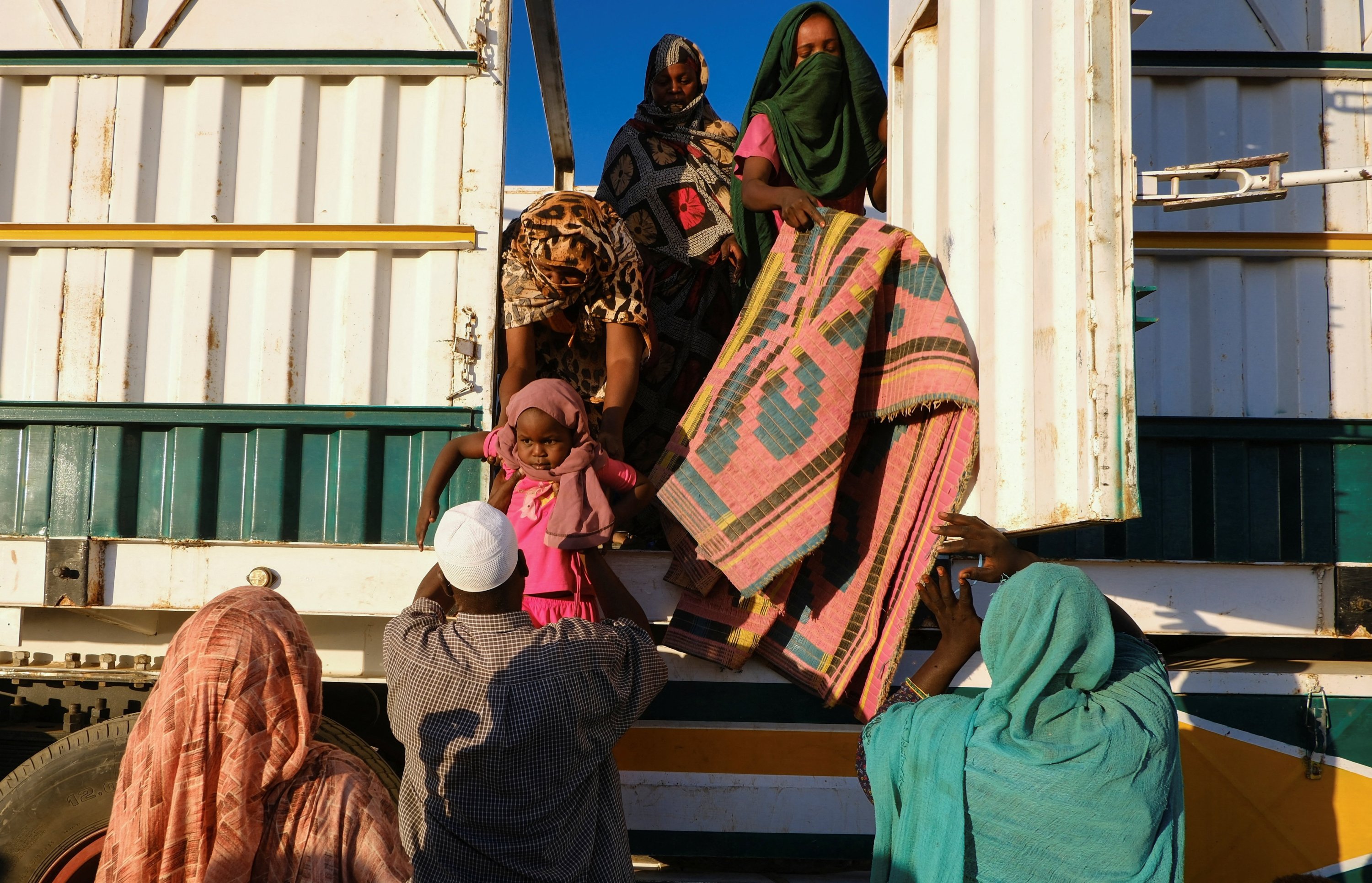
A displaced woman from el-Fasher hands a child to a volunteer to help them get down from a truck, at a displacement camp in Al-Dabba, Sudan, Nov. 19, 2025. (Reuters Photo)
by Agence France-Presse - AFP Nov 21, 2025 11:47 am
Edited By Mindy Ann Yartaşı

Sudan’s civil war, grinding into its third year and scarring a nation already stretched thin, is increasingly defined not only by its battlefield losses but by the global contest for the country’s gold, farmland and strategic coastline – resources that have turned the conflict into one of the world’s most deeply entangled proxy wars.

Since April 2023, Sudan’s regular army and the paramilitary Rapid Support Forces (RSF) have fought for control of a country fractured by decades of unrest.

The RSF’s October seizure of el-Fasher – the last major city in Darfur under army control – marked a turning point in a war that has killed tens of thousands, uprooted nearly 12 million people and unleashed a humanitarian crisis the U.N. warns is nearing famine levels.

Despite public denials, both sides have powerful patrons. Analysts say Egypt, Saudi Arabia, Iran and Türkiye have lined up behind the army, while the RSF has been kept afloat by funds, weapons and logistics traced back to the United Arab Emirates (UAE).

Land, ports and the Red Sea stakes

Sudan’s vast, fertile farmlands – long coveted by resource-seeking Gulf states – became central to the scramble for influence well before the war.

Emirati companies had secured control over tens of thousands of hectares and dominated a large share of Sudan’s agricultural exports.

Qatar and Saudi Arabia negotiated billion-dollar farming deals before the 2019 ouster of Omar al-Bashir.

But the fight for leverage extends beyond land. Sudan’s Red Sea coastline – a gateway connecting the Mediterranean to the Indian Ocean – has drawn interest from countries seeking port concessions, naval access and control over one of the world’s busiest maritime corridors, where up to 12% of global trade passes.

Russia and Türkiye have both negotiated for a foothold along the coast, though talks stalled as the war deepened.

UAE’s shadow war

Tensions between the army-led government and the UAE erupted soon after the fighting began, with Khartoum severing diplomatic ties and accusing Abu Dhabi of arming the RSF and funnelling foreign fighters through Chad, Libya, Kenya and Somalia – charges the UAE repeatedly denies.

Still, U.N. documents and satellite investigations point to a steady stream of Emirati cargo flights landing in Chad and, more recently, in eastern Libya.

Researchers say Libyan commander Khalifa Haftar – a longtime UAE ally – has become a key conduit for weapons and fuel destined for RSF forces across Darfur.

The Sentry, a U.S.-based watchdog, reported that Haftar’s loyalty to Abu Dhabi has made his territory a central lifeline for the RSF’s war machine.

Analysts say more than 200 cargo flights linked to the UAE have landed in Libyan airfields since June alone.

A war fueled by gold

After South Sudan’s 2011 independence stripped Khartoum of most of its oil reserves, gold became Sudan’s economic backbone.

Before the war, Sudan produced more than 80 tons annually and exported nearly $3 billion worth in 2021.

As the state collapsed, the trade slipped underground. Smuggling networks – some tied to the army, others to the RSF – now dominate the sector.

Much of the gold, whether mined in RSF-controlled Darfur or army-held territories, ultimately flows to Dubai, which Swiss watchdogs describe as a “hub for gold of dubious origin.”

A 2024 Swissaid report said UAE imports of Sudanese gold surged 70% during the war, enriching both warring factions and giving regional actors a direct financial interest in prolonging the conflict.

Drones, mercenaries and shifting lines

Iran and Türkiye have supplied the army with long-range drones, which helped government forces briefly retake areas of Khartoum earlier this year.

But the RSF has strengthened its air defenses, blunting the drones’ impact and clearing the way for its dramatic push into el-Fasher.

The army accuses the UAE of supplying RSF with Chinese-made drones – allegations Abu Dhabi denies.

Meanwhile, foreign fighters have streamed into Sudan.

According to researchers, RSF recruitment networks have drawn Russians, Syrians, Colombians and Sahelian mercenaries, further internationalizing the conflict.


  • shortlink copied
  • Last Update: Nov 21, 2025 3:44 pm
    KEYWORDS
    sudan civil war rapid support forces (rsf) el-fasher united nations
    The Daily Sabah Newsletter
    Keep up to date with what’s happening in Turkey, it’s region and the world.
    You can unsubscribe at any time. By signing up you are agreeing to our Terms of Use and Privacy Policy. This site is protected by reCAPTCHA and the Google Privacy Policy and Terms of Service apply.
    No Image
    Protests in Sri Lanka as economic crisis worsens
    PHOTOGALLERY
    • POLITICS
    • Diplomacy
    • Legislation
    • War On Terror
    • EU Affairs
    • News Analysis
    • TÜRKİYE
    • Istanbul
    • Education
    • Investigations
    • Minorities
    • Diaspora
    • World
    • Mid-East
    • Europe
    • Americas
    • Asia Pacific
    • Africa
    • Syrian Crisis
    • İslamophobia
    • Business
    • Automotive
    • Economy
    • Energy
    • Finance
    • Tourism
    • Tech
    • Defense
    • Transportation
    • News Analysis
    • Lifestyle
    • Health
    • Environment
    • Travel
    • Food
    • Fashion
    • Science
    • Religion
    • History
    • Feature
    • Expat Corner
    • Arts
    • Cinema
    • Music
    • Events
    • Portrait
    • Performing Arts
    • Reviews
    • Sports
    • Football
    • Basketball
    • Motorsports
    • Tennis
    • Opinion
    • Columns
    • Op-Ed
    • Reader's Corner
    • Editorial
    • Photo gallery
    • DS TV
    • Jobs
    • privacy
    • about us
    • contact us
    • RSS
    © Turkuvaz Haberleşme ve Yayıncılık 2021