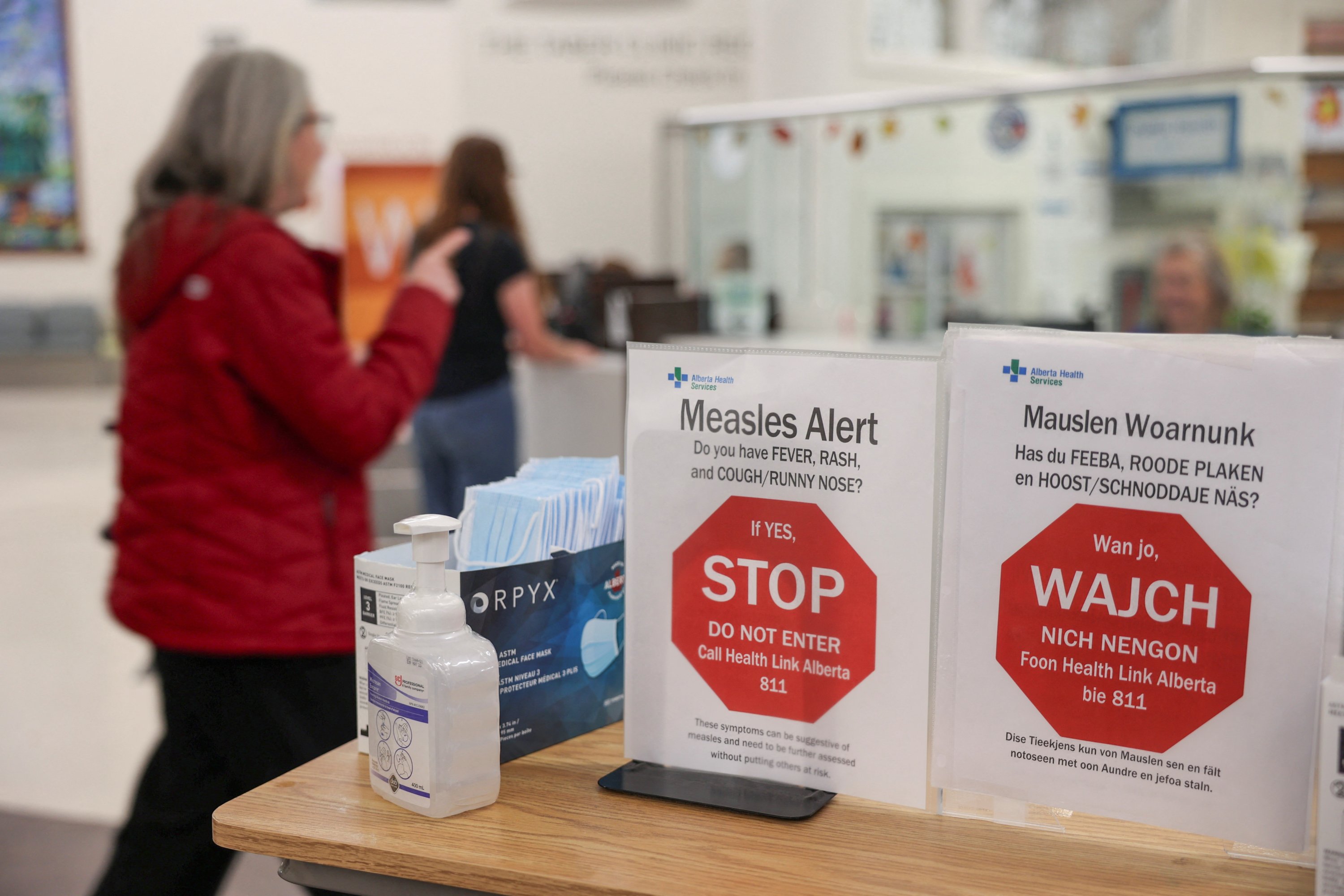
Canada has been stripped of its measles elimination status for the first time in nearly 30 years after failing to stop a yearlong outbreak that spread across nearly all provinces, the country’s public health agency said Monday – a loss that also revokes the Americas region’s measles-free standing.
Health experts last month predicted the Pan American Health Organization would strip Canada of its elimination status. The country has recorded more than 5,000 measles cases in nine of its 10 provinces and one northern territory.
The Pan American Health Organization has notified Canada that it no longer holds measles elimination status, the Public Health Agency of Canada said. The PAHO criteria indicate that the entire region will lose its elimination status.
"While transmission has slowed recently, the outbreak has persisted for over 12 months, primarily within under-vaccinated communities," the agency said in a statement.
Health experts have said the spread of the virus, enabled by slipping vaccination rates in parts of the country, is a harbinger of a resurgence of more vaccine-preventable illnesses in a population increasingly skeptical and mistrustful of vaccines since the COVID-19 pandemic.
To be considered measles-free, a country where an outbreak takes place must get back to zero cases within 12 months.
"Loss of elimination status is a step backward and a return to more primitive times, where voices from the Dark Ages continue to attempt pull us," said Amesh Adalja, senior scholar at the Johns Hopkins Center for Health Security.
The Public Health Agency of Canada said it would focus on improving vaccination coverage, strengthening data sharing, and enabling better overall surveillance efforts.
The United States and Mexico have also had significant measles outbreaks this year, with thousands of cases and a handful of deaths.
The Americas region only regained its measles-free status in 2024, after an outbreak in Brazil was stopped.
The office of the federal Health Minister Marjorie Michel declined to comment.
Offices of the health ministries and health ministers of Alberta, Manitoba and Ontario, three of the worst-affected Canadian provinces, did not immediately respond to requests for comments.