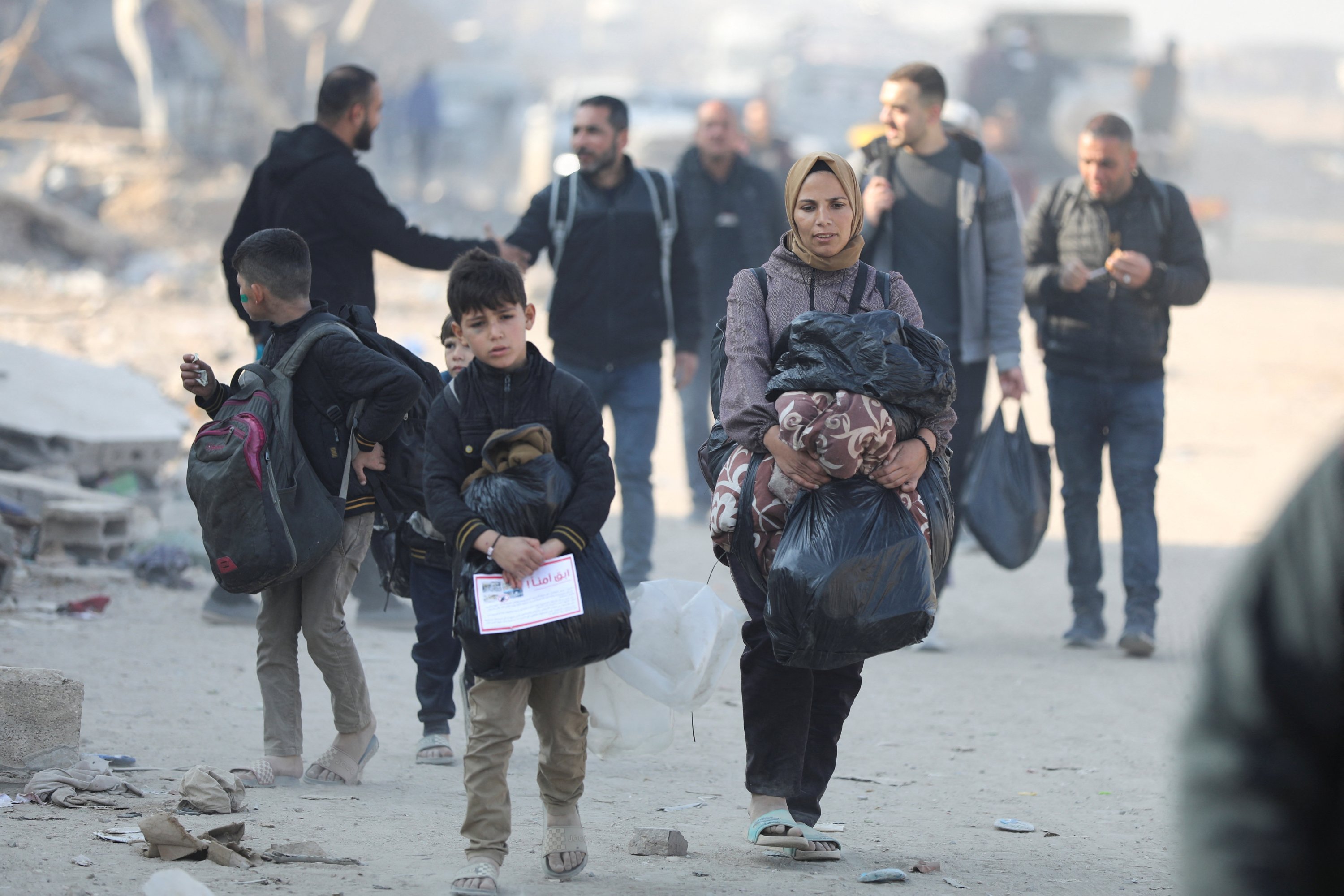
U.S. President Donald Trump claimed that Palestinians would willingly leave Gaza and relocate elsewhere if given the opportunity, despite the fact that they have stayed in their homeland and resisted Israel's genocidal attacks.
They would "love to leave Gaza," he told reporters at the White House. "I would think that they would be thrilled."
Trump also said he was planning to reinstate what he called the "maximum pressure" policy against Iran over allegations that the country is trying to develop nuclear weapons.
Trump made the comment as he signed a memorandum reimposing the tough policy of sanctions against Iran, similar to during his first term.
"It's very tough on Iran," Trump told reporters at the White House.
He said he is "torn" on signing the order but added, "Hopefully we are not going to have to use it very much."
The order directs the Treasury Department to impose "maximum economic pressure" on Iran through sanctions designed to cripple the country's oil exports.
The signing comes shortly before he meets with Israeli Prime Minister Benjamin Netanyahu.
Foreign ministers from six Arab nations met in Cairo on Saturday to oppose the displacement of Palestinians from Gaza and reaffirm their call for a two-state solution to the Israeli-Palestinian conflict.
The meeting, held at Egypt's invitation and attended by representatives from Saudi Arabia, the United Arab Emirates (UAE), Qatar, Jordan, Palestine and the Arab League, issued a statement stressing the importance of working toward a just and lasting peace in the Middle East.
The statement also expressed support for collaboration with the administration of U.S. President Donald Trump to achieve a comprehensive peace in the region, based on the two-state solution.
Türkiye and Egypt on Tuesday also opposed any efforts to displace or expel Palestinians from their homeland, calling on Israel to permit the U.N. agency for Palestinian refugees (UNRWA) to continue its humanitarian operations.
In an official statement issued following a meeting between Foreign Minister Hakan Fidan and his Egyptian counterpart Badr Abdelatty in Ankara, it emphasized the importance of preserving the UNRWA's role and called on Israel to reverse its decisions undermining the agency's work.
It highlighted UNRWA’s role in supporting Palestinian refugees in the occupied territories.
Both nations reiterated their strong support for the Palestinian people’s resilience, attachment to their land, and legitimate rights.
They condemned any actions aimed at displacing or relocating Palestinians, warning that such measures would threaten regional stability, risk escalating conflict, and undermine prospects for peace and cooperation.