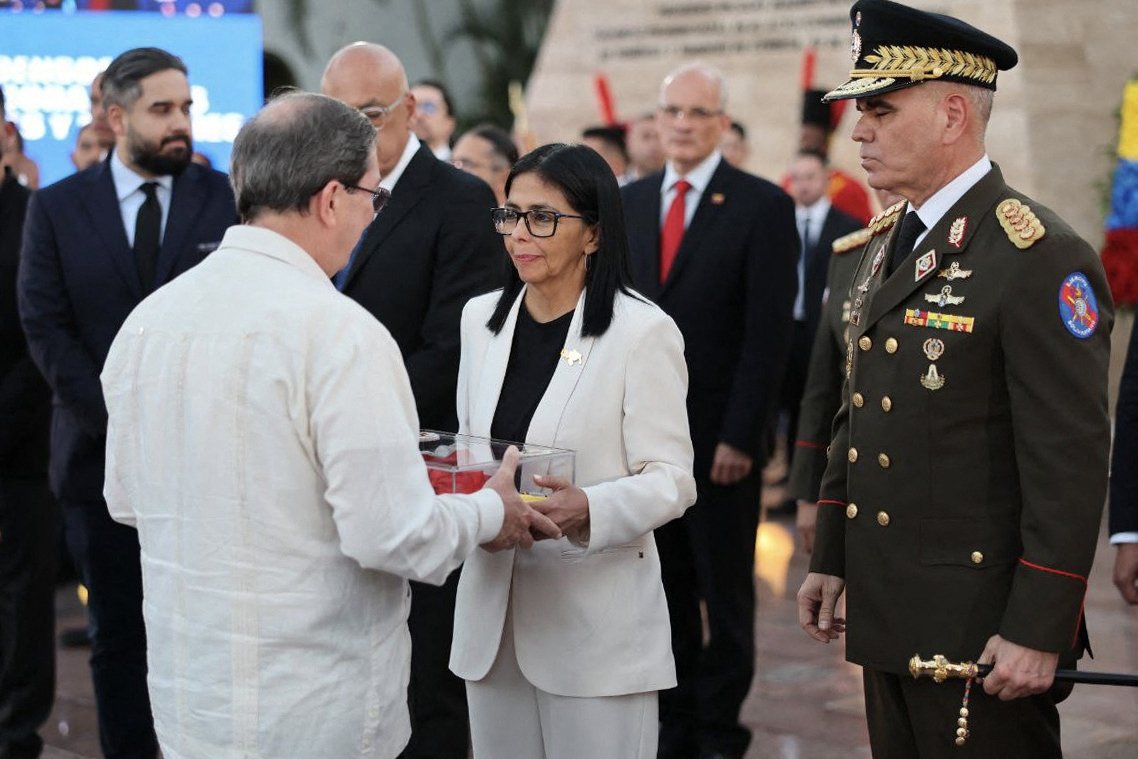
A United Nations (U.N.) human rights expert warned Thursday that Venezuela’s political transition must be rooted in international law and driven by Venezuelans themselves, as the country’s interim authorities released a wave of political prisoners days after U.S. forces captured President Nicolas Maduro in a dramatic military operation.
“Protecting rights, addressing past abuses and securing guarantees of nonrepetition is the only pathway to lasting peace and dignity,” said Bernard Duhaime, the U.N. special rapporteur on truth, justice and reparations, calling the moment one of “immense uncertainty” for the oil-rich nation.
Duhaime stressed that any transition must not be imposed from abroad, saying it must be “shaped and owned by the Venezuelan people themselves, free from external interference or pressure.”
He also expressed alarm at the U.S. military intervention that led to Maduro’s arrest, saying the operation “blatantly violates the U.N. Charter.”
U.S. forces launched airstrikes early Saturday on air defense systems and communications sites in northern Venezuela before special operations troops carried out a nighttime raid in Caracas, seizing Maduro and his wife, Cilia Flores.
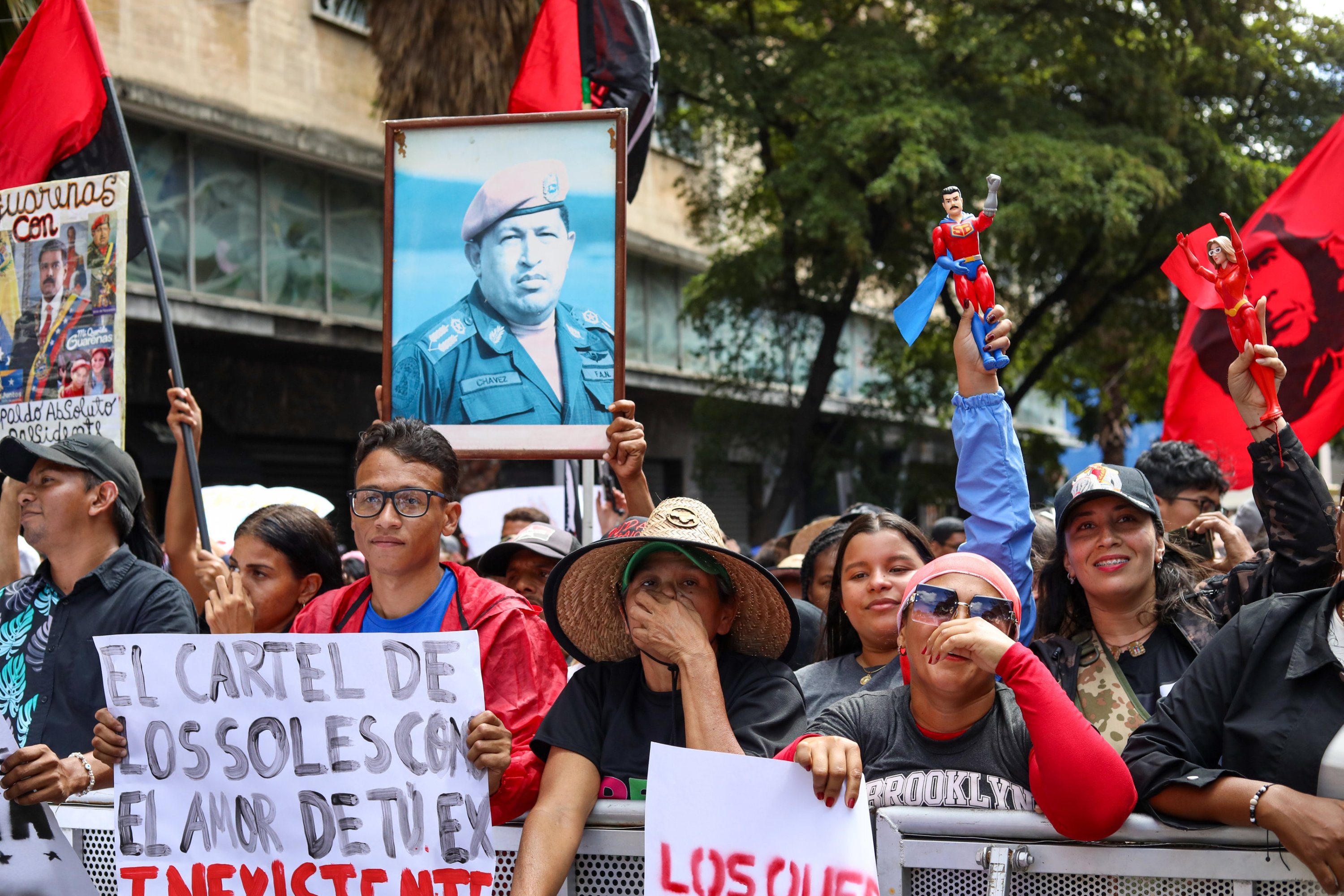
The couple later pleaded not guilty to drug- and weapons-related charges during their first court appearance in New York.
The Trump administration framed the operation as part of a revived Monroe Doctrine strategy, portraying it as a crackdown on narco-trafficking and corruption while openly linking U.S. involvement to securing access to Venezuela’s vast oil reserves.
Trump later said the United States would “run” Venezuela for an extended period.
Less than a week after Maduro’s capture, Venezuela’s interim government announced the release of a “significant number” of imprisoned opposition figures, activists and journalists, both Venezuelan and foreign nationals, in what officials described as a unilateral gesture to “seek peace.”
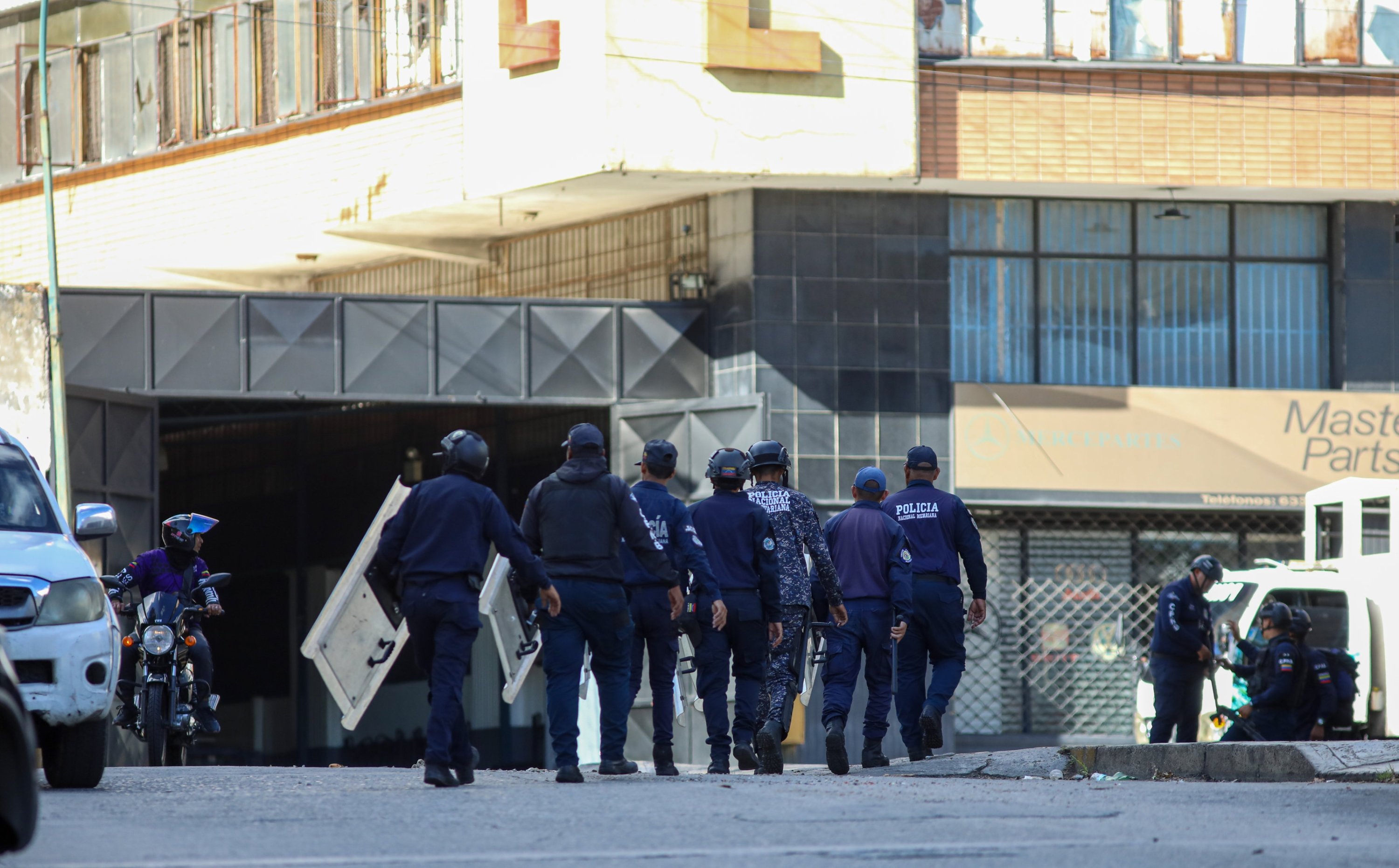
U.S. President Donald Trump said the releases came at Washington’s request, praising the interim government led by President Delcy Rodriguez. “They’ve been great,” Trump said in a Fox News interview. “Everything we’ve wanted, they’ve given us.”
National Assembly Speaker Jorge Rodriguez, the acting president’s brother, said the releases were not negotiated with any other party. While authorities did not immediately publish a full list, human rights groups confirmed that several high-profile detainees were freed.
Among them were Biagio Pilieri, a key opposition figure who worked on Maria Corina Machado’s 2024 presidential campaign, and Enrique Marquez, a former electoral authority and presidential candidate, according to Foro Penal, a Caracas-based prisoners’ rights group.
Videos circulated online showed Marquez and Pilieri embracing relatives outside prison gates. In one clip, Marquez smiles into a phone camera, telling family members: “Soon I will be with you all.”
Five Spanish citizens were also released, including prominent human rights lawyer Rocio San Miguel. Spain’s foreign minister, José Manuel Albares, confirmed that those freed included Andrés Martinez, José Maria Basoa, Ernesto Gorbe and Miguel Moreno. Two of them had been accused of espionage, claims Spain has strongly denied.
Outside prisons in Guatire and elsewhere, families waited for hours, chanting “¡Libertad! ¡Libertad!” as word spread that more detainees could be released.
Venezuela has a long history of freeing political prisoners during moments of heightened pressure, often to signal openness to dialogue or extract concessions.
Analysts say the timing of Thursday’s releases, coming after Maduro’s removal but amid U.S. sanctions and oil negotiations, fits that pattern.
“The regime uses prisoners like bargaining chips,” said Ronal Rodriguez, a researcher at the Venezuelan Observatory at the University of Rosario in Colombia. “What matters now is how many are freed, under what conditions, and whether this includes senior political figures.”
Foro Penal estimates that 863 people remained imprisoned for political reasons as of late December 2025, despite government claims that no one is detained for their beliefs.
Opposition leader Maria Corina Machado, speaking from exile, called the releases “an act of moral restitution,” though she cautioned that freedom does not erase years lost behind bars.
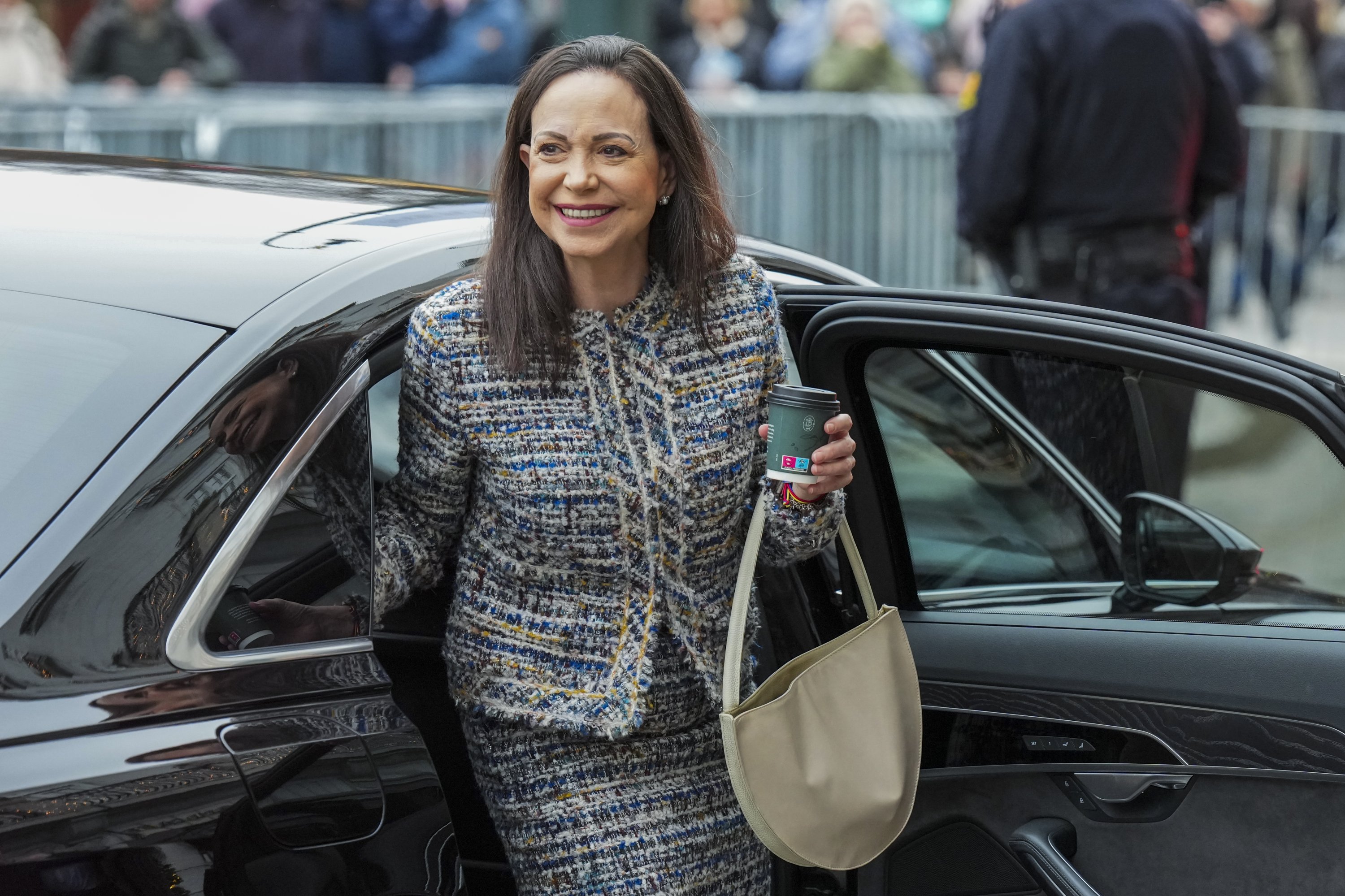
“Nothing brings back the stolen years,” she said in an audio message addressed to families. “But injustice is not eternal, and truth, though wounded, eventually prevails.”
Foro Penal president Alfredo Romero welcomed the move but warned against reading too much into it. “We hope this is the beginning of dismantling a repressive system,” he said, “and not a charade of releasing some while jailing others.”
As detainees walked free, Washington deepened its involvement in Venezuela’s future.
The Trump administration seized two sanctioned oil tankers, announced plans to oversee global sales of Venezuelan crude and said U.S. companies would invest at least $100 billion in rebuilding the country’s energy sector.
Trump said the U.S. could control Venezuela’s oil revenues for years, arguing the country was not capable of holding elections anytime soon. “We have to rebuild the country,” he said. “They wouldn’t even know how to have an election right now.”
Trump also said Machado would visit Washington next week and suggested she might meet with him, potentially their first encounter, despite his earlier remarks questioning her domestic support.
Machado has previously offered to share her Nobel Peace Prize with Trump, who again complained Thursday that Norway had embarrassed itself by not awarding him the honor.
Meanwhile, the U.S. Senate voted 52-47 to advance a resolution that would restrict Trump from taking further military action against Venezuela without congressional approval.
Though unlikely to survive a presidential veto, the vote marked a rare bipartisan rebuke of the White House’s approach.
Trump dismissed the measure as an attempt to weaken U.S. power, while also signaling a softer tone toward Colombia after a cordial call with President Gustavo Petro, easing fears of a regional escalation.
For families reunited after years of separation, the moment was emotional but uncertain.
“I don’t have words,” said Pedro Duran, who flew from Spain after hearing rumors his brother, detained since 2021, might be released. “We feel hope. But we’re still waiting.”
As Venezuela enters an uncharted phase marked by foreign intervention, prisoner releases and fierce geopolitical stakes, Duhaime said the path forward remains clear, and narrow.
“Only a transition grounded in human rights,” he said, “can deliver justice, dignity and lasting peace for Venezuela.”