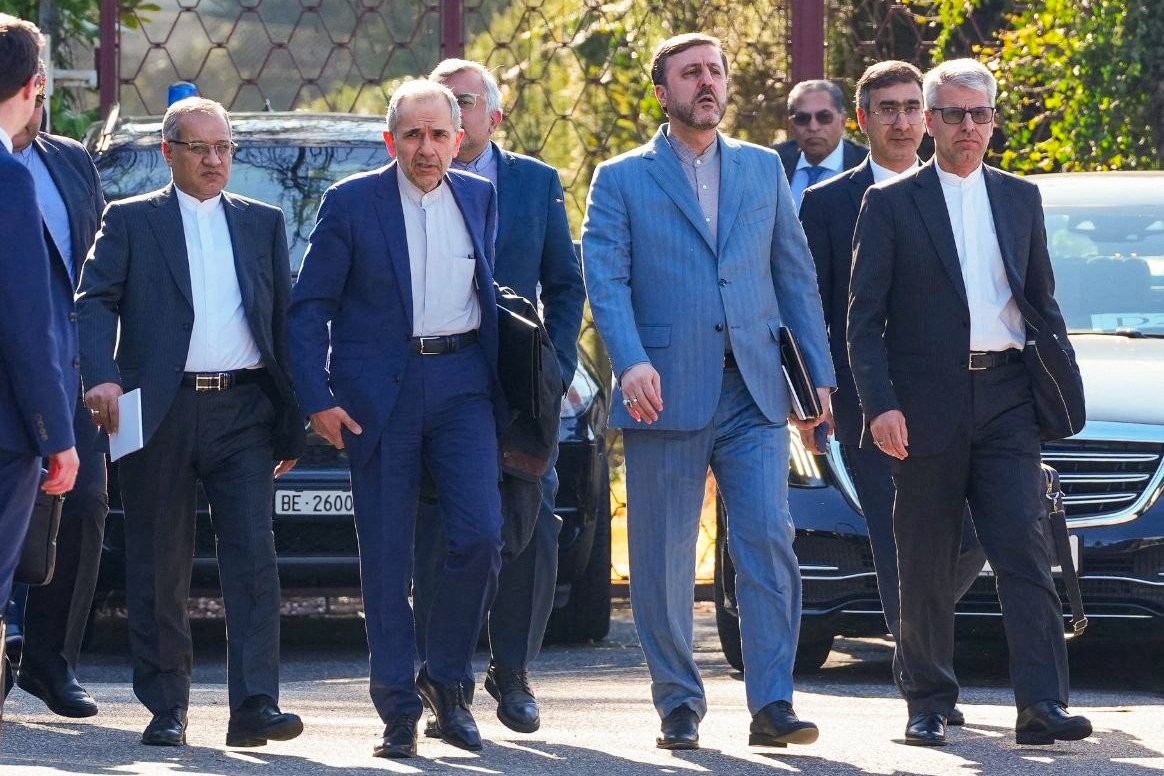
Indirect negotiations between the United States and Iran wrapped up in Geneva on Thursday, with Oman announcing that talks had made “significant progress” and would resume soon despite lingering gaps between the two sides.
Omani Foreign Minister Badr al‑Busaidi said on X that the delegations had concluded the latest round but would continue technical-level discussions next week in Vienna, home to the International Atomic Energy Agency (IAEA). He added that both sides had exchanged “creative and positive ideas.”
U.S. envoys Jared Kushner and Steve Witkoff had been dispatched by President Donald Trump to push for a deal limiting Iran’s nuclear activities. Axios reported that both expressed disappointment with Iran’s opening position during Thursday morning’s session, though analysts noted that the U.S. side’s decision to continue talks showed room for compromise.
Iranian Foreign Ministry spokesperson Esmail Baghaei said Tehran presented “constructive proposals” on nuclear issues and sanctions relief during “very intensive” meetings mediated by Oman, which has long served as a key channel between Tehran and Washington.
The talks come at a moment of heightened tension in the Middle East, with the United States deploying a large fleet of aircraft and warships to the region. Analysts warn that failure to reach an agreement could increase the risk of U.S. military action.
Iranian Foreign Minister Abbas Araghchi, who is leading Iran’s delegation, said that any war would be “devastating for everyone,” warning that U.S. bases across the region and Israel would become legitimate targets if conflict erupts. “The whole region would be engaged,” he said.
Washington is pressing Iran to halt all uranium enrichment and roll back its missile program and support for regional groups. Iran insists its nuclear program is peaceful and says it will negotiate only on nuclear matters.
Satellite imagery reviewed by the Associated Press has shown activity at two Iranian nuclear sites struck during last year’s U.S. attacks, suggesting Iran is assessing damage and attempting to recover materials, though IAEA inspectors have been blocked from accessing the facilities.
U.S. intelligence agencies maintain that Iran has not restarted an active weapons program, though it has advanced activities that could shorten the time required to produce a nuclear device if it chooses. Iran denies seeking a bomb but has hinted it could change its stance if pressured militarily.
The previous round of U.S.-Iran talks collapsed last year after a 12-day war erupted between Israel and Iran, followed by U.S. strikes that heavily damaged Iran’s nuclear infrastructure.
Thursday’s discussions lasted around three hours before diplomats from both sides were seen returning to the Omani diplomatic residence later in the day, signaling continuing engagement.
Oman’s foreign minister said both delegations aim to build on the day’s momentum. “We hope to make more progress,” he said.