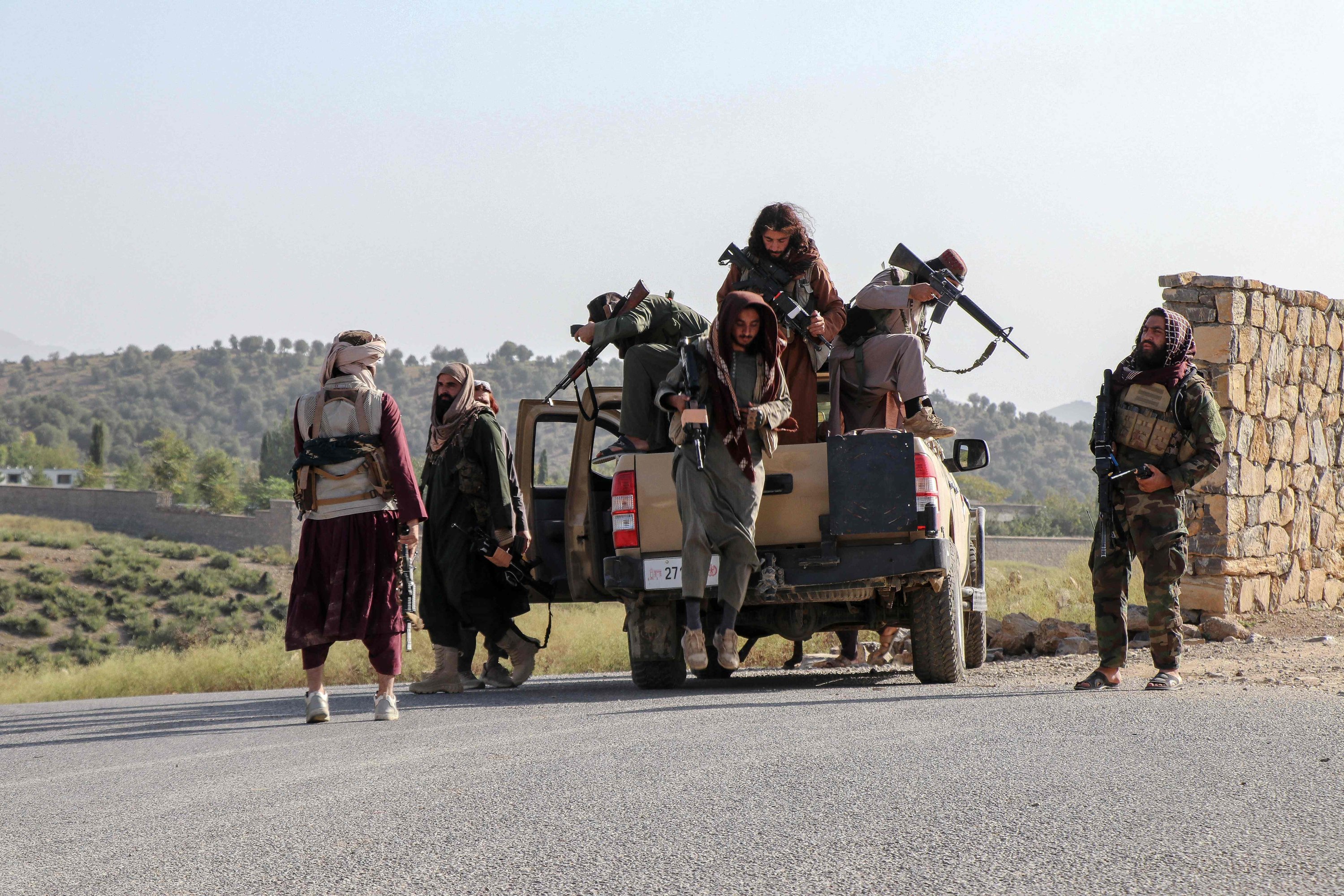
Dozens of fighters and troops were reported killed Sunday after Pakistan and Afghanistan engaged in deadly cross-border clashes overnight.
The clashes were the most serious fighting between the South Asian neighbors since the Taliban came to power in Kabul.
The Pakistan military said that 23 of its soldiers were killed in the clashes. The Taliban said nine on its side were killed.
Tensions have risen after Islamabad demanded the Taliban take action against terrorists who have stepped up attacks in Pakistan, saying they operate from havens in Afghanistan. The Taliban, which came to power in 2021, denies that Pakistani terrorists are present on its soil.
Each side said it inflicted far higher casualties on the other side, without providing evidence. Pakistan said it had killed more than 200 Afghan Taliban and allied fighters, while Afghanistan said that it had killed 58 Pakistani soldiers.
Reuters was not able to independently verify the figures.
On Thursday, Pakistan carried out airstrikes in Kabul and on a marketplace in eastern Afghanistan, according to Pakistani security officials and the Taliban, setting off retaliatory attacks by the Taliban. Pakistan has not officially acknowledged the airstrikes.
Afghan troops opened fire on Pakistani border posts late Saturday. Pakistan said that it had responded with gun and artillery fire.
Both nations claimed to have destroyed the border posts of the other side. Pakistani security officials shared video footage, which they said showed Afghan posts being hit.
The exchanges were mostly over by Sunday morning, Pakistani security officials said. But in Pakistan's Kurram area, intermittent gunfire continued, according to local officials and residents.
Afghanistan's Defense Ministry had previously said that its operation had finished at midnight local time.
Kabul said Sunday that it had halted attacks at the request of Qatar and Saudi Arabia. The two Arab Gulf nations had released statements of concern about the clashes.
"There is no kind of threat in any part of Afghanistan's territory," the Taliban administration's spokesman, Zabihullah Mujahid, said Sunday. "The Islamic Emirate and the people of Afghanistan will defend their land and remain resolute and committed in this defense."
Mujahid said that fighting was ongoing in some areas.
Pakistani officials said Sunday Pakistan had closed crossings along the 2,600-kilometer (1,600-mile) border with Afghanistan, a disputed colonial-era frontier known as the Durand line drawn up by the British in 1893.
The two main border crossings with Afghanistan, at Torkham and Chaman, and at least three minor crossings, at Kharlachi, Angoor Adda and Ghulam Khan, were closed Sunday, local officials said.
The Pakistani airstrikes coincided with a rare visit to India by a Taliban leader, Foreign Minister Amir Khan Muttaqi, which resulted in an announcement by India on Friday to upgrade relations. India is Pakistan's longstanding adversary, with the trip causing concern in Islamabad.
Militancy increased in northwestern Khyber Pakhtunkhwa since the withdrawal of U.S.-led troops from neighboring Afghanistan in 2021 and the return of the Taliban government.
The vast majority of attacks are claimed by the Pakistani Taliban (TTP), whose campaign against Pakistan security forces has intensified this year – set to be the deadliest in more than a decade.
The TTP is a separate but closely linked group to the Afghan Taliban, which Islamabad says operates from Afghan soil with impunity.
A U.N. report this year said the TTP "receive substantial logistical and operational support from the de facto authorities," referring to the Taliban government in Kabul.
More than 500 people, including 311 troops and 73 policemen, have been killed in attacks between January and Sept. 15, a Pakistan military spokesman said Friday.
Pakistani Defense Minister Khawaja Muhammad Asif told Parliament Thursday that several efforts to convince the Afghan Taliban to stop backing the TTP had failed.
"Enough is enough," he said. "The Pakistani government and army's patience has run out."