Muneer Elbaz still remembers walking hand in hand with his family through Gaza’s old markets, the call to prayer rising from the Great Omari Mosque as it has for centuries.
“These were the best days,” he said, recalling evenings when the mosque’s courtyard filled with worshippers and the surrounding alleys buzzed with traders. “This place transports us from one era to another.”
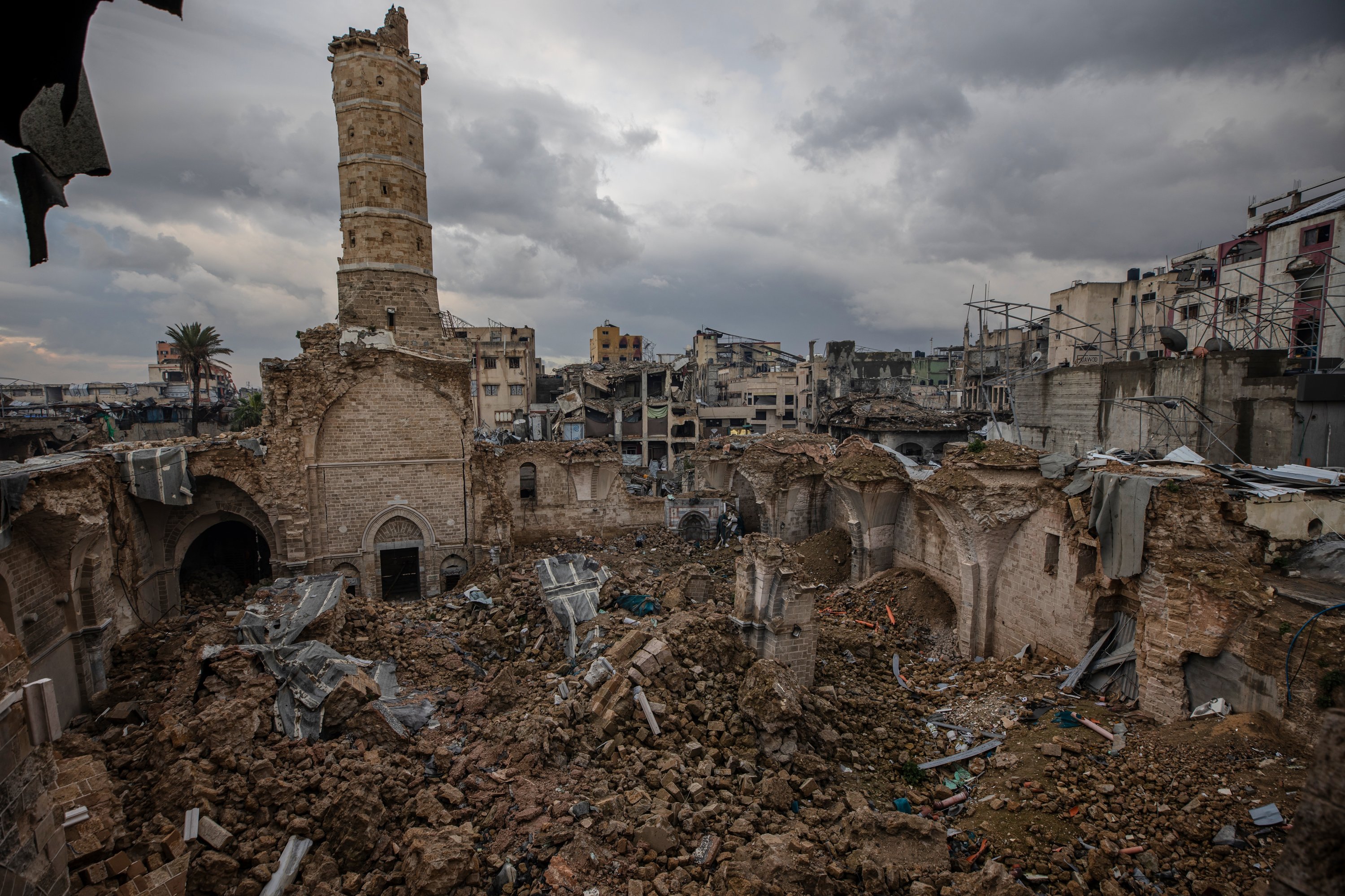
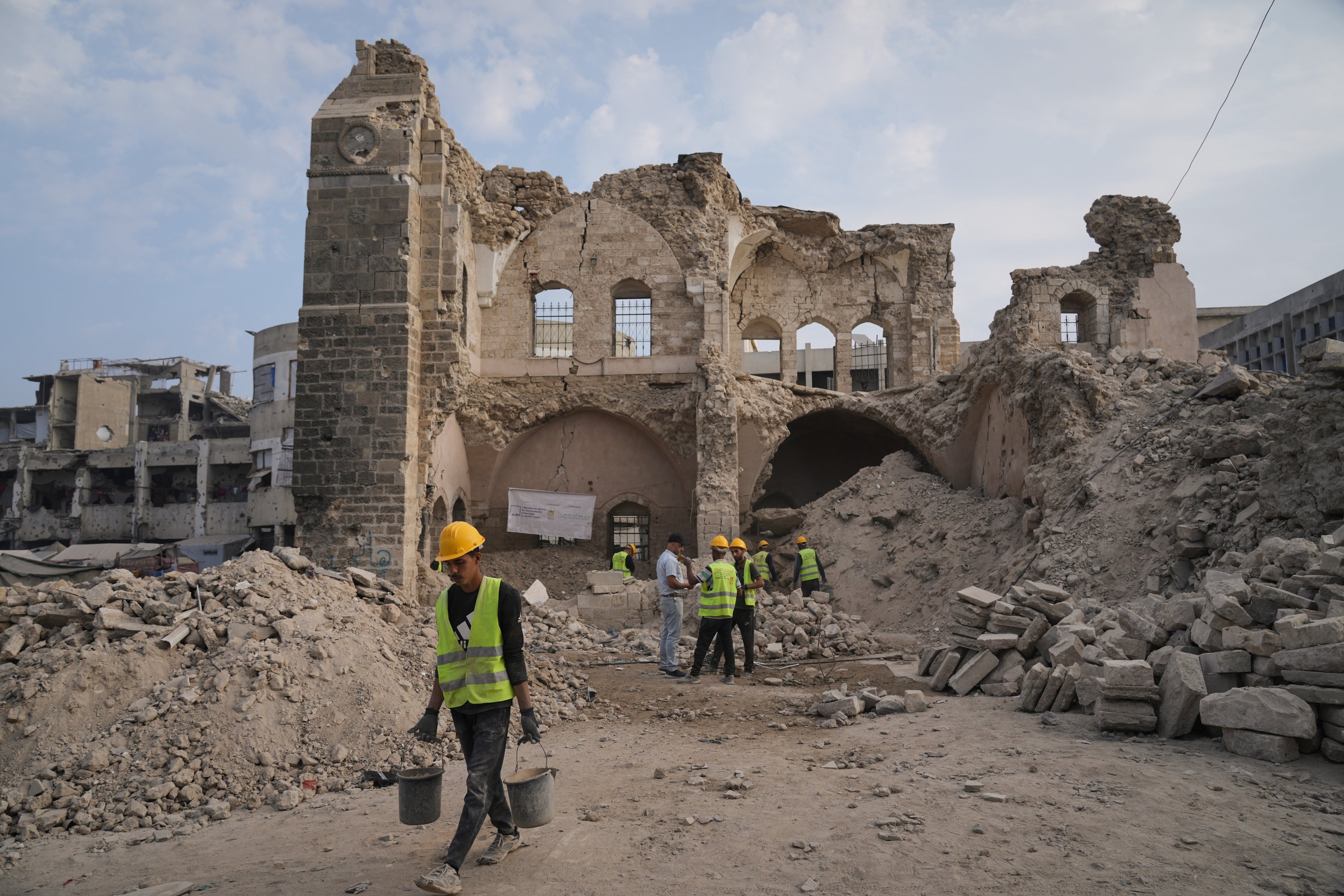
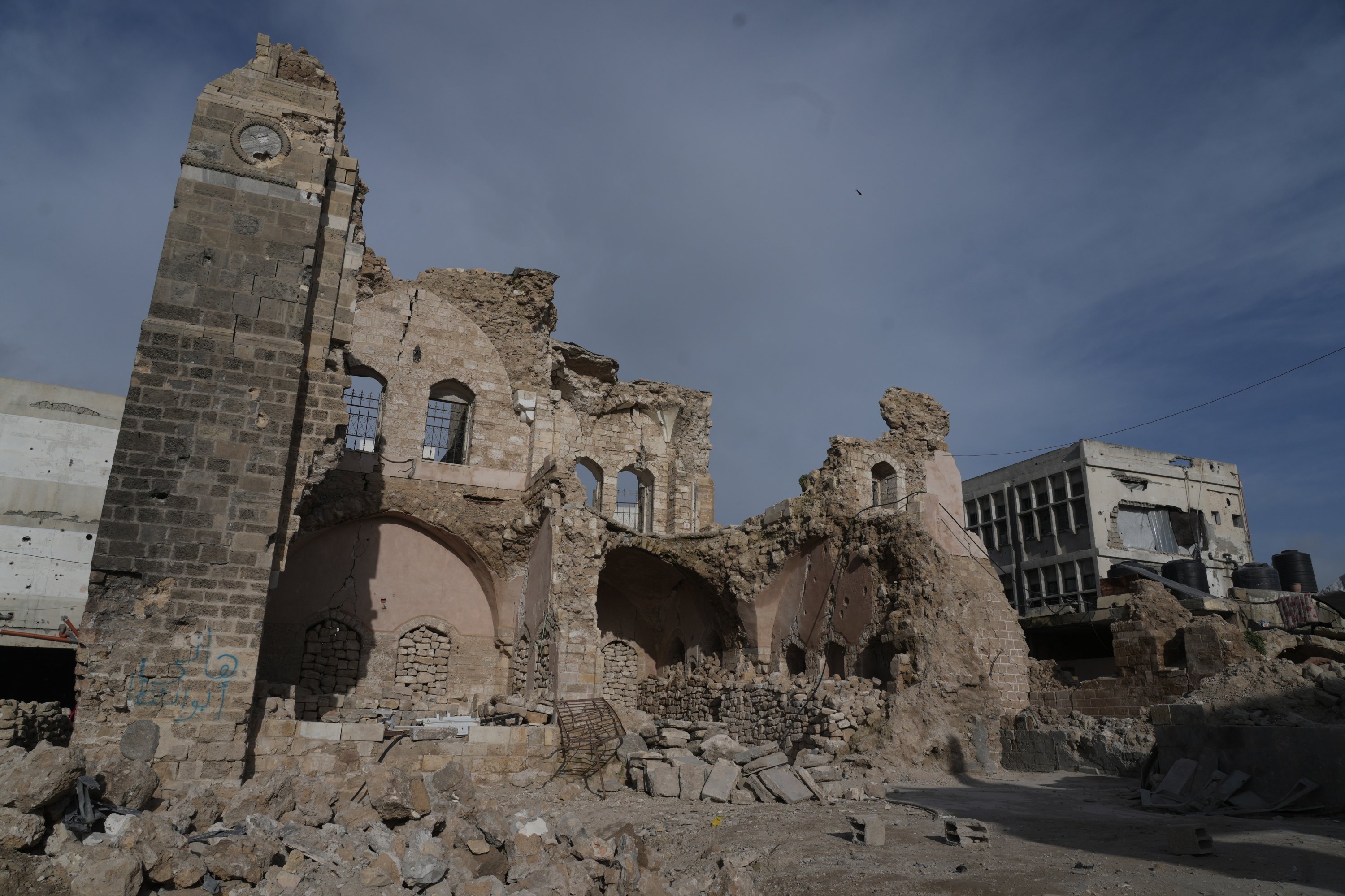
Today, the mosque lies scarred and partially collapsed, its prayer hall roof caved in, its minaret damaged, its stones scattered. For Elbaz, a Palestinian heritage consultant now involved in recovery efforts, the destruction feels like “a tree uprooted from the land.”
The devastation is part of a wider toll.
Israel’s military campaign in Gaza, launched following Hamas' Oct. 7 incursion into southern Israel that killed about 1,200 people and took 251 hostages, has killed more than 72,000 Palestinians, according to Gaza’s Health Ministry.
Entire families have been wiped out. Neighborhoods flattened.
Along with lives and homes, pieces of Gaza’s long and layered history have been shattered.
The Omari Mosque stands on ground that mirrors Gaza’s past. A Byzantine church once occupied the site. In the seventh century, a mosque was built there and named for Islam’s second caliph.
During the Crusades, it was converted into a cathedral, then restored as a mosque after the Crusaders were expelled. It was shelled by British forces during World War I and rebuilt again.
Stephennie Mulder, an associate professor of Islamic art at the University of Texas at Austin, said the building embodied Gaza’s role as a crossroads of trade routes, armies and religions.
“For many Gazans, the Omari mosque stood as a beloved symbol of multiplicity, resilience and persistence,” she said.
That symbolism has taken a direct hit.
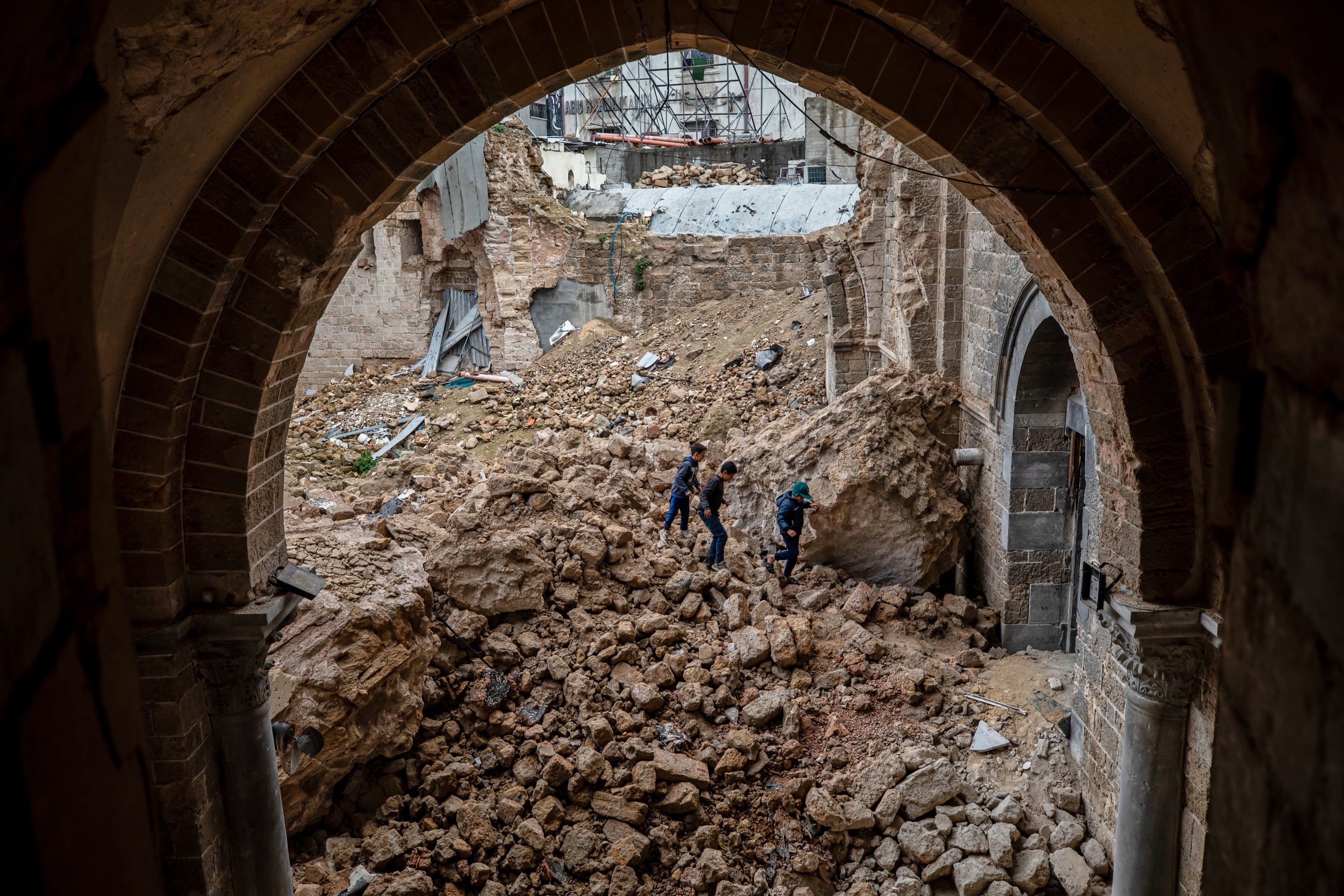
The Israeli military said it struck a Hamas “terror tunnel” at the mosque. It provided no public evidence.
An independent commission established by the U.N. Human Rights Council said it was not aware of evidence of a tunnel shaft there and added that even the presence of a legitimate military target would not have justified the scale of the resulting damage.
Gaza’s endowments ministry denied the allegation.
Under international law, cultural property should not be targeted or used for military purposes. Israel says it takes the sensitivity of such sites into account and adheres to international law.
The Omari Mosque is not alone.
UNESCO, using satellite imagery, has verified damage to at least 150 heritage sites since the war began. They include religious buildings, historic houses, monuments and archaeological locations.
Among the hardest hit is the Pasha Palace, where urgent rescue work is underway. The palace once housed centuries-old artifacts. According to heritage officials, items now missing include an Ottoman-era Quranic manuscript, medieval Mamluk jewelry and fragments of a Roman sarcophagus.
The Israeli military said it struck a Hamas compound and an anti-tank missile array at the site. It did not release evidence.
The centuries-old Saint Porphyrius Church complex, which had been sheltering displaced families, was also hit early in the war. The military said it targeted a nearby Hamas command center. UNESCO assessed the church as moderately damaged.
Some landmarks appear to have escaped major harm. UNESCO reported no evidence of damage at the Saint Hilarion Monastery, which dates to the fourth century.
Issam Juha, co-director of the Centre for Cultural Heritage Preservation in the West Bank, said the destruction strikes at more than stone and mortar.
“These sites solidify the presence of the Palestinian people on this land,” he said. “They represent the continuity of their cultural identity.”
A U.S.-brokered cease-fire in October halted most large-scale fighting. It set no timeline for reconstruction. Gaza’s broader recovery remains uncertain, especially if Israel maintains the blockade imposed after Hamas seized power in 2007.
At the Omari Mosque, workers now fill wheelbarrows with debris beneath the shadow of a fractured minaret. Engineers say the prayer hall can be rebuilt if construction materials are allowed in. For now, teams sift through rubble, cataloging and storing salvaged stones to prevent further loss.
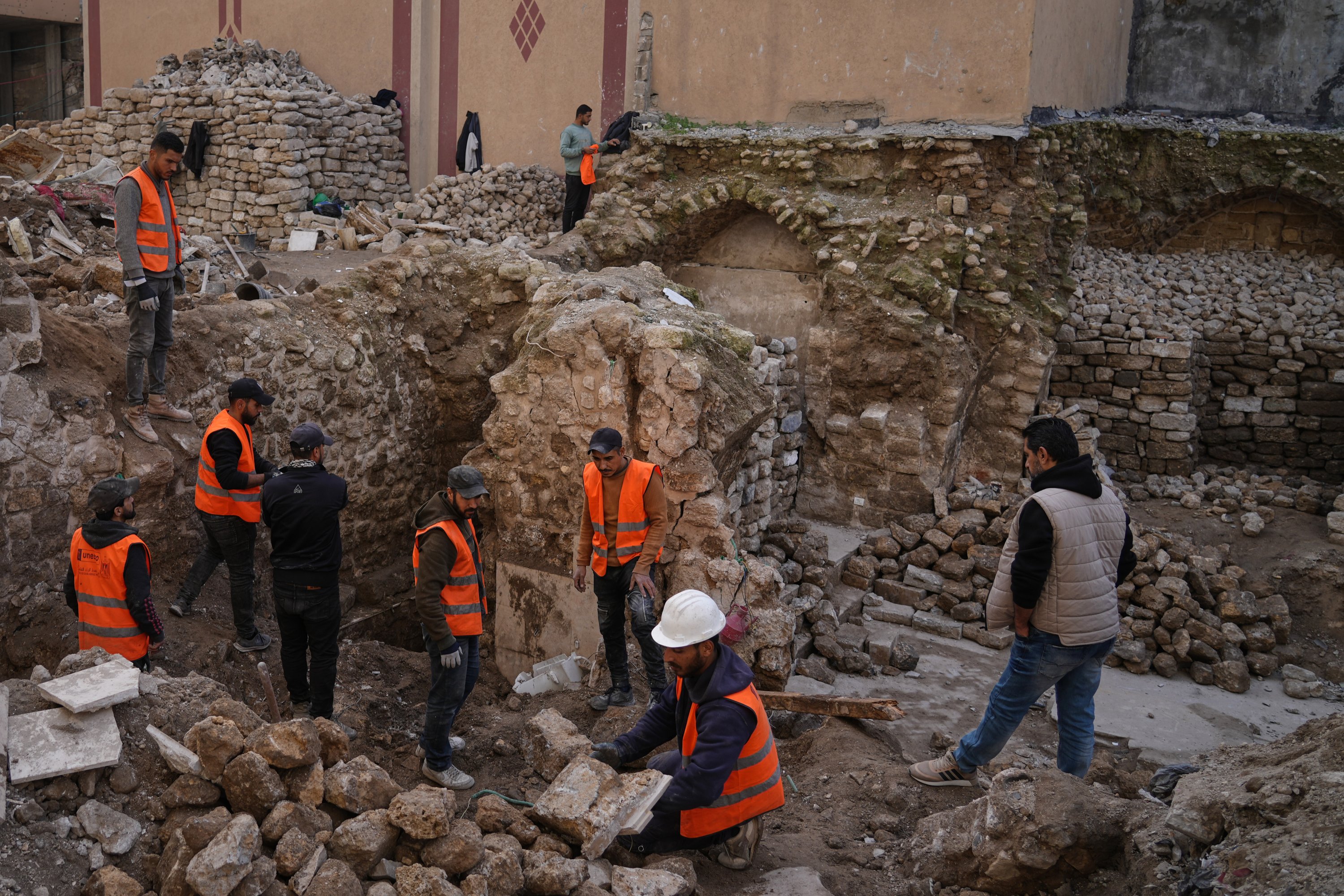
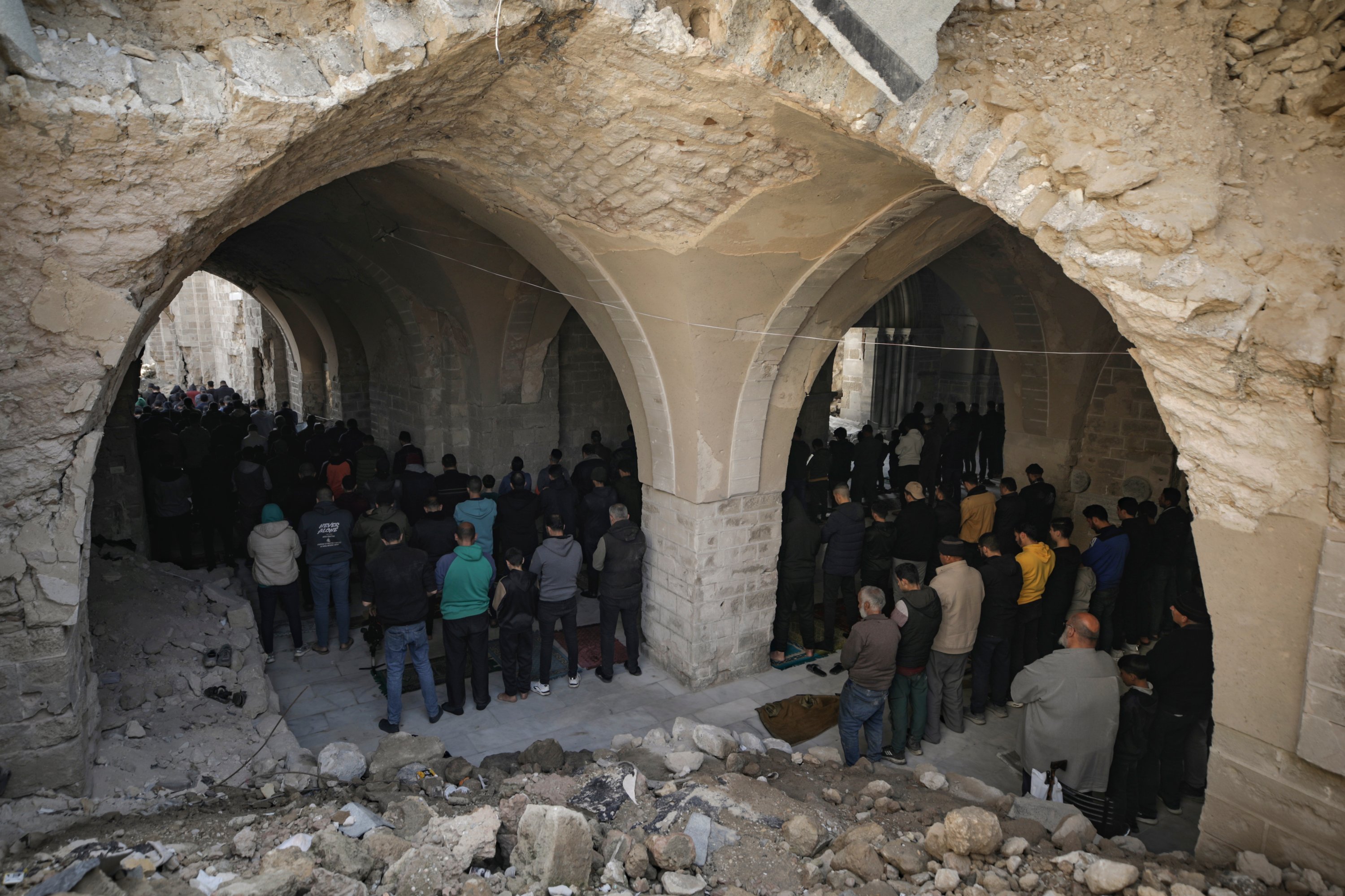
The coming Ramadan will underscore the absence. In previous years, thousands packed the mosque for evening prayers in a festive atmosphere. This year, a large tent has been erected nearby.
For 62-year-old Mohammad Shareef, the mosque was a second home. He studied for exams there as a boy, prayed beside his father and later brought his own children.
“We were raised in it and around it,” he said, his voice breaking. “For the people of Gaza, this is their history.”
Before the cease-fire, Elbaz said survival left little room for mourning.
“What would you begin to cry over?” he asked. “The mosques, your home, your children’s schools, the streets?”
Now, in quieter moments away from his children, he allows himself to grieve.
“Gaza is our mother,” he said. “We have memories everywhere. In this tree, this flower, this garden and this mosque. Yes, we cry over every part of Gaza.”