Daily Sabah logo

Politics
Diplomacy Legislation War On Terror EU Affairs Elections News Analysis
TÜRKİYE
Istanbul Education Investigations Minorities Expat Corner Diaspora
World
Mid-East Europe Americas Asia Pacific Africa Syrian Crisis Islamophobia
Business
Automotive Economy Energy Finance Tourism Tech Defense Transportation News Analysis
Lifestyle
Health Environment Travel Food Fashion Science Religion History Feature Expat Corner
Arts
Cinema Music Events Portrait Reviews Performing Arts
Sports
Football Basketball Motorsports Tennis
Opinion
Columns Op-Ed Reader's Corner Editorial
PHOTO GALLERY
JOBS ABOUT US RSS PRIVACY CONTACT US
© Turkuvaz Haberleşme ve Yayıncılık 2025

Daily Sabah - Latest & Breaking News from Turkey | Istanbul

  • Politics
    • Diplomacy
    • Legislation
    • War On Terror
    • EU Affairs
    • Elections
    • News Analysis
  • TÜRKİYE
    • Istanbul
    • Education
    • Investigations
    • Minorities
    • Expat Corner
    • Diaspora
  • World
    • Mid-East
    • Europe
    • Americas
    • Asia Pacific
    • Africa
    • Syrian Crisis
    • Islamophobia
  • Business
    • Automotive
    • Economy
    • Energy
    • Finance
    • Tourism
    • Tech
    • Defense
    • Transportation
    • News Analysis
  • Lifestyle
    • Health
    • Environment
    • Travel
    • Food
    • Fashion
    • Science
    • Religion
    • History
    • Feature
    • Expat Corner
  • Arts
    • Cinema
    • Music
    • Events
    • Portrait
    • Reviews
    • Performing Arts
  • Sports
    • Football
    • Basketball
    • Motorsports
    • Tennis
  • Gallery
  • Opinion
    • Columns
    • Op-Ed
    • Reader's Corner
    • Editorial
  • TV
  • World
  • Mid-East
  • Europe
  • Americas
  • Asia Pacific
  • Africa
  • Syrian Crisis
  • Islamophobia

Europe moves to reimpose UN sanctions on Iran amid nuclear tensions

by Daily Sabah with Agencies

ISTANBUL Aug 29, 2025 - 11:28 am GMT+3
Edited By Kelvin Ndunga
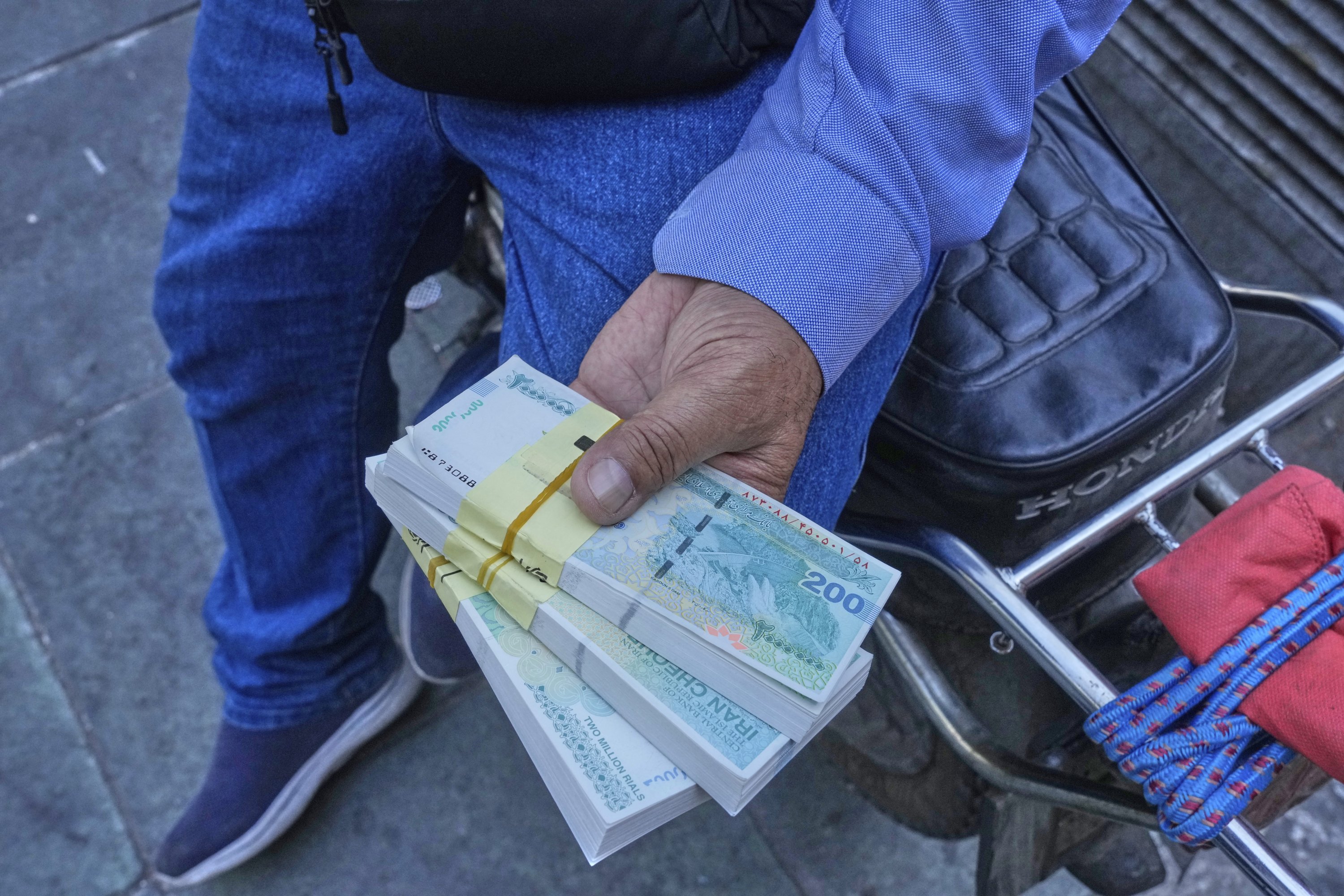
A street money exchanger holds Iranian banknotes at Ferdowsi square, Tehran's go-to venue for foreign currency exchange, in downtown Tehran, Iran, Aug. 28, 2025. (AP Photo)
by Daily Sabah with Agencies Aug 29, 2025 11:28 am
Edited By Kelvin Ndunga

France, Germany, and the United Kingdom on Thursday triggered a mechanism to reimpose United Nations sanctions on Iran over its nuclear program, deepening Tehran’s isolation after repeated Israeli strikes on its atomic sites during a 12-day war.

The “snapback” process, built into the 2015 nuclear deal with world powers, is designed to bypass vetoes at the U.N. and could take effect within a month.

If implemented, it would freeze Iranian assets abroad, halt arms deals, and penalize ballistic missile development – further straining a struggling economy already battered by sanctions and inflation.

The move initiates a 30-day window for negotiations. European diplomats framed the measure as a diplomatic lever rather than a punitive action.

“This measure does not signal the end of diplomacy: we are determined to make the most of the 30-day period that is now opening to engage in dialogue with Iran,” French Foreign Minister Jean-Noel Barrot wrote on X.

Iran reacted angrily. Foreign Minister Abbas Araghchi labeled the move “unjustified” and “lacking any legal basis,” warning that Tehran would respond appropriately.

Hours later, the Iranian Foreign Ministry said the action would “gravely undermine” its cooperation with the U.N. nuclear watchdog, the International Atomic Energy Agency (IAEA).

Past threats from Iran have included withdrawing from the Nuclear Nonproliferation Treaty, echoing North Korea’s 2003 exit and subsequent nuclear development.

European officials had warned in August that Tehran could trigger the snapback after halting IAEA inspections following Israeli strikes that targeted top Iranian military leaders and forced Supreme Leader Ayatollah Ali Khamenei into hiding.

The European nations formally initiated the sanctions process through a letter to the U.N. Security Council, requesting closed consultations Friday to discuss Iran’s noncompliance. U.S. Secretary of State Marco Rubio praised the move, emphasizing that snapback “does not contradict our earnest readiness for diplomacy; it only enhances it.”

The decision is likely to intensify tensions between Iran and the West amid ongoing conflicts in the region, including Israeli strikes targeting Yemen’s Iran-backed Houthi rebels. The New York-based Soufan Center noted that Iranian leaders view sanctions as an attempt to weaken the economy and provoke unrest against the regime.

Economic distress in Iran is stark. On Thursday, the rial traded at over 1 million to $1, compared with 32,000 to $1 in 2015. Locals expressed fear and uncertainty over the collapsing currency and the country’s broader nuclear and economic troubles.

Iran continues to enrich uranium at high levels, close to weapons-grade purity, and stockpiles enough material for multiple bombs if it chooses. While Tehran maintains its program is peaceful, Western nations and the IAEA have long suspected an active weapons program, and the recent Israeli and U.S. strikes have left its current nuclear status uncertain.

IAEA inspectors have limited access despite the 2015 accord, which required permanent monitoring at nuclear sites. A fuel replacement at Iran’s Bushehr reactor this week demonstrated partial compliance, though IAEA Director Rafael Grossi called full access “a work in progress.”

The snapback window expires Oct. 18, after which any sanctions move could be blocked by Russia or China, both past supporters of Tehran.

Moscow and Beijing have proposed a six-month extension of U.N. sanctions relief. Russia criticized Europe’s move as an “impudent attempt” to manipulate the U.N., arguing that Western nations violated the 2015 deal by imposing unilateral sanctions and claiming European action lacked legal authority.

Russia urged diplomacy over confrontation, warning that the European approach “holds no future prospects” and could trigger “irreversible consequences.”


  • shortlink copied
  • Last Update: Aug 29, 2025 2:28 pm
    KEYWORDS
    nuclear weapons united nations jean-noel barrot iran sanctions
    The Daily Sabah Newsletter
    Keep up to date with what’s happening in Turkey, it’s region and the world.
    You can unsubscribe at any time. By signing up you are agreeing to our Terms of Use and Privacy Policy. This site is protected by reCAPTCHA and the Google Privacy Policy and Terms of Service apply.
    No Image
    A look into 'You and Robots - What is it to be Human?' exhibition
    PHOTOGALLERY
    • POLITICS
    • Diplomacy
    • Legislation
    • War On Terror
    • EU Affairs
    • News Analysis
    • TÜRKİYE
    • Istanbul
    • Education
    • Investigations
    • Minorities
    • Diaspora
    • World
    • Mid-East
    • Europe
    • Americas
    • Asia Pacific
    • Africa
    • Syrian Crisis
    • İslamophobia
    • Business
    • Automotive
    • Economy
    • Energy
    • Finance
    • Tourism
    • Tech
    • Defense
    • Transportation
    • News Analysis
    • Lifestyle
    • Health
    • Environment
    • Travel
    • Food
    • Fashion
    • Science
    • Religion
    • History
    • Feature
    • Expat Corner
    • Arts
    • Cinema
    • Music
    • Events
    • Portrait
    • Performing Arts
    • Reviews
    • Sports
    • Football
    • Basketball
    • Motorsports
    • Tennis
    • Opinion
    • Columns
    • Op-Ed
    • Reader's Corner
    • Editorial
    • Photo gallery
    • DS TV
    • Jobs
    • privacy
    • about us
    • contact us
    • RSS
    © Turkuvaz Haberleşme ve Yayıncılık 2021