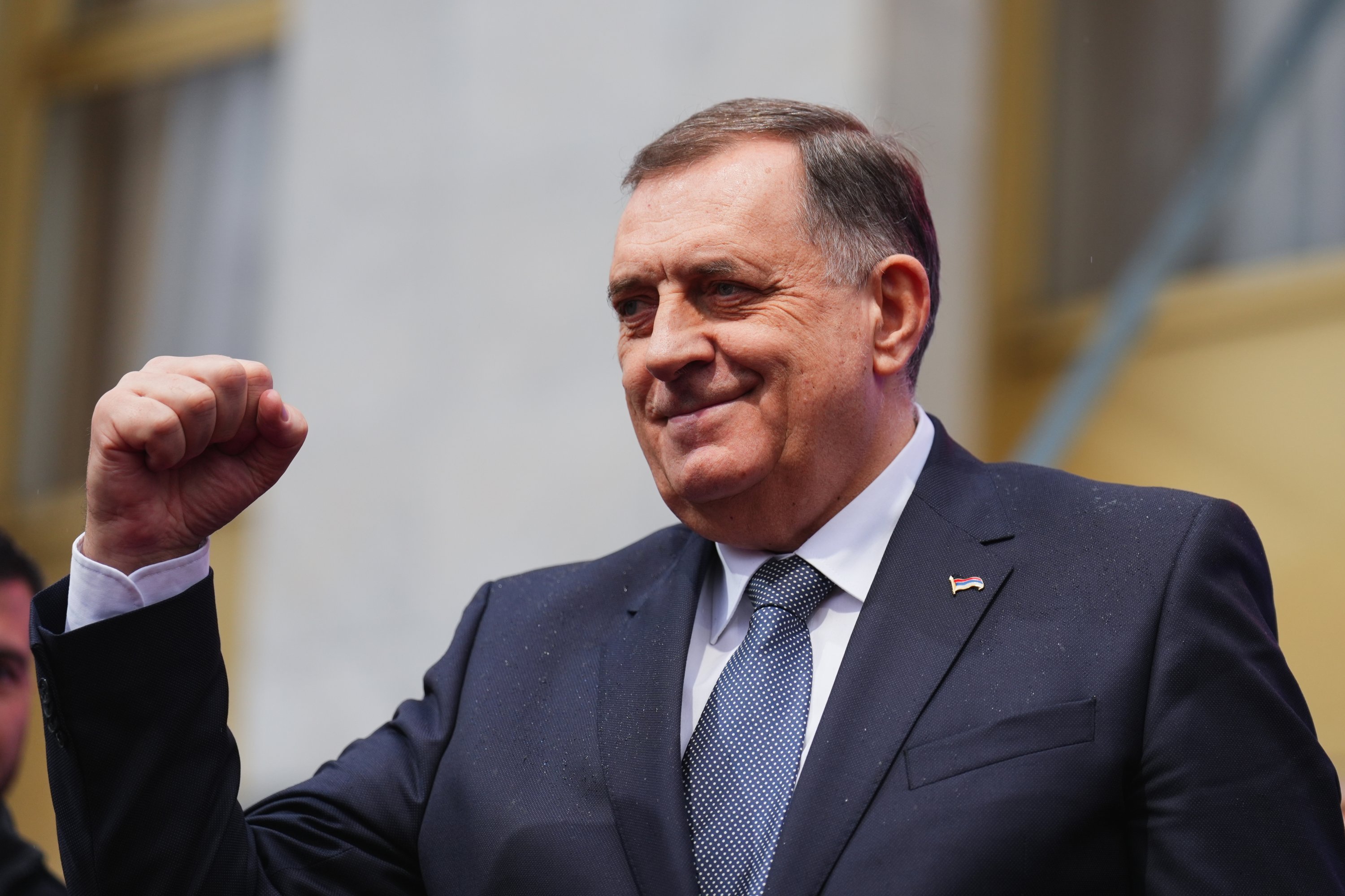
Electoral authorities on Wednesday dismissed Milorad Dodik, the Bosnian Serb separatist leader, from his position as president of the Serb entity in Bosnia, following an appeals court verdict that sentenced him to one year in prison and barred him from participating in any political activities for six years.
The Central Electoral Commission said that Dodik has the right to appeal, with an early presidential election to be held in the Serb Republic, or Republika Srpska, 90 days after the decision. The last Bosnian Serb presidential vote was held in 2022.
Dodik's lawyers have said they will seek a temporary measure postponing the implementation of the verdict, and announced an appeal to the Constitutional Court of Bosnia-Herzegovina.
The appeals court in Bosnia-Herzegovina confirmed Friday an earlier court ruling that sentenced the pro-Russia Bosnian Serb leader to one year in prison and handed a six-year ban on political activity. As a result, his mandate as Bosnian Serb president was revoked.
Dodik rejected the court ruling and added that he will continue to act as president as long as he has the support of the Bosnian Serb parliament. He also received support from populist Serbian President Aleksandar Vucic as well as Hungarian Prime Minister Viktor Orban.
"Surrender is not an option," Dodik said on his X profile after the electoral commission's decision.
The Bosnian Serb government said it does not accept the court ruling because it is "unconstitutional and politically motivated."
"In any case, we can't put him behind bars, that's impossible," the speaker of the Bosnian Serb parliament, Nenad Stevandic, said. "We can't ban him from political activity. What he did till now, he will be doing from now on as well."
The European Union said last week that the "verdict is binding and must be respected." Bosnia is a candidate for EU membership, but has been told by Brussels to strengthen the rule of law. Dodik's separatist and pro-Russian activities stalled Bosnia's progress toward EU membership.
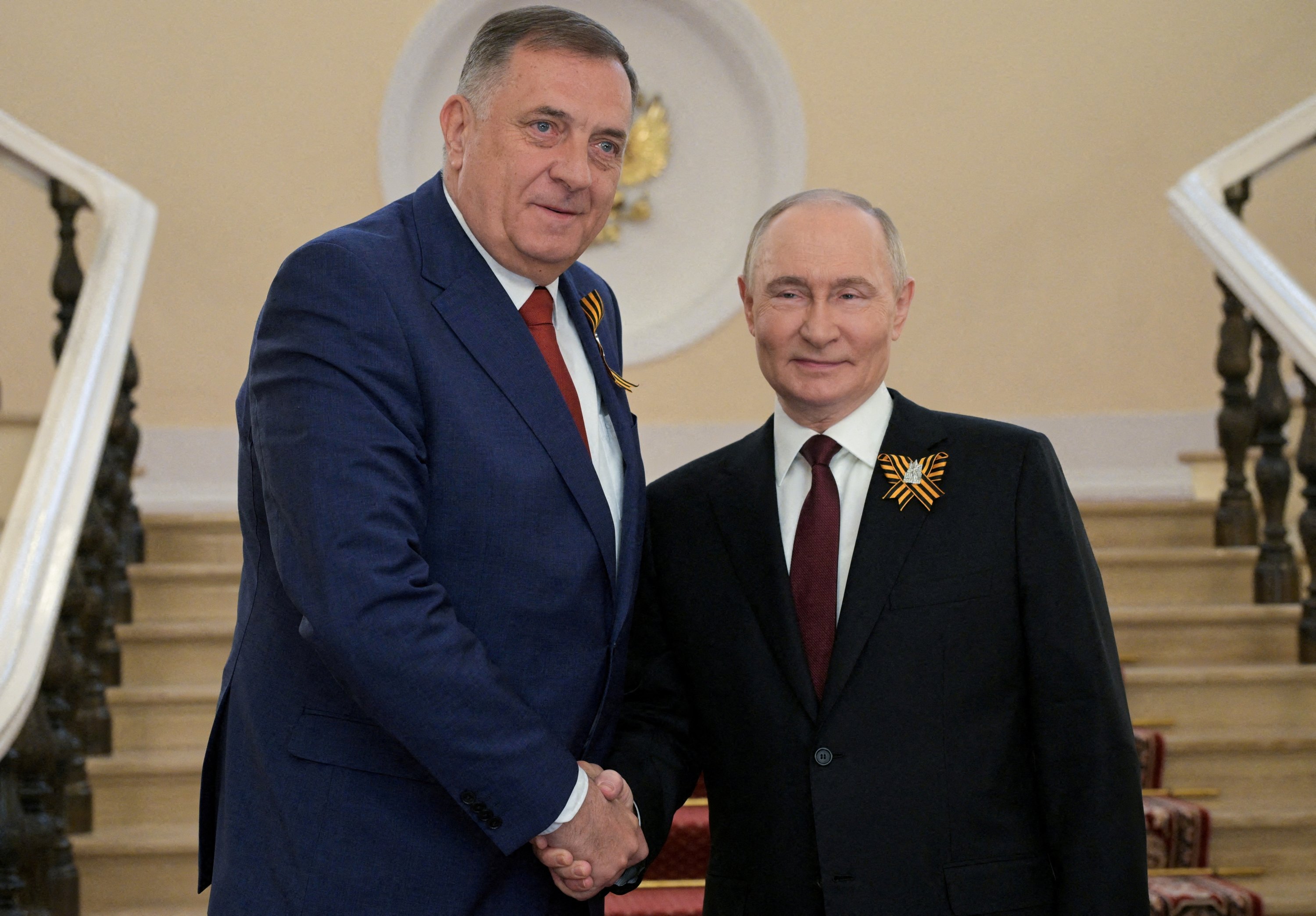
Dodik has repeatedly called for the separation of the Serb-run half of Bosnia to join neighboring Serbia, prompting the former U.S. administration to impose sanctions against him and his allies. Dodik was also accused of corruption and pro-Russian policies.
His separatist threats have stoked fears in Bosnia, where a 1992-95 war erupted after the breakup of the former Yugoslavia unleashed nationalist passions and territorial ambitions that set Bosnian Serbs against the Bosnian Muslims, or Bosniaks.
Serbs had taken up arms in a rebellion against Bosnia's independence and moved to form a ministate with the aim of uniting it with Serbia.
More than 100,000 people were killed and millions displaced before a U.S.-brokered peace agreement was reached in Dayton in 1995.
The Dayton Accords created two regions, Republika Srpska and the Bosniak-Croat Federation, which were given wide autonomy but kept some joint institutions, including the army, top judiciary and tax administration. Bosnia also has a rotating three-member presidency made up of Bosniak, Bosnian Serbs and Bosnian Croats.
Dodik has repeatedly clashed with the top international envoy overseeing the peace, Christian Schmidt, and declared his decisions illegal in Republika Srpska. The Dayton peace agreement envisages that the high representative can impose decisions and change laws in the country.