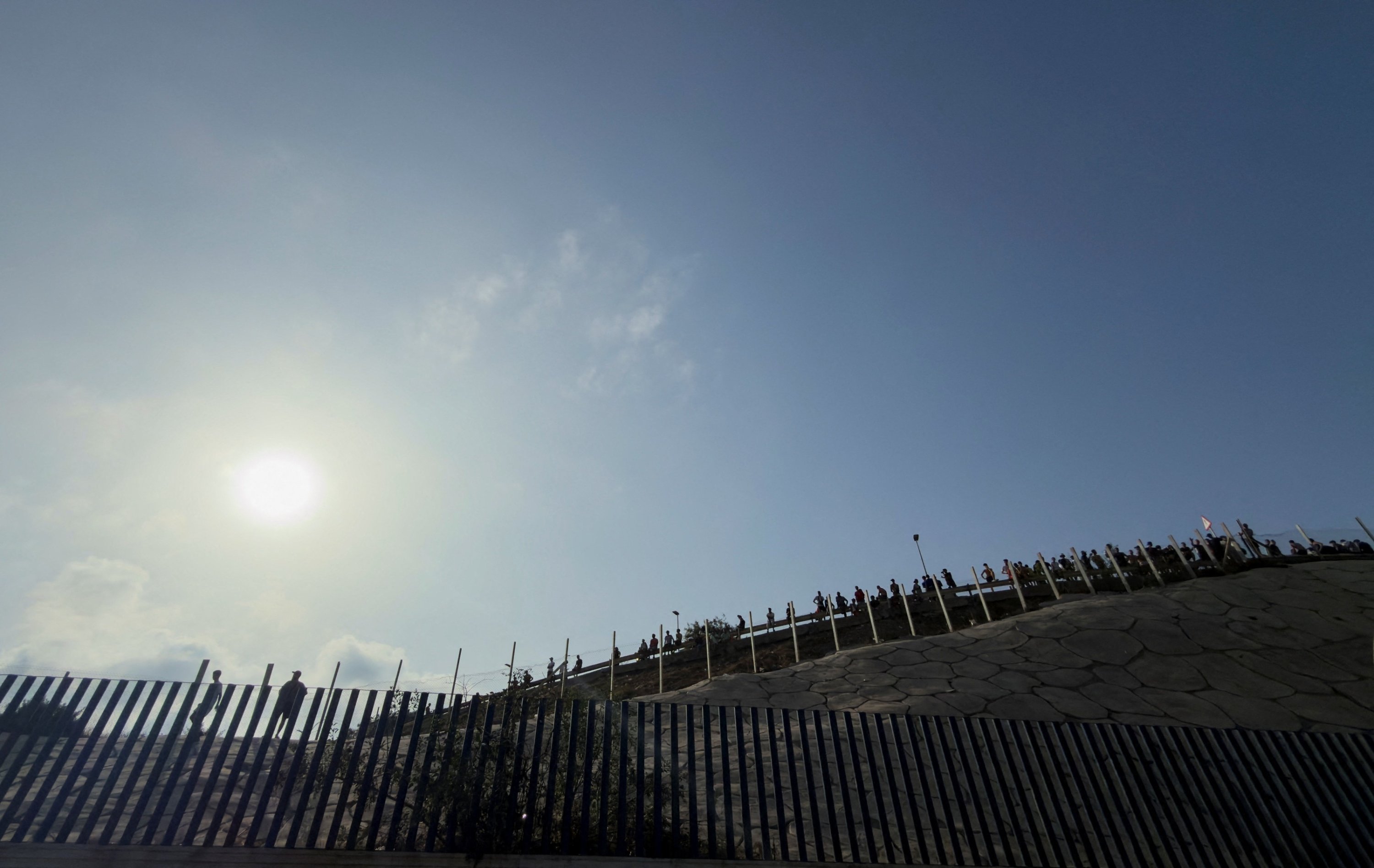
Spain on Thursday blasted Italy's "demagoguery" for calling for its exit from the Schengen zone after migrants poured into the Spanish exclave of Ceuta from neighboring Morocco.
It also summoned Italy's ambassador to Madrid to lodge a protest.
Spain said it was deploying its military to restore order at its border with Morocco after thousands of migrants streamed into Ceuta, mainly by swimming, with at least nine dying in the attempt.
State television TVE reported that 2,000 to 3,000 people had crossed.
Italy's Foreign Minister Antonio Tajani said earlier Thursday he was "in favor of closing the Schengen area with Spain," claiming "Irregular and uncontrolled immigration poses a danger to national security."
"The images coming from Ceuta show how the Madrid government's decision to grant Spanish, and therefore European, citizenship to over 500,000 irregular immigrants is profoundly wrong and encourages human trafficking," he said.
The message from the Italian foreign minister "is improper" for "a partner and friendly country from which we expect European solidarity and not partisan demagoguery," Spanish Foreign Minister Jose Luis Albares said.
Matteo Salvini, also Italy's deputy prime minister and leader of the far-right League party, has in turn called for the Schengen zone to be suspended and Europe's borders defended.
The Schengen Area is a system of open borders that encompasses 29 European countries that have officially abolished frontier controls at their common borders.
Migration from Morocco into Spain's two north African territories, Ceuta and Melilla, has long been a politically sensitive issue between the two countries, as thousands cross the border at times.
Earlier Thursday, local authorities in Ceuta asked the central government in Madrid for reinforcements to manage the border crisis.
Spain's government said it would send the Armed Forces to help the Civil Guard "to maintain security in the city of Ceuta." It also announced that Spain's Prime Minister Pedro Sanchez would join Interior Minister Fernando Grande-Marlaska and visit Ceuta Friday.
Spain is a main point of arrival into Europe for migrants seeking better economic opportunities or an escape from violence in their home countries.
To reach Ceuta, migrants often swim from the Moroccan town of Fnideq, covering about 5 kilometers (3.1 miles) to reach Spanish territory. Others attempt the crossing from the nearby town of Belyounech, where the distance is shorter.
The scenes of people streaming across the frontier recall the border crisis of May 2021 when more than 8,000 migrants poured into Ceuta in just two days.
At the time, Morocco was accused of easing border controls and allowing migrants to cross into Ceuta.
Spain's Interior Ministry, which tracks irregular migration, would not confirm the number of migrants who had made it to Ceuta in the last few days but said it would publish its next migration report on Aug. 3.
As of July 15, nearly 3,000 migrants had entered Ceuta by land or sea this year, according to ministry figures.
The ministry said the Moroccan government was "closely cooperating" with Spain to handle the situation and that Moroccan police are stopping "numerous people" who are trying to cross the border. Both countries agreed to work together "for the return, as soon as possible, of all the people who entered Ceuta illegally."
The ministry earlier said it would guarantee the safety of citizens and the integrity of the nation's border but that the Spanish government could not declare a national emergency, as local authorities had asked.