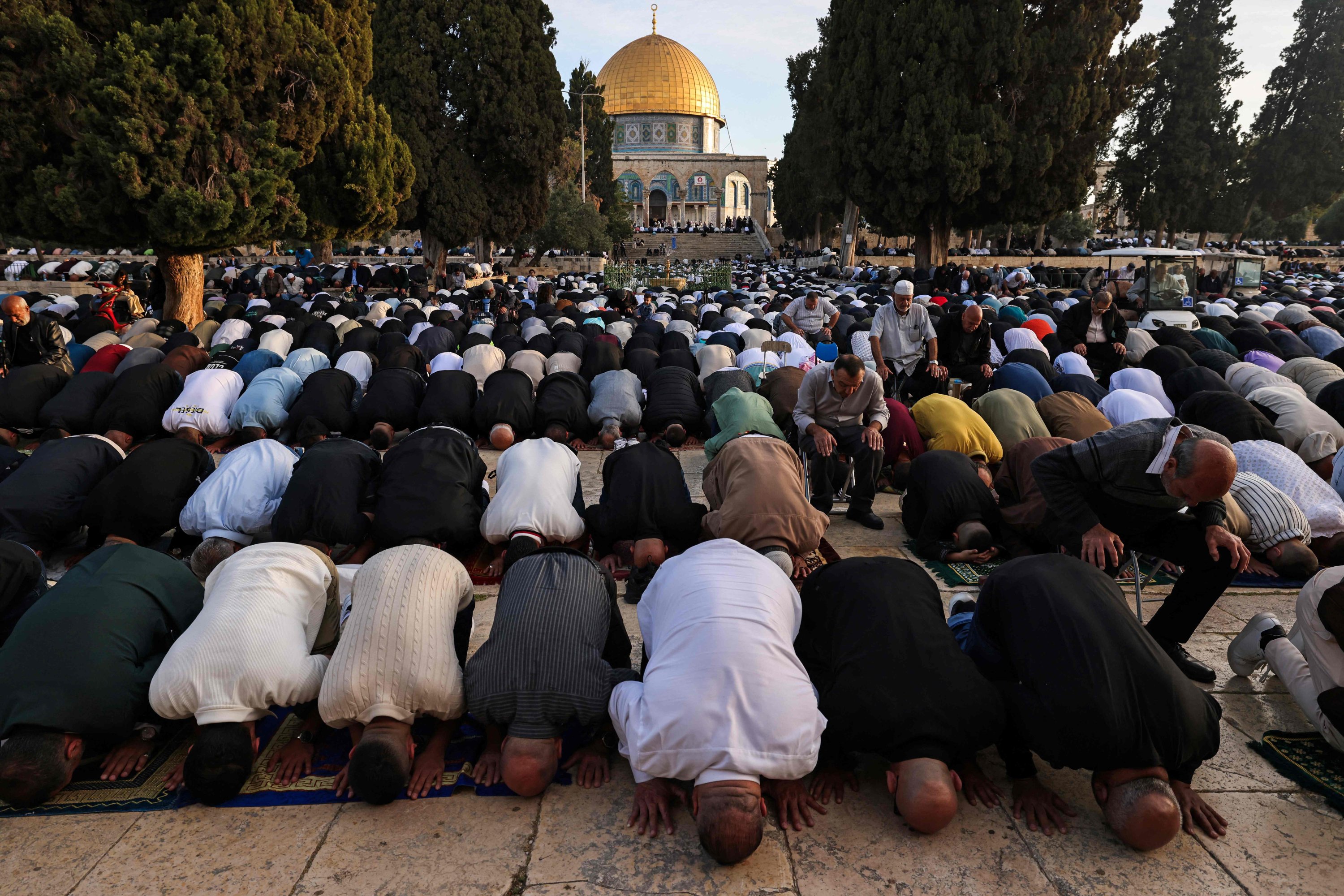
About 140,000 Muslim worshippers gathered Wednesday in the courtyards and prayer halls of Al-Aqsa Mosque in occupied East Jerusalem, marking Eid al-Adha with one of the largest turnouts at the site in recent years, according to the Islamic Waqf Department.
The Waqf, which administers the compound, estimated attendance at 140,000 as crowds filled the vast esplanades of the hilltop sanctuary from early morning for the Eid prayer.
Worshippers prayed across the mosque grounds, which sit at the heart of the Old City of Jerusalem, an area that remains under tight Israeli security control and frequent political tension.
A heavy Israeli police presence was deployed across the Old City, including its narrow alleyways, checkpoints, and the main gates leading into the mosque compound.
Security presence is typically heightened during major religious holidays, particularly in periods of regional unrest.
A sacred site with layered significance
Al-Aqsa Mosque is regarded in Islam as the third-holiest site, believed to be the location of the Prophet Muhammad’s Night Journey and ascension to heaven. It is also known in Judaism as the Temple Mount, adding to its central role in one of the most sensitive territorial and religious disputes in the region.
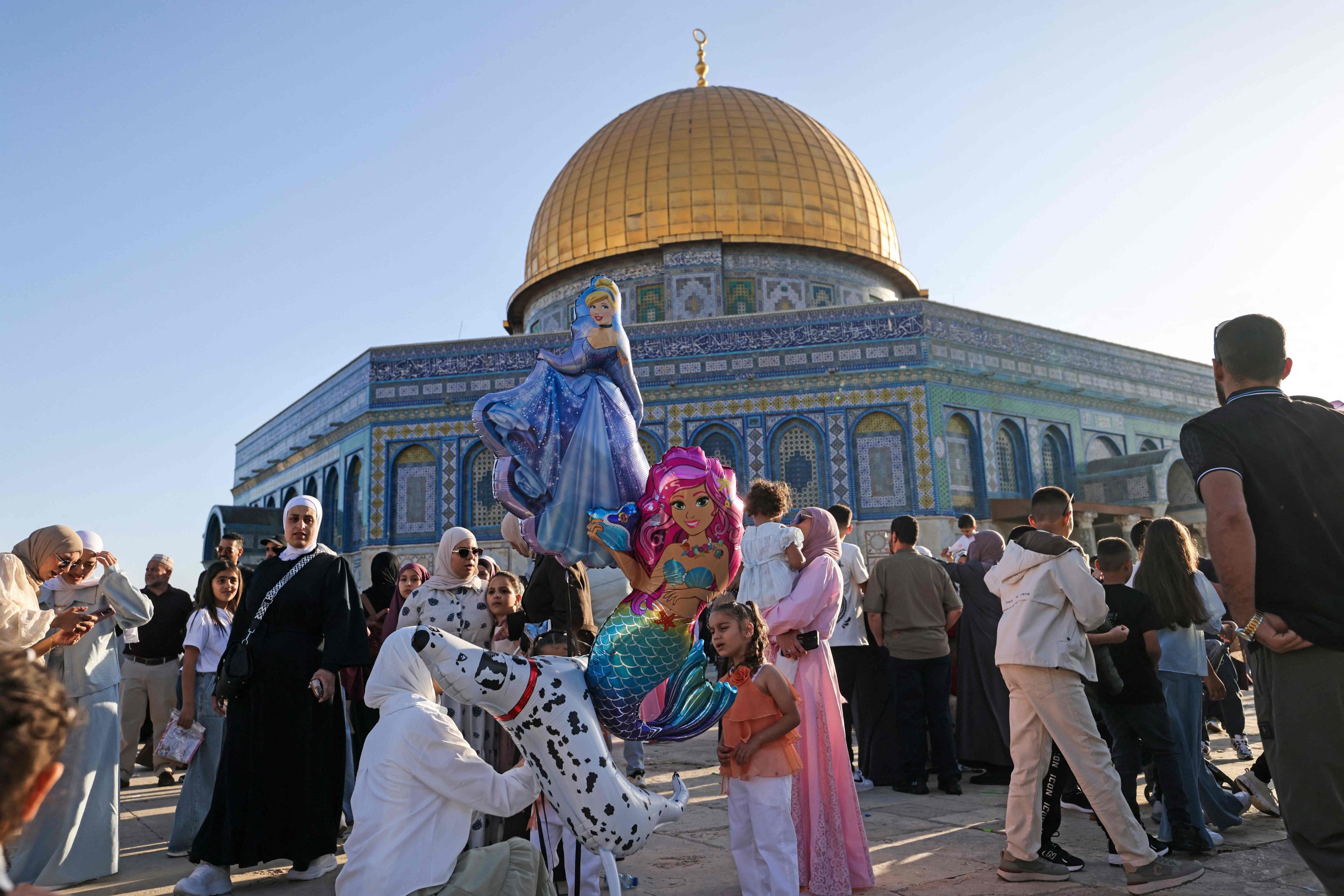
Access to the compound is controlled by Israeli authorities, while day-to-day administration of the site is handled by the Jordanian-run Islamic Waqf. The arrangement has long been a point of friction during periods of heightened violence or political tension.
Eid al-Adha, the Festival of Sacrifice, is one of the two major Islamic holidays. It commemorates the willingness of Prophet Ibrahim, known as Abraham in Judaism and Christianity, to sacrifice his son in obedience to God’s command before a ram was provided in his place.
The holiday coincides with the conclusion of the annual Hajj pilgrimage in Mecca. It is marked by a communal Eid prayer followed by the ritual slaughter of livestock, with meat divided among family members, relatives, and people in need. The celebration typically lasts three to four days and also includes family visits, charitable donations, and communal meals.
This year’s Eid celebrations unfolded amid the continuing war in Gaza and sustained unrest across the occupied West Bank.
Since the escalation of the conflict in October 2023, violence in the West Bank has intensified, with Palestinian officials and humanitarian agencies reporting more than 1,000 Palestinians killed, over 12,000 injured, and tens of thousands displaced. The worst-affected areas include rural communities and Bedouin regions near Israeli settlements and outposts, where clashes and settler violence have been repeatedly reported.
In Gaza, where much of the territory has suffered extensive destruction, many Palestinians marked Eid in displaced shelters, open streets, or among rubble. Humanitarian conditions remain severe, with widespread displacement, damaged infrastructure, and shortages of basic necessities.
Religious sites across Gaza have also been heavily affected, with reports indicating that hundreds of mosques have been damaged or destroyed since the start of the war, reshaping how Eid prayers are conducted for many families.
Access to Al-Aqsa has remained a recurring point of tension throughout the conflict. While large numbers were permitted to enter for Eid al-Adha prayers this year, previous religious holidays have seen tighter restrictions or limited entry, often linked by Israeli authorities to security concerns.
Palestinian officials and the Waqf have repeatedly emphasized the importance of maintaining open access to the site, particularly during major religious observances, while Israel has cited security risks in restricting movement during periods of instability.