Daily Sabah logo

Politics
Diplomacy Legislation War On Terror EU Affairs Elections News Analysis
TÜRKİYE
Istanbul Education Investigations Minorities Expat Corner Diaspora
World
Mid-East Europe Americas Asia Pacific Africa Syrian Crisis Islamophobia
Business
Automotive Economy Energy Finance Tourism Tech Defense Transportation News Analysis
Lifestyle
Health Environment Travel Food Fashion Science Religion History Feature Expat Corner
Arts
Cinema Music Events Portrait Reviews Performing Arts
Sports
Football Basketball Motorsports Tennis
Opinion
Columns Op-Ed Reader's Corner Editorial
PHOTO GALLERY
JOBS ABOUT US RSS PRIVACY CONTACT US
© Turkuvaz Haberleşme ve Yayıncılık 2025

Daily Sabah - Latest & Breaking News from Turkey | Istanbul

  • Politics
    • Diplomacy
    • Legislation
    • War On Terror
    • EU Affairs
    • Elections
    • News Analysis
  • TÜRKİYE
    • Istanbul
    • Education
    • Investigations
    • Minorities
    • Expat Corner
    • Diaspora
  • World
    • Mid-East
    • Europe
    • Americas
    • Asia Pacific
    • Africa
    • Syrian Crisis
    • Islamophobia
  • Business
    • Automotive
    • Economy
    • Energy
    • Finance
    • Tourism
    • Tech
    • Defense
    • Transportation
    • News Analysis
  • Lifestyle
    • Health
    • Environment
    • Travel
    • Food
    • Fashion
    • Science
    • Religion
    • History
    • Feature
    • Expat Corner
  • Arts
    • Cinema
    • Music
    • Events
    • Portrait
    • Reviews
    • Performing Arts
  • Sports
    • Football
    • Basketball
    • Motorsports
    • Tennis
  • Gallery
  • Opinion
    • Columns
    • Op-Ed
    • Reader's Corner
    • Editorial
  • TV
  • World
  • Mid-East
  • Europe
  • Americas
  • Asia Pacific
  • Africa
  • Syrian Crisis
  • Islamophobia

Displaced Gazans scavenge through rubble to survive winter floods

by Daily Sabah with Agencies

ISTANBUL Dec 12, 2025 - 10:38 am GMT+3
Edited By Kelvin Ndunga
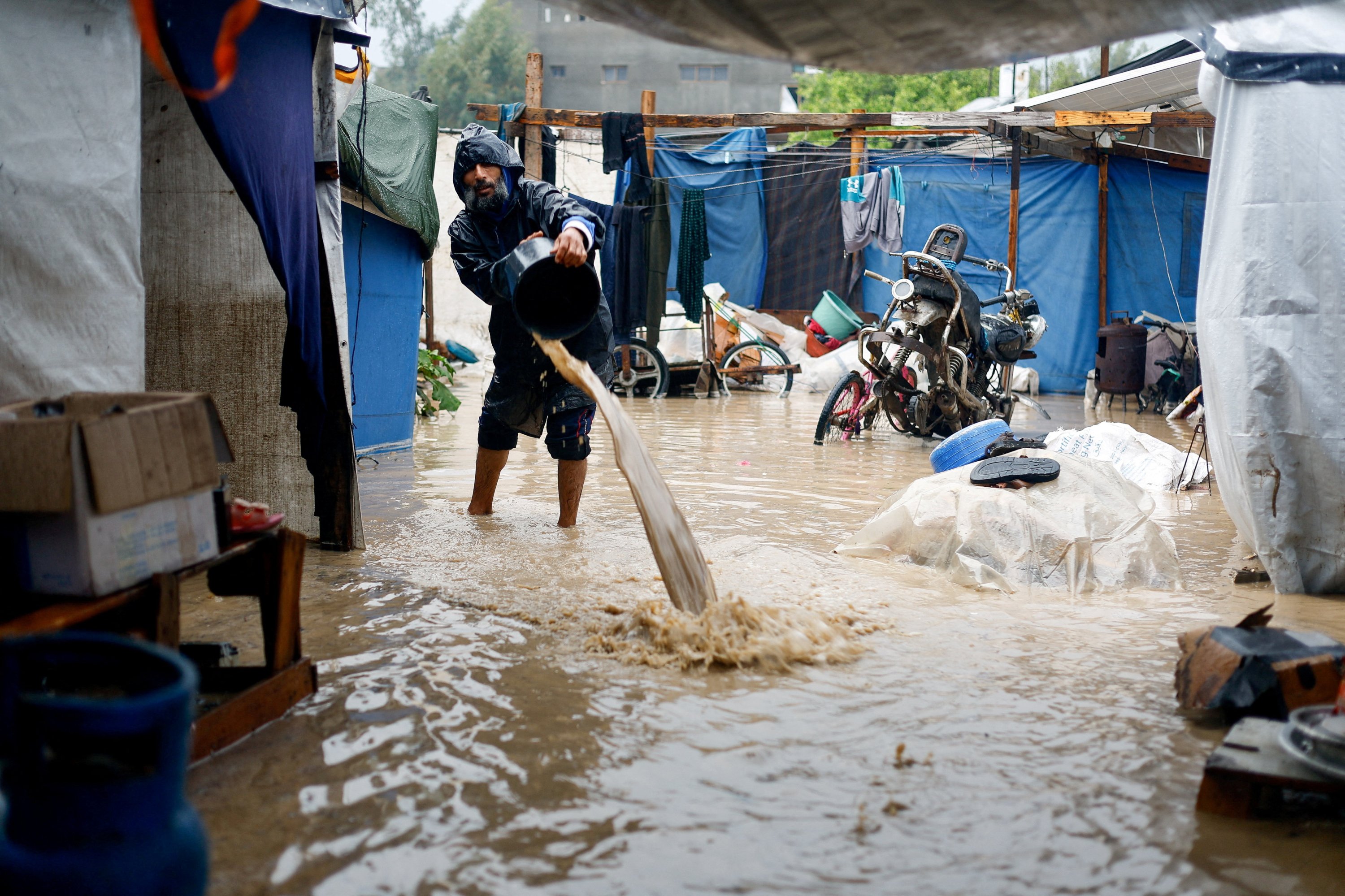
A displaced Palestinian man clears muddy water in a flooded tent camp on a rainy day in Nuseirat, Gaza Strip, Palestine, Dec. 12, 2025. (Reuters Photo)
by Daily Sabah with Agencies Dec 12, 2025 10:38 am
Edited By Kelvin Ndunga

Every day, displaced Palestinians return to the ruins of their homes, searching for twisted iron rods to prop up makeshift tents or sell to survive in a territory still reeling from war.

Winter’s chill and heavy rains have turned these fragile shelters into flood-prone traps, leaving residents trapped between exposure, ruin, and the relentless struggle to live.

Once the backbone of family homes, iron rods have become a lifeline.

Men, teenagers, and even the elderly hammer and chisel rods free from thick concrete with shovels, pickaxes, and hammers.

“I don’t have money to buy wood. I had to extract this iron from the house,” said Wael al-Jabra, 53, a father of six, hammering together a tent frame. “This house sheltered us. Now we only have God and these walls.”
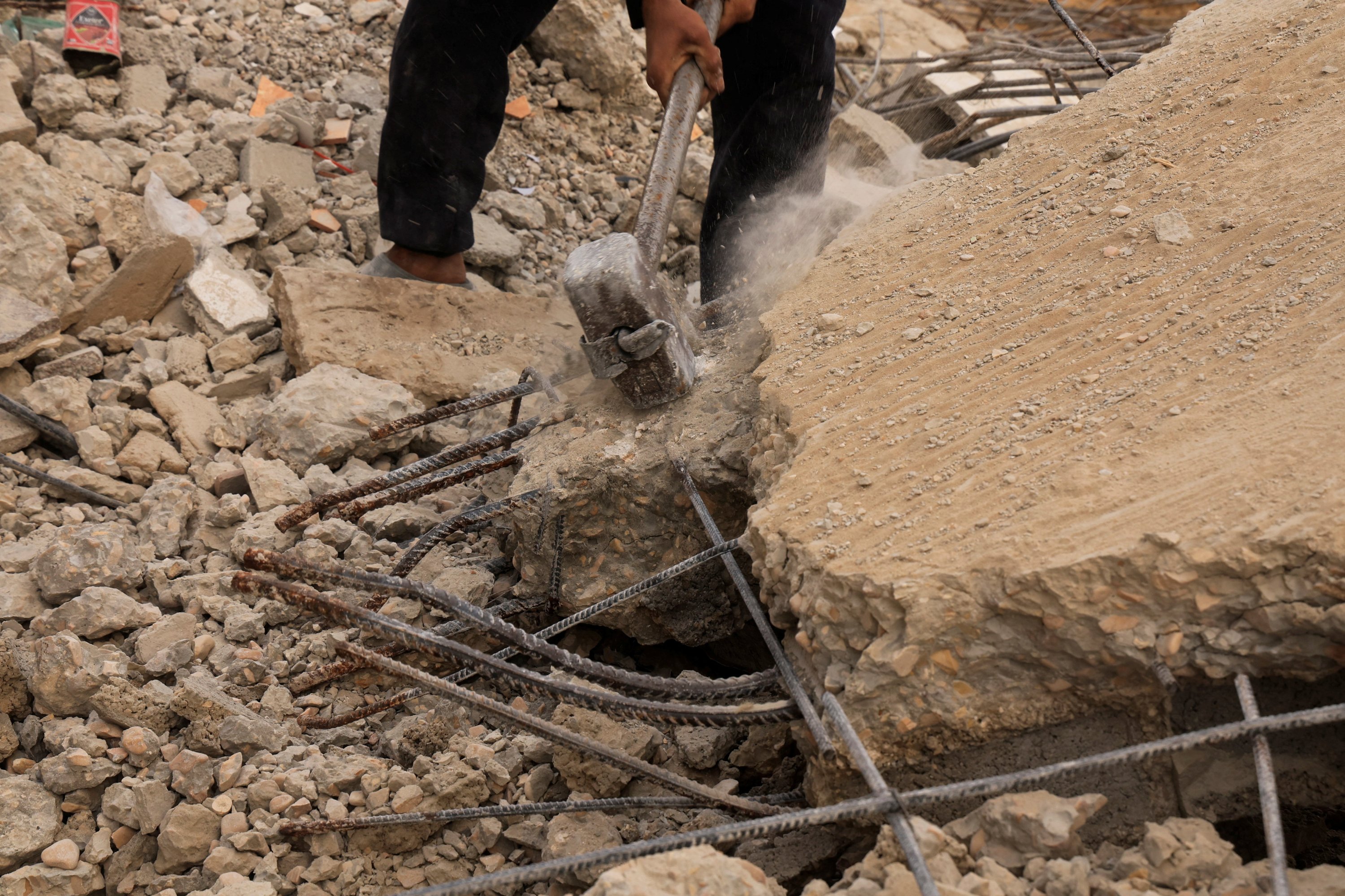
A Palestinian worker breaks concrete to extract steel bars from destroyed homes, using only simple hand tools amid a severe shortage of construction materials caused by long-standing restrictions on the entry of cement and iron, in Khan Younis, southern Gaza Strip, Palestine, Dec. 9, 2025. (Reuters Photo)

The conflict that created this devastation began on Oct. 7, 2023, following Hamas' incursion into southern Israel, killing 1,200 and taking 251 hostages.

Israel responded with a military campaign that killed more than 70,400 Palestinians and left neighborhoods flattened.

According to the United Nations Development Programme, the war produced 61 million tonnes of rubble – much of it embedded with iron rods that now serve as crucial tools for survival.

Even under ideal conditions, clearing Gaza’s debris could take seven years.

“You clean a house in exchange for iron. Sometimes it takes a week or more just to pry it out,” said Suleiman al-Arja, 19.

“We pass by destroyed homes, agree with owners, and start breaking the iron. It’s backbreaking work.” Other laborers pursue survival with dignity. “We do this to feed ourselves and cover living expenses. We earn through halal means – through our own hands,” said Haitham Arbiea, 29.

Iron rods are scarce and costly.

A 10-meter bar costs roughly $15, a fortune for families living hand-to-mouth.
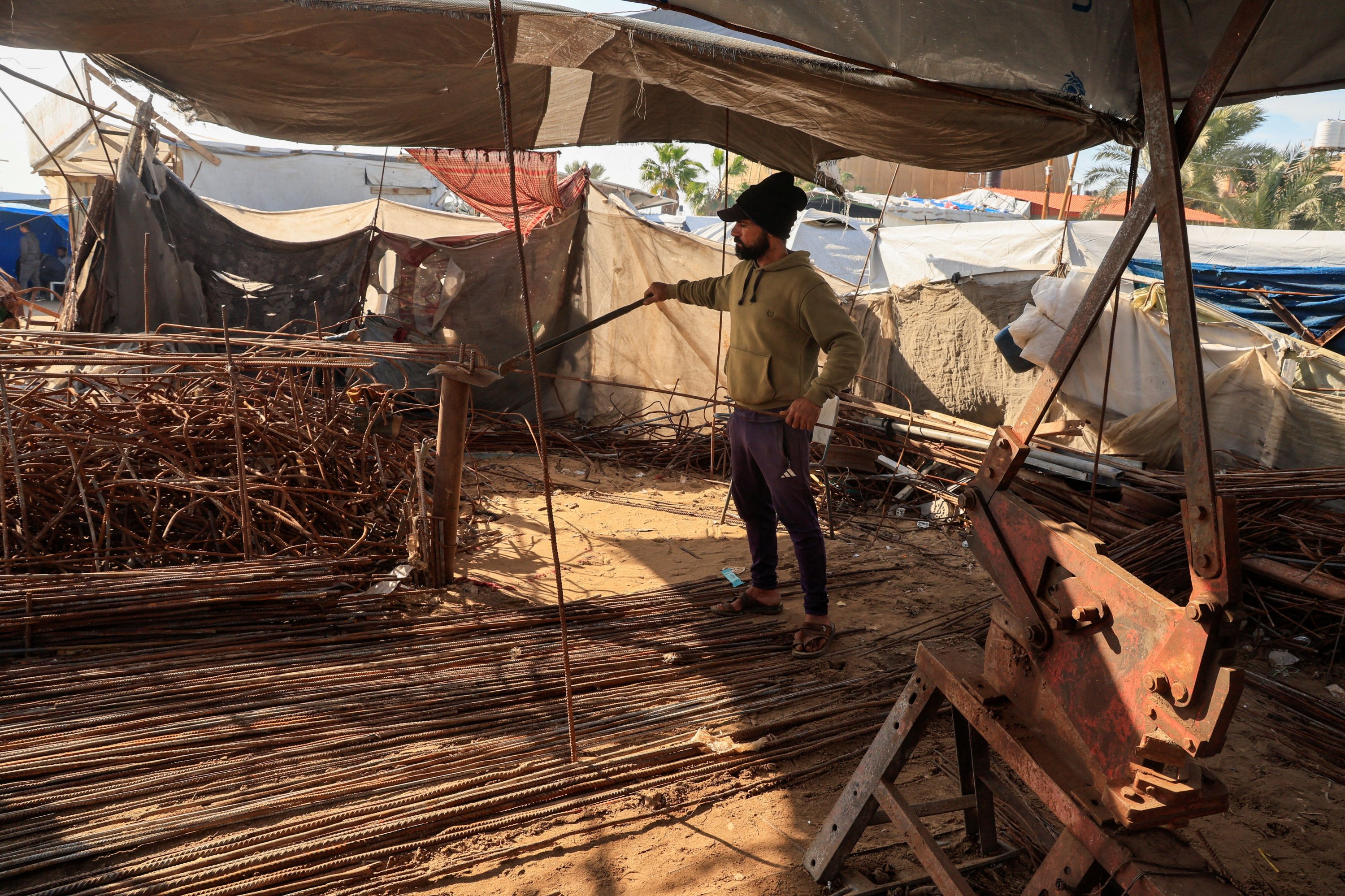
A Palestinian worker reshapes and straightens steel bars recovered from destroyed homes using basic tools inside a small workshop, amid a severe shortage of construction materials, Khan Younis, Gaza Strip, Palestine, Dec. 10, 2025. (Reuters Photo)

Israel tightly controls construction materials, classifying them as dual-use items that could be misused by Hamas, delaying shipments until the second phase of a U.S.-brokered reconstruction plan.

Winter rains have compounded the crisis.

Torrential downpours flood tent camps, submerging bedding, food, and children in soaking water.

Streets become mud-choked rivers, sewage spills into camps, and damp conditions foster disease.
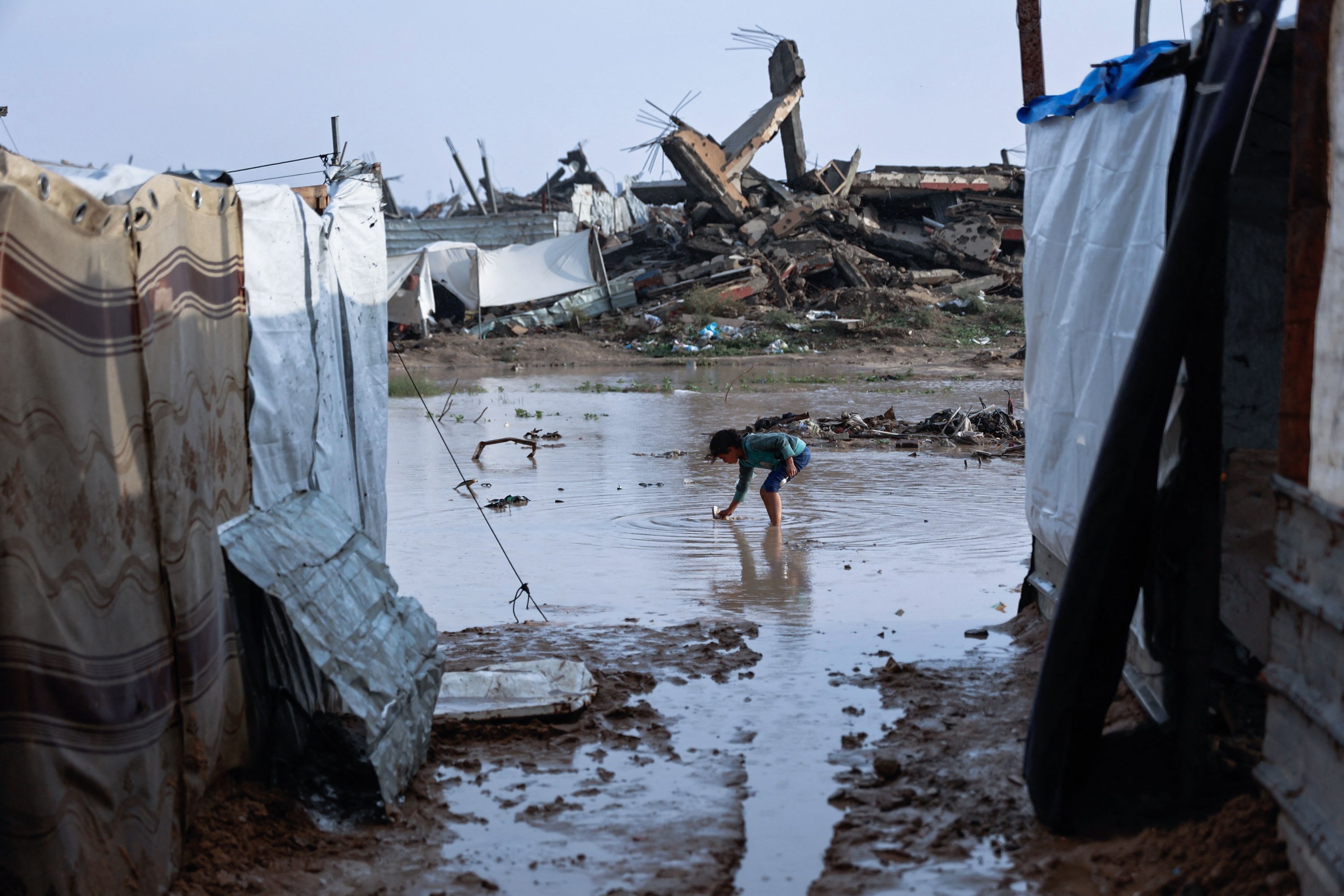
A girl stands in a pool of water at a makeshift camp sheltering displaced Palestinians after heavy rains in the Zeitoun neighbourhood of Gaza City, Palestine, Dec. 11, 2025. (AFP Photo)

Clinics report deaths from hypothermia, while families shiver in soaked clothes, desperate to stay warm.

“We urgently need to rebuild Gaza. We cannot imagine living in these tattered tents for years,” said Amal Shabat, 33, sheltering five family members in a partially collapsed building.

Families recount nights of exposure and fear. Aliaa Bahtiti said her 8-year-old son was soaked through overnight, waking up “blue from cold.”

Baraka Bhar tried to keep her 3-month-old twins warm in a leaky tent; one child suffers from hydrocephalus, a condition that complicates even minor illnesses.

“Our tents are worn out. We should not lose our children this winter,” she said. Older adults, the sick, and the disabled endure overcrowded, unsanitary conditions that heighten infection risks.

Aid shipments have arrived too slowly and in insufficient numbers.

Only a fraction of the 300,000 tents Gaza requires have entered, and many are poorly insulated. Water pumps and heavy machinery to clear rubble remain blocked.

Palestinians labor by hand to restore some measure of shelter, scooping floodwater from tents and fashioning temporary repairs. “All international sides should take responsibility for Gaza’s conditions.
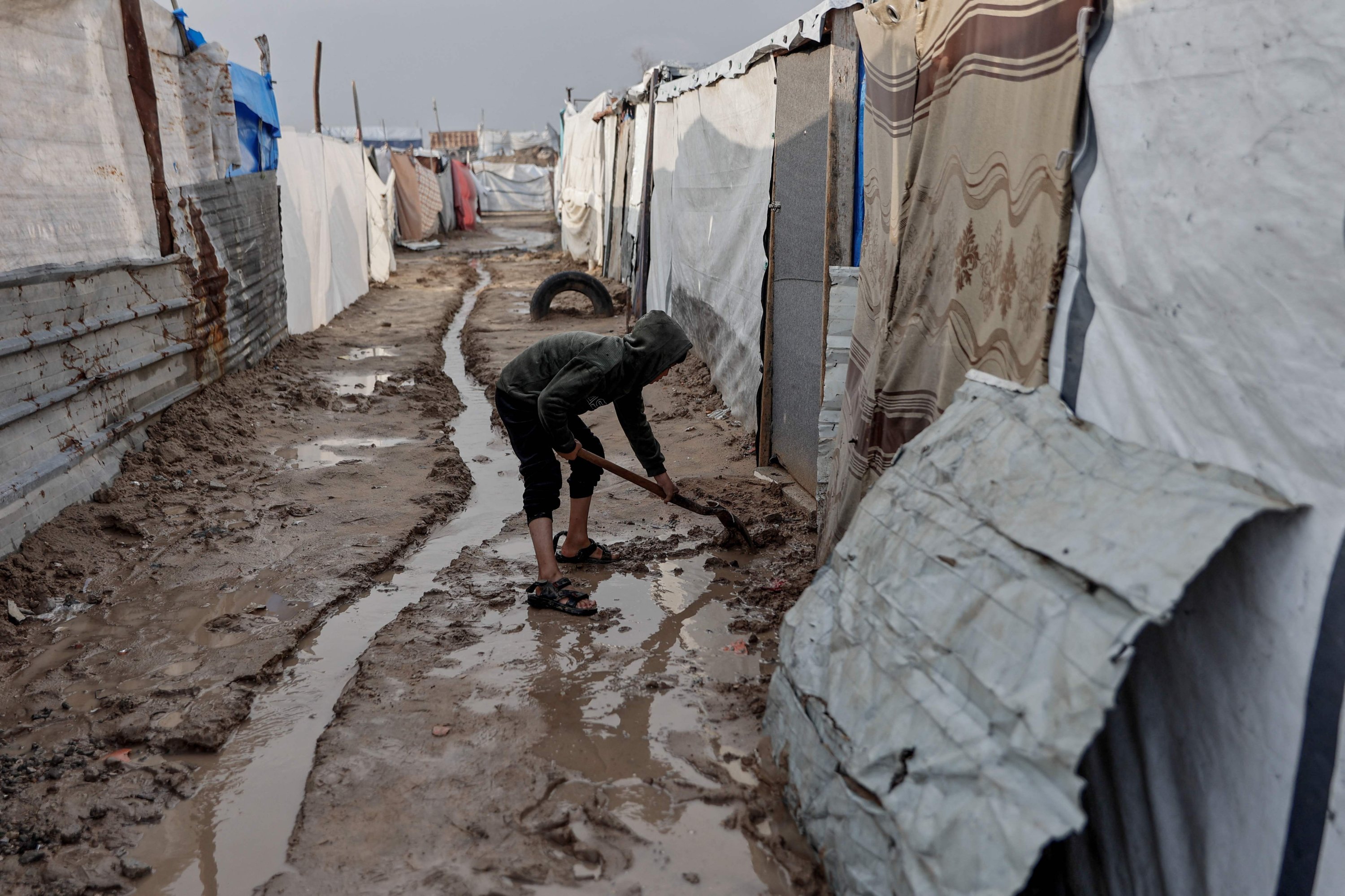
A boy reinforces his tent at a makeshift camp sheltering displaced Palestinians after heavy rains in the Zeitoun neighbourhood of Gaza City, Palestine, Dec. 11, 2025. (AFP Photo)

People here face real danger at every level,” said Amjad al-Shawa, chief of the Palestinian NGO Network.

The humanitarian crisis is compounded by a fragile ceasefire reached in October 2023.

Sporadic incidents of violence continue, keeping residents on edge. U.S. proposals to stabilize Gaza include an international force and economic development plans, but daily life remains a struggle for families focused on immediate survival.

“Every day is about finding food, water, and shelter. The future doesn’t exist right now,” said Wael al-Jabra.

The impact of flooding extends beyond tents. Three partially damaged buildings collapsed under recent rains, according to Palestinian Civil Defense, which warned residents against staying in unstable structures.

Waterlogged roads and sewage-filled streets hinder aid delivery, and more than 2,500 distress calls were recorded after the latest storm.

Residents labor to remove water using buckets and mops, often barefoot in knee-deep floodwater.

Amnesty International released a report Thursday accusing Hamas of widespread crimes against humanity during the Oct. 2023 attacks, including killings, hostage-taking, and sexual violence. Israel rejected the findings, calling the report incomplete.

The war’s legacy remains complex and deeply painful for civilians on both sides.

Despite the devastation, Gazans demonstrate resilience. “We use what we can from the rubble. Every rod, every tent, every effort keeps our family alive,” said Haitham Arbiea.

For many, laboring amid destruction is not just a necessity – it is an assertion of dignity in the face of near-total loss.

Families like Wael al-Jabra’s and Amal Shabat’s embody the human cost of war and displacement.

Their stories reveal the intersection of conflict, winter storms, and humanitarian insufficiency in a region struggling to recover from one of the deadliest campaigns in decades.

With each iron rod pulled from the debris, each soaked blanket hung to dry, and each child shielded from the cold, Gaza’s residents cling to survival while the world debates reconstruction, accountability, and long-term aid.


  • shortlink copied
  • Last Update: Dec 12, 2025 12:34 pm
    KEYWORDS
    gaza genocide hamas tent humanitarian crisis makeshift shelter death toll united nations
    The Daily Sabah Newsletter
    Keep up to date with what’s happening in Turkey, it’s region and the world.
    You can unsubscribe at any time. By signing up you are agreeing to our Terms of Use and Privacy Policy. This site is protected by reCAPTCHA and the Google Privacy Policy and Terms of Service apply.
    No Image
    Gaza aftermath, Tulsa and 'sea snot': Top pictures of the week
    PHOTOGALLERY
    • POLITICS
    • Diplomacy
    • Legislation
    • War On Terror
    • EU Affairs
    • News Analysis
    • TÜRKİYE
    • Istanbul
    • Education
    • Investigations
    • Minorities
    • Diaspora
    • World
    • Mid-East
    • Europe
    • Americas
    • Asia Pacific
    • Africa
    • Syrian Crisis
    • İslamophobia
    • Business
    • Automotive
    • Economy
    • Energy
    • Finance
    • Tourism
    • Tech
    • Defense
    • Transportation
    • News Analysis
    • Lifestyle
    • Health
    • Environment
    • Travel
    • Food
    • Fashion
    • Science
    • Religion
    • History
    • Feature
    • Expat Corner
    • Arts
    • Cinema
    • Music
    • Events
    • Portrait
    • Performing Arts
    • Reviews
    • Sports
    • Football
    • Basketball
    • Motorsports
    • Tennis
    • Opinion
    • Columns
    • Op-Ed
    • Reader's Corner
    • Editorial
    • Photo gallery
    • DS TV
    • Jobs
    • privacy
    • about us
    • contact us
    • RSS
    © Turkuvaz Haberleşme ve Yayıncılık 2021