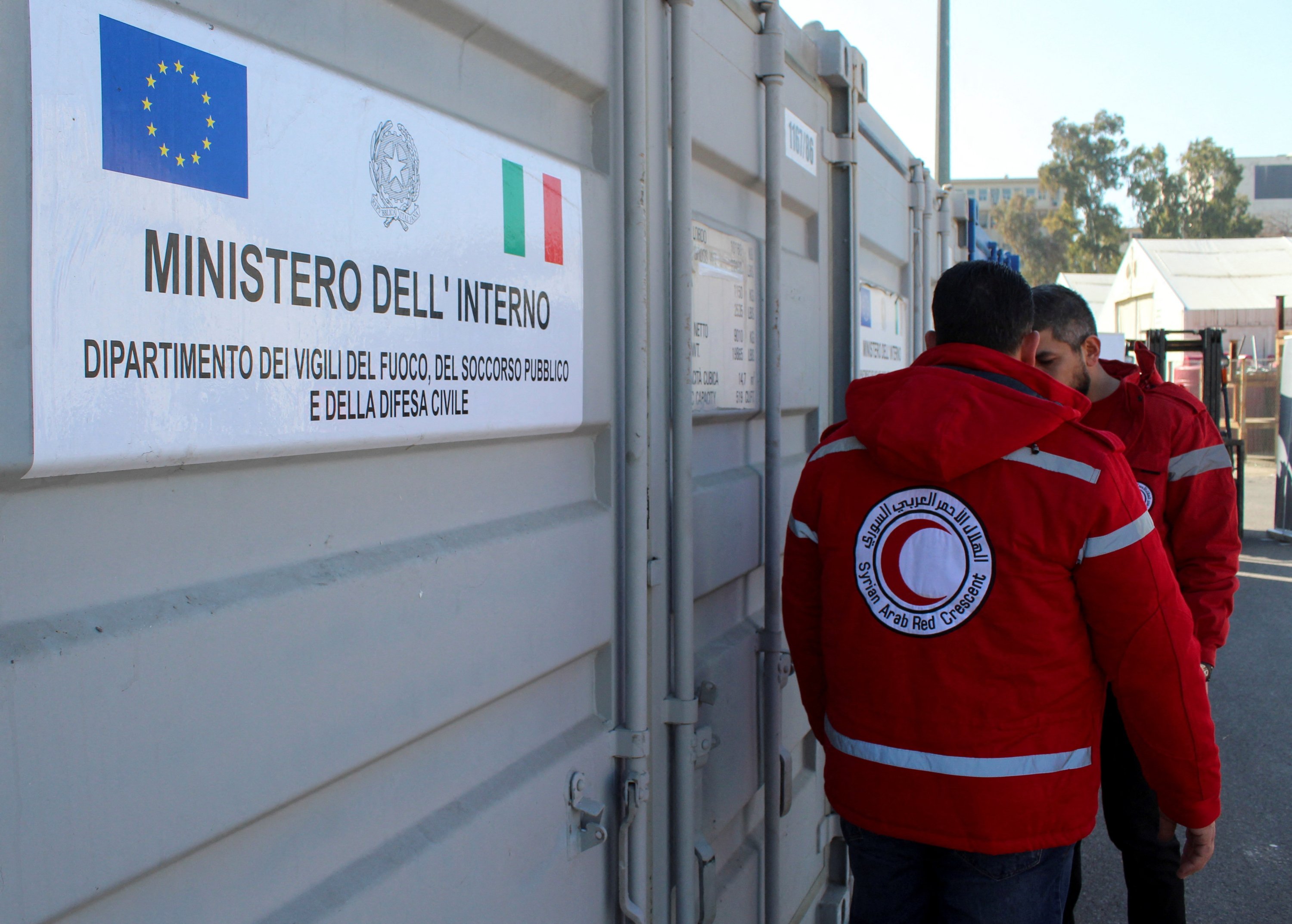
The European Union has eased some export restrictions on Syria that will allow aid organizations to deliver aid to the quake-hit nation without permission.
In view of the severity of the humanitarian crisis, it was decided to adjust the punitive measures to allow for the rapid delivery of aid, the Council of EU states announced Thursday. The change is to apply for six months.
Specifically, aid organizations will no longer need approval from the relevant EU states to deliver humanitarian goods and services to sanctioned individuals and entities.
The European Union reiterated that the existing sanctions were directed against Syria's President Bashar Assad, his supporters and certain sectors of the economy.
Before Thursday's easing of restrictions, there were already wide-ranging exemptions to ensure the provision of humanitarian aid in all parts of the country.
The existing sanctions did not prohibit the export of food, medicines, or medical equipment by the EU to Syria, and did not target Syria’s health care system.
The EU has currently sanctioned 291 individuals and 70 companies because of the ongoing violent repression of the civilian population. The civil war in the country has been ongoing since 2011.
Nearly 50,000 people died when southern Türkiye and northern Syria were devastated by two strong earthquakes on Feb. 6, followed by more than 8,550 aftershocks.