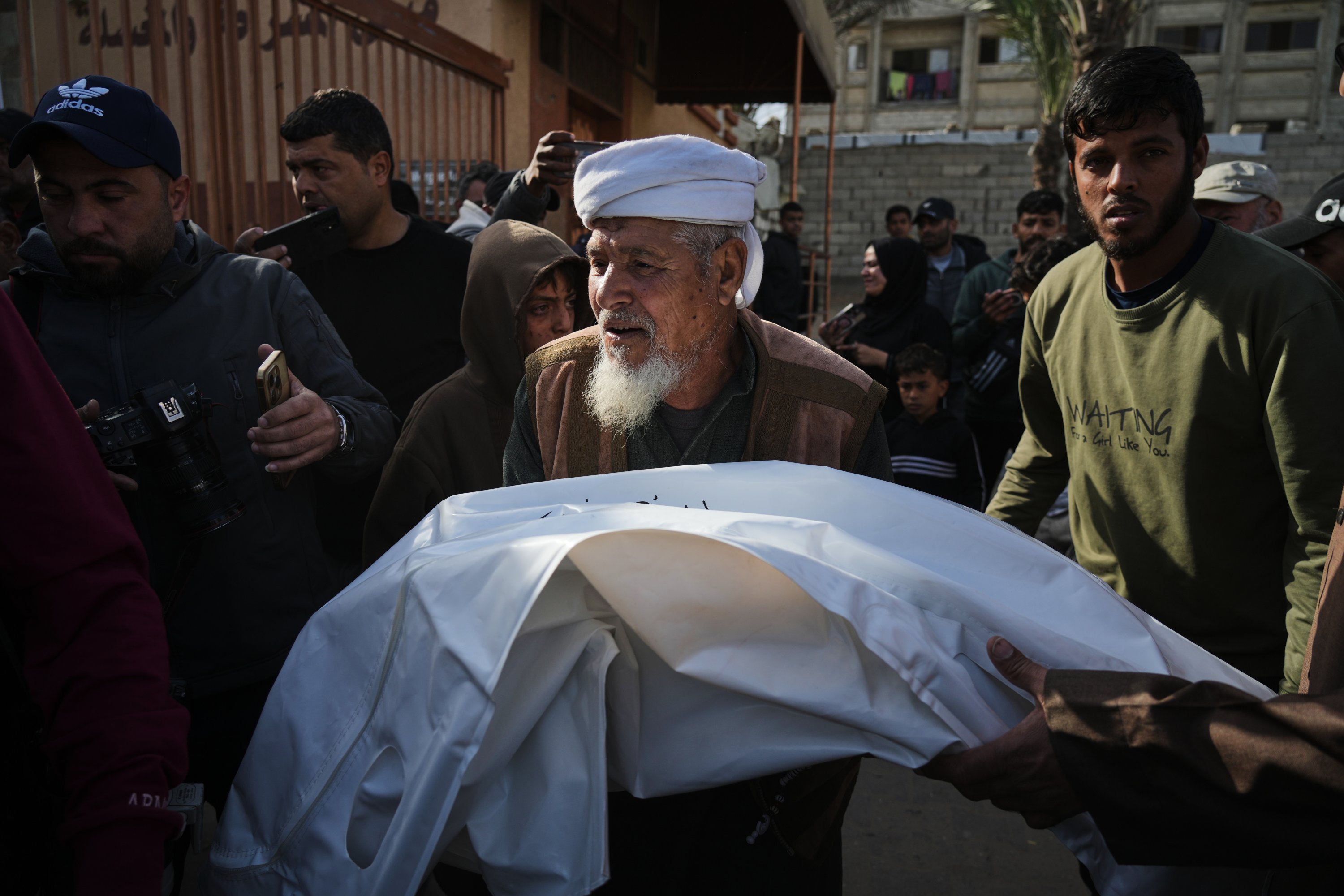
Sara Warsh Agha and her brothers, Ayman, Nafeth, and Ibrahim, gathered for iftar Sunday evening, their plates untouched, their mother absent.
Basma Banat, 28, had been shot in the lower back by Israeli military fire while leaving home for her job in an educational center, dying hours later at Al-Shifa Hospital in Gaza City.
Her death is the latest in a relentless pattern of violence along northern Gaza’s “Yellow Line,” a temporary boundary established under a cease-fire agreement that came into effect Oct. 10.
The cease-fire was intended to halt Israel’s two-year offensive, which has killed more than 72,000 people, wounded over 171,000, and destroyed roughly 90% of civilian infrastructure.
Yet for many Palestinians, the truce has become a fragile illusion.
Gaza’s Health Ministry reports at least 818 Palestinians killed and 1,663 injured since the cease-fire began, with 96 deaths attributed to direct Israeli fire, including 36 women, children, and elderly.
An additional 326 people were wounded by tanks, drones, and sniper fire along the boundary.
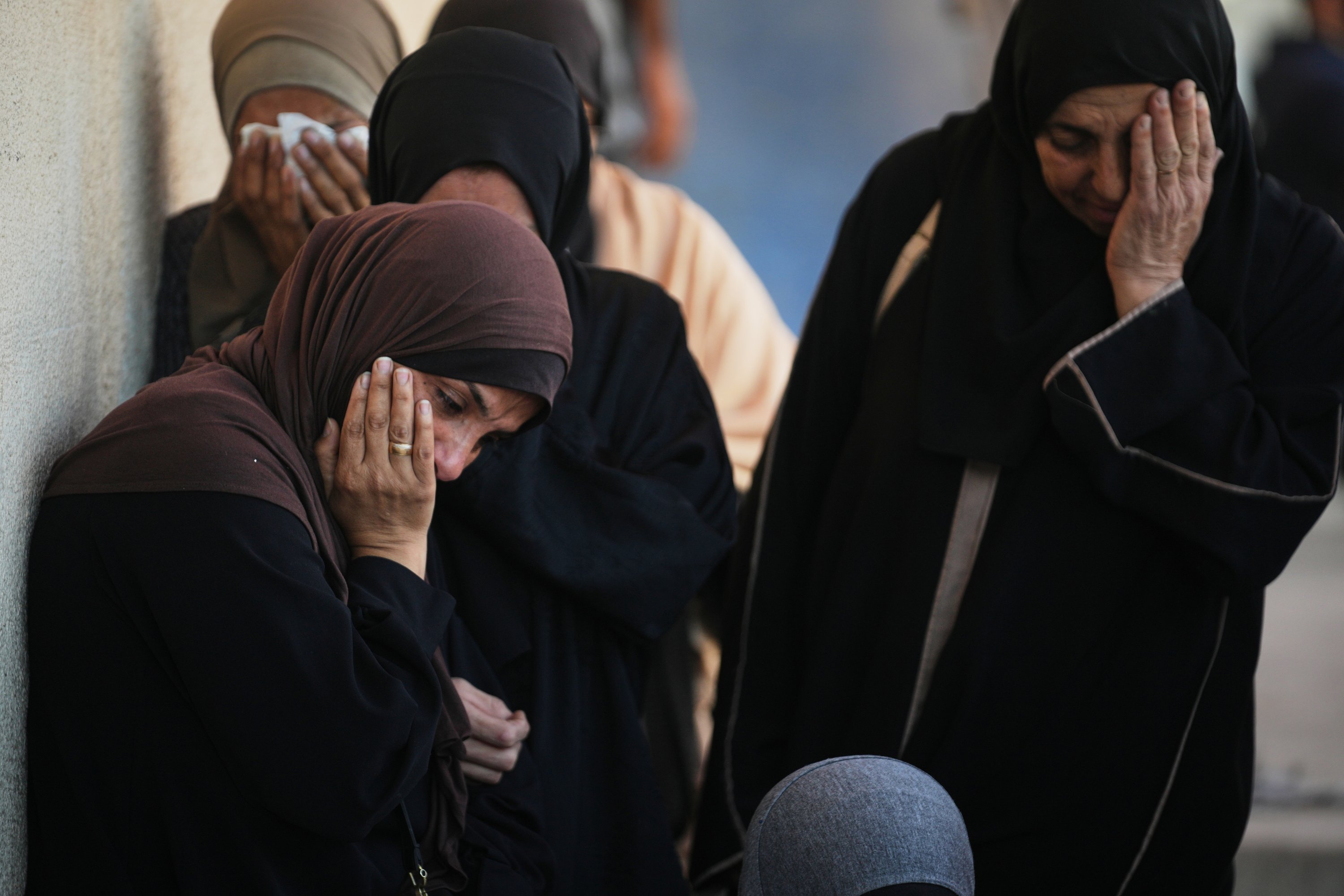
Inside her modest Beit Lahia home, damaged by prior bombardments, Banat’s relatives wept openly. Samar Banat, her mother, clutched her grandchildren, repeating prayers for patience in the face of unthinkable loss. “Basma was going to work with her children. She was killed, my beloved, my daughter... God, reward me in my tragedy,” she sobbed.
Her brother Ahmed described the chaos of the morning. “We were near Beit Lahia Square when heavy fire erupted from Israeli vehicles stationed east of the town. I was stunned when her children ran screaming, ‘Our mother has been martyred.’ I rushed to find her lying on the ground,” he said, recounting how he struggled to retrieve her body before taking her to the hospital.
Basma’s husband, Mousa Warsh Agha, stood with their four children, holding their infant, Ibrahim, oblivious to the loss of his mother. “I am still in shock. What will I do with my children? How do I tell them, every day, ‘Your mother is gone’?” he asked, his voice breaking.
Ahmed condemned Israeli claims of so-called “safe zones.” “There is no safe place. Gunfire and shells rain morning and evening. Our lives have no meaning,” he said, his eyes scanning the horizon where the armored vehicles and sniper posts loom.
An Anadolu Agency (AA) correspondent documented the source of the gunfire, showing Israeli positions atop elevated sand dunes overlooking residential neighborhoods.
Armored vehicles, sniper posts with advanced surveillance gear, and metal towers mounted with machine guns fire continuously into areas civilians still occupy.
Quadcopters patrol overhead, sometimes firing or dropping incendiary devices. Heavy machinery levels land, fortifying positions and cementing a military presence.
Ismail Al-Thawabteh, director of the Gaza Government Media Office, said Israel is exploiting the cease-fire to reshape the battlefield.
“These are not isolated cases or field errors. They are deliberate, calculated killings targeting civilians to impose continuous pressure, despite declared commitments,” he said. More than 99% of those killed occurred in areas labeled “safe,” he added.
The violations underscore the precarious nature of the cease-fire, which leaves families like the Warsh Aghas trapped in an unending cycle of fear. “This war is not just a series of battles,” Al-Thawabteh said. “It is a systematic effort to dictate reality on the ground while civilians bear the cost.”
Authorities and human rights observers warn that the continued targeting of civilians violates international law and the truce’s intent. Thawabteh urged immediate international action, including monitoring mechanisms and legal accountability for those responsible for the violence.