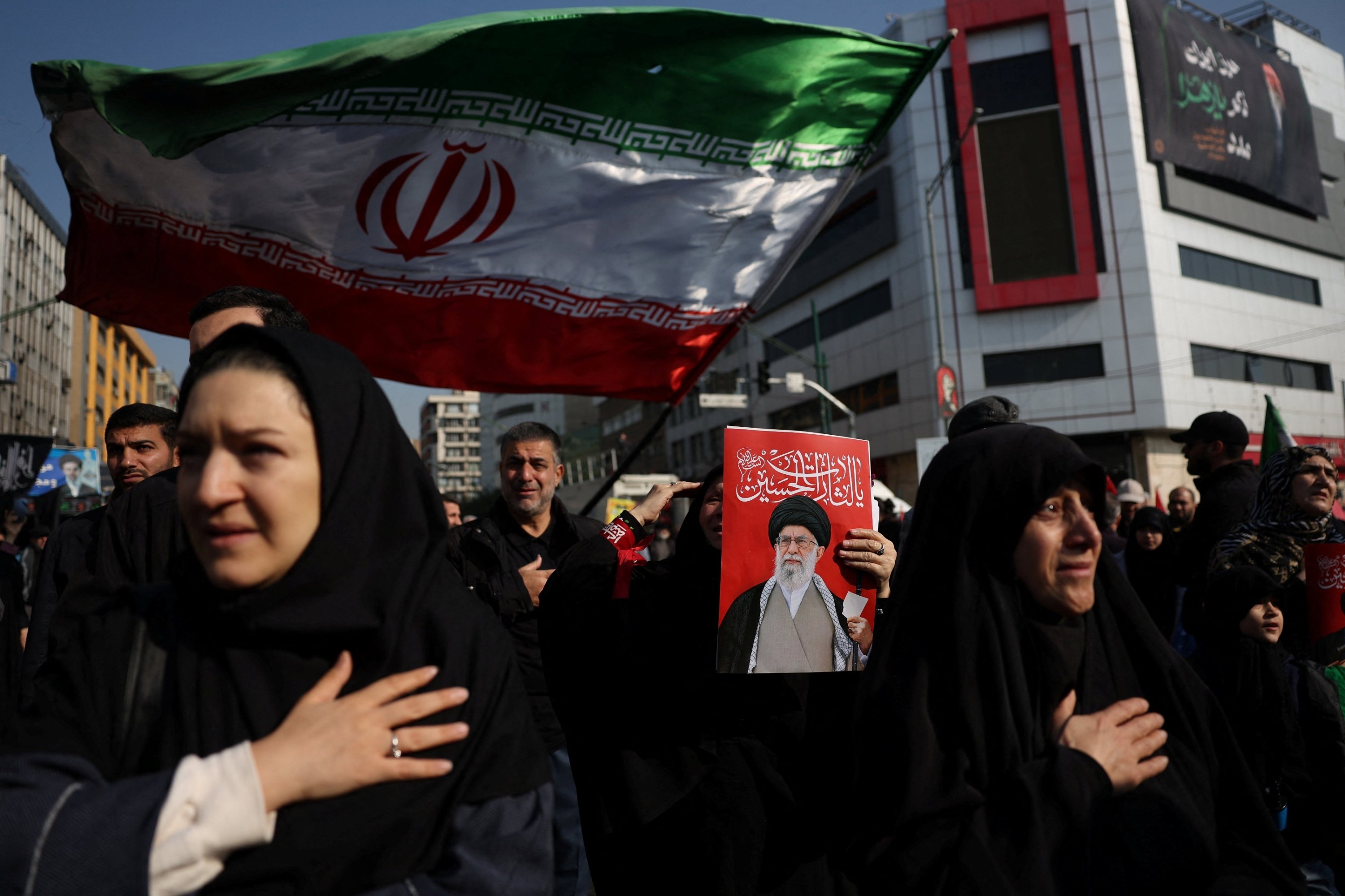
Iran remains committed to diplomacy, Foreign Minister Abbas Araghchi said Monday, as Iranian naval forces reported three oil tankers had struck mines near the Strait of Hormuz and media reports said a third U.S. aircraft carrier had arrived in the Middle East.
Addressing the 30th meeting of Economic Cooperation Organization foreign ministers in Islamabad, Araghchi accused Washington of pursuing aggression and economic pressure despite Tehran's continued commitment to diplomatic engagement.
"Unfortunately, the United States chose a completely different path," he said, according to a transcript released by Iran's Foreign Ministry.
Araghchi accused the United States of aggression, threats, targeted assassinations, economic pressure and a naval blockade in violation of international law and the U.N. Charter.
His remarks came amid renewed fighting and reports of further damage to shipping in and around the Strait of Hormuz, a key route for international oil shipments linking the Gulf to the Gulf of Oman.
Iran's regular navy said a tanker struck a mine early Monday east of the strait in an area it described as prohibited, catching fire and becoming immobilized, according to a statement carried by state broadcaster IRIB.
The navy said it continuously monitored vessel movements east of the waterway and warned that ships switching off tracking systems or entering restricted waters faced serious risks. Shipowners who ignored navigation warnings would bear responsibility for the consequences, it said.
Separately, the Islamic Revolutionary Guard Corps' navy said two tankers struck mines while attempting to cross the southern part of the strait. It alleged that the vessels were operating under the direct guidance of U.S. officers and with support from American fighter jets.
The tankers suffered several powerful explosions that illuminated the sky for hours, the Guard said.
Its statement said the vessels were near two tankers involved in earlier incidents and claimed that six tankers had caught fire and were sinking in the waterway since Sunday. It was unclear whether that total included the tanker reported by the regular navy.
The Guard also claimed that pollution from the explosions had spread across the strait's waters and shores. It described its actions as a response to the U.S. naval blockade of Iranian ports and violations of Iranian navigation rules.
"The southern American-created route in the Strait of Hormuz has been mined with walls of fire," it said, warning shipowners against cooperating with the U.S. military.
Iranian forces have repeatedly reported tankers striking mines while using routes Tehran describes as unauthorized.
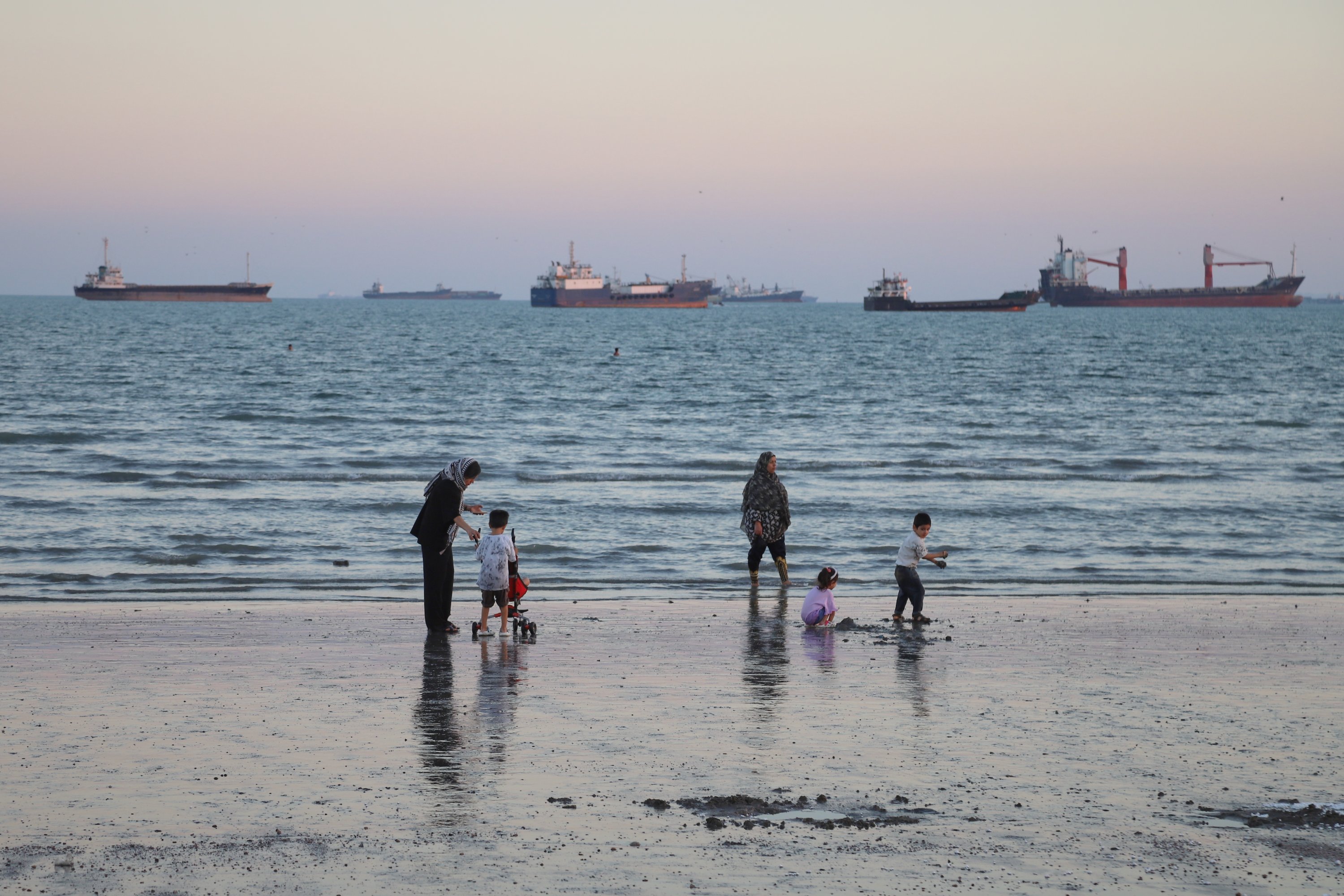
Meanwhile, the United Kingdom Maritime Trade Operations agency said a tanker was struck by an unidentified projectile while sailing out of the strait, causing a fire in its engine room.
The agency said the report came from the vessel's company security officer. No casualties were reported, and all crew members were accounted for.
The extent of the damage and any environmental impact remained unknown. The agency did not identify the tanker, its flag or operator, or who might have been responsible. It was unclear whether its report concerned any of the vessels cited by Iranian forces.
The shipping incidents followed reports that the USS Theodore Roosevelt arrived in the Middle East Sunday, bringing the number of U.S. carrier strike groups in the region to three.
The deployment was reported by The National and Axios journalist Barak Ravid as fighting intensified following a lull in regional strikes.
Iran claimed a drone attack on U.S.-allied Bahrain Sunday. It also fired drones at Bahrain on Friday, the first strikes since September against countries in the Gulf, which has been heavily targeted during the conflict.
In Islamabad, Araghchi said Iran sought friendly, constructive relations with its neighbors and had no inherent dispute with countries in the region.
"The territory, airspace and facilities of countries in the region must not become a platform for attacks against one another," he said.
He argued that Iranian operations targeted only the military facilities and bases of those attacking Iran and should not be viewed as attacks on neighboring governments or their populations.
Araghchi called for an inclusive, regionally led dialogue on security arrangements that would uphold nonaggression and prevent third countries from using regional territory to attack another state.
He also said sanctions had strengthened Iranians' determination to defend their rights and resist what he described as excessive and unlawful demands. He thanked Pakistan and the organization's secretariat for arranging the meeting and hosting the Iranian delegation.
U.S. President Donald Trump, meanwhile, plans to discuss the war at a trilateral meeting with Chinese President Xi Jinping and Russian President Vladimir Putin this week, an official said Friday.
Months of diplomacy have failed to end the conflict, which began in February with U.S.-Israeli strikes that killed Iran's supreme leader, Ayatollah Ali Khamenei.