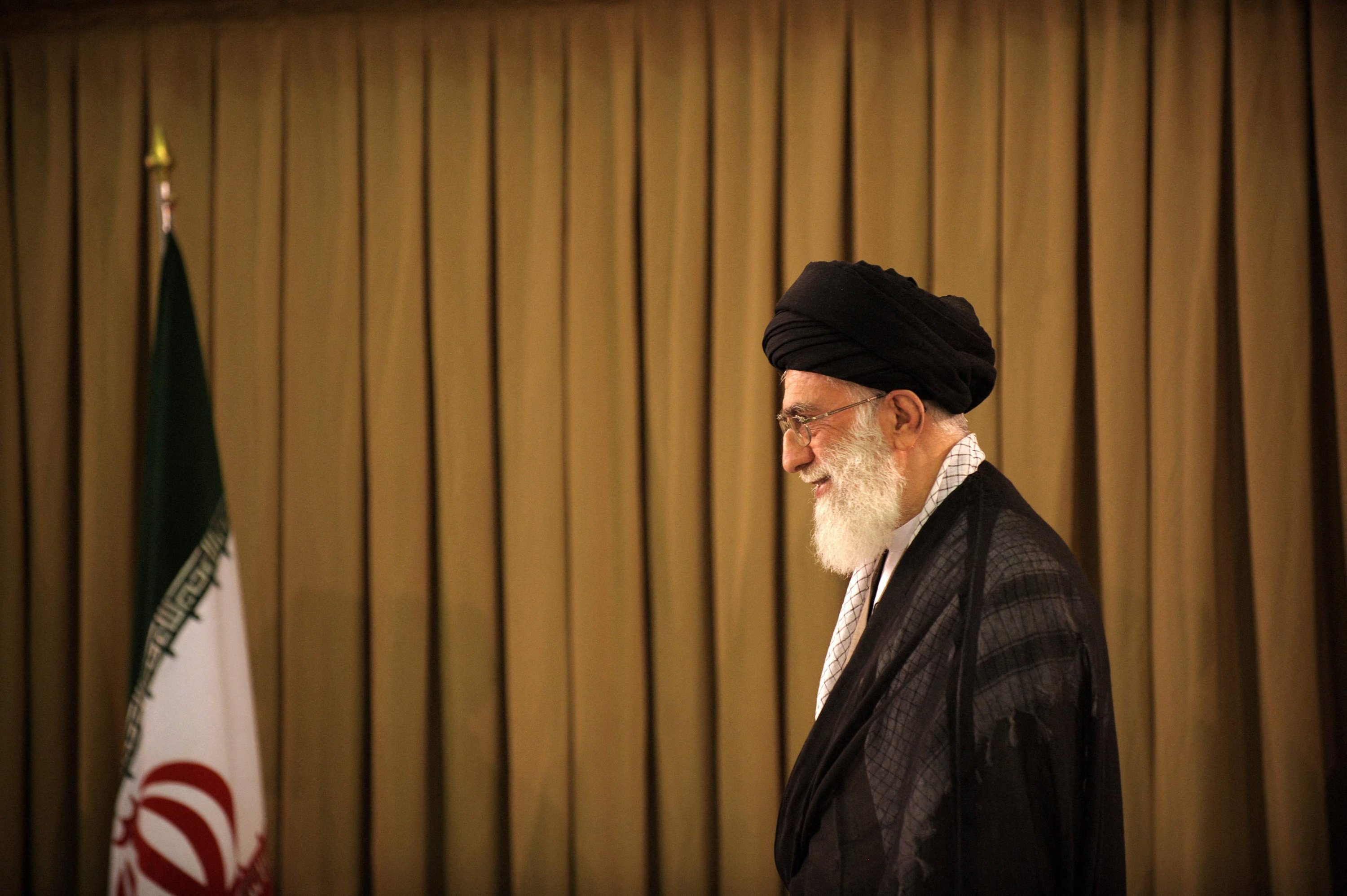
Supreme leader of Iran, Ali Khamenei, was killed following U.S.-Israeli bombardment, Iranian state television confirmed Sunday.
The broadcaster did not provide details about the circumstances of his death.
State media also reported that 40 days of public mourning were declared in Iran.
The Supreme National Security Council said Khamenei was killed at his office early Saturday, and that his death would mark the beginning of a "great uprising against the tyrants of the world.”
Iran’s Revolutionary Guard Corps said it would "decisively avenge” Khamenei’s killing, stressing that "the hand of revenge of the Iranian people will not let go of the killers of the Imam.”
The guard said martyrdom in the path of Islam and "Greater Iran” represents victory and proximity to the ultimate goal, adding that Khamenei’s path "will not stop after his martyrdom, but will continue with strength and grandeur.”
The statement urged all segments of society to take part in national defense gatherings to demonstrate unity and cohesion before "the enemies of the nation and terrorists,” and said the killing would make the nation more determined to continue what it described as Khamenei’s illuminating path.
U.S. President Donald Trump wrote in a post on his social media platform Truth Social that Khamenei was "dead.”
"Khamenei, one of the most evil people in History, is dead,” Trump wrote.
Members of the Assembly of Experts, composed of ayatollahs, will convene in Tehran to select the new supreme leader, also known as the Velayat-e Faqih.
The body may choose Ayatollah Khamenei's successor in a single session or through multiple meetings, and the selection process could take one day or several.
The Assembly of Experts may have already selected a successor on Saturday, and if a decision has been made, an announcement is likely sometime Sunday.
Until the new Velayat-e Faqih is officially declared, the constitutional powers of the Supreme Leadership will be exercised by a three-member council consisting of the president, the speaker of parliament and the head of the judiciary.