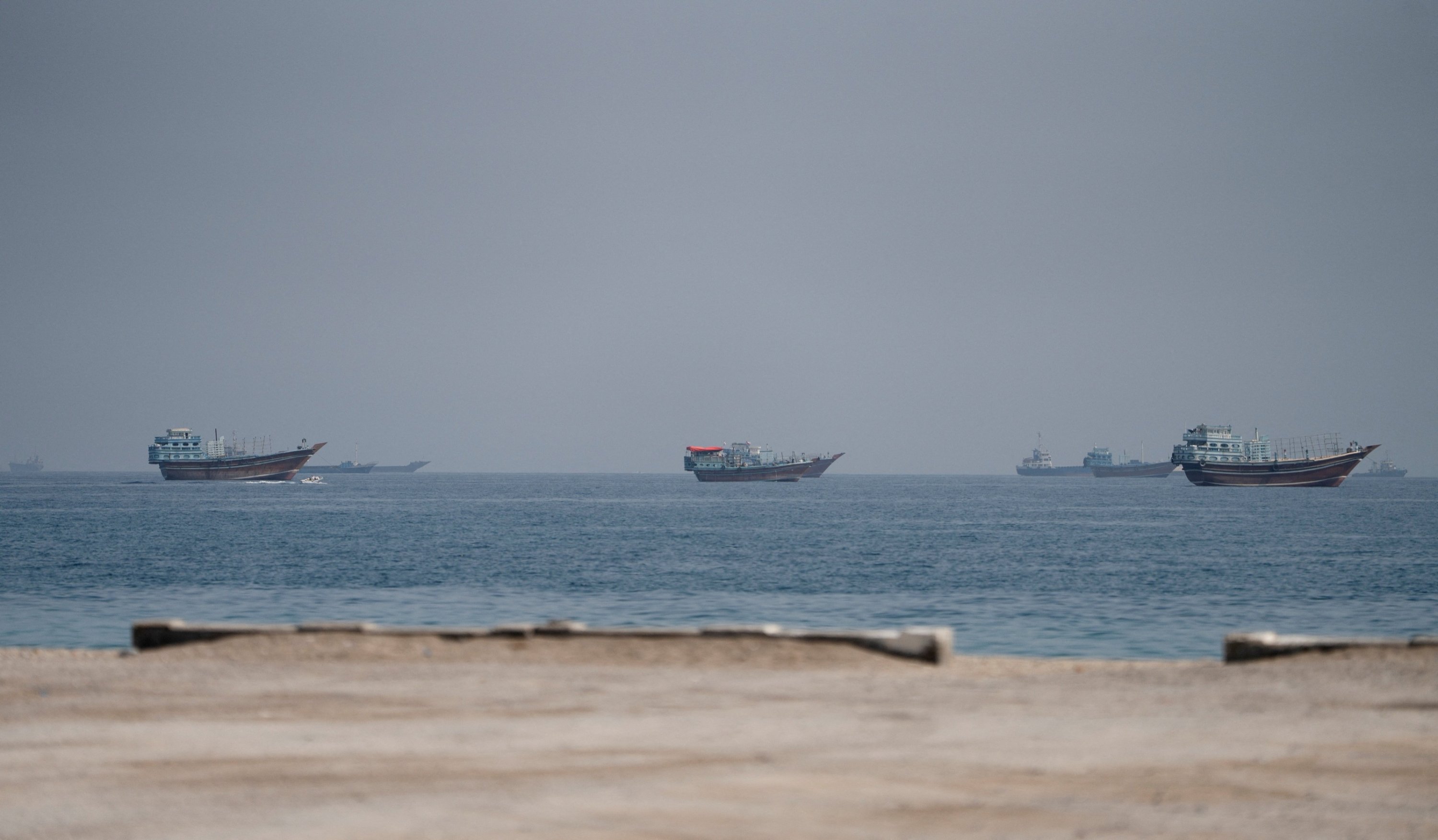
Iran and Oman have agreed on control and revenues tied to the Strait of Hormuz, but the key shipping lane will remain closed unless the United States accepts their conditions, Iran’s Revolutionary Guard said Wednesday.
The duo have held on-and-off talks for weeks about controlling traffic through the strait, which handled one-fifth of global oil and liquefied natural gas shipments before the war began in February.
Most shipping has since been shut down, driving global energy prices higher, as Tehran and Washington have tried to assert control over the channel, imposing separate blockades.
"The Strait of Hormuz belongs to Iran and the country of Oman ... We have been in negotiations with Oman for about a month, and we have reached results that are acceptable to both sides," Islamic Revolutionary Guard Corps spokesman Hossein Mohebbi said in comments published by Iranian state media.
"In these negotiations, agreements have been reached regarding the share of each country in the waters of the Strait and the share of Iran and Oman in its revenues," Mohebbi added.
The IRGC accused the United States of seeking to obstruct the negotiations between Iran and Oman and said this had caused the agreement to be delayed.
"If the United States stops obstructing and returns to the agreement, we can open the Strait of Hormuz within the framework of the agreement reached ... If the United States does not accept our conditions, the Strait of Hormuz will not be opened under any circumstances," Mohebbi said.
Though active hostilities between the U.S. and Iran have largely subsided in recent weeks, diplomatic efforts to reach a peace deal have stalled and continuing attacks on ships mean passage through the Strait of Hormuz remains perilous.
Iran announced a blacklist on Sunday of 45 ships in an apparent effort to stop ship-to-ship transfers used by Gulf energy producers to evade the Iranian blockade. Some companies plan to stop using vessels added to the blacklist, sources said.
In an effort to tighten pressure on Iran's economy, the United States earlier this week threatened to punish countries that continue to do business with Iran, but said it would not impose penalties immediately.
The sanctions did not feature Chinese financial institutions suspected of facilitating oil exports from Iran that the U.S. blockade has cut.
Iran denounced the U.S. effort to isolate its economy as an act of "gross lawlessness", expressing confidence that many countries would not join the pressure campaign.
Oil prices fell for a third day, dropping more than $2 a barrel to a two-week low, following signs of renewed efforts to seek a mediated end to the war that began on Feb. 28 with U.S. and Israeli strikes on Iran.