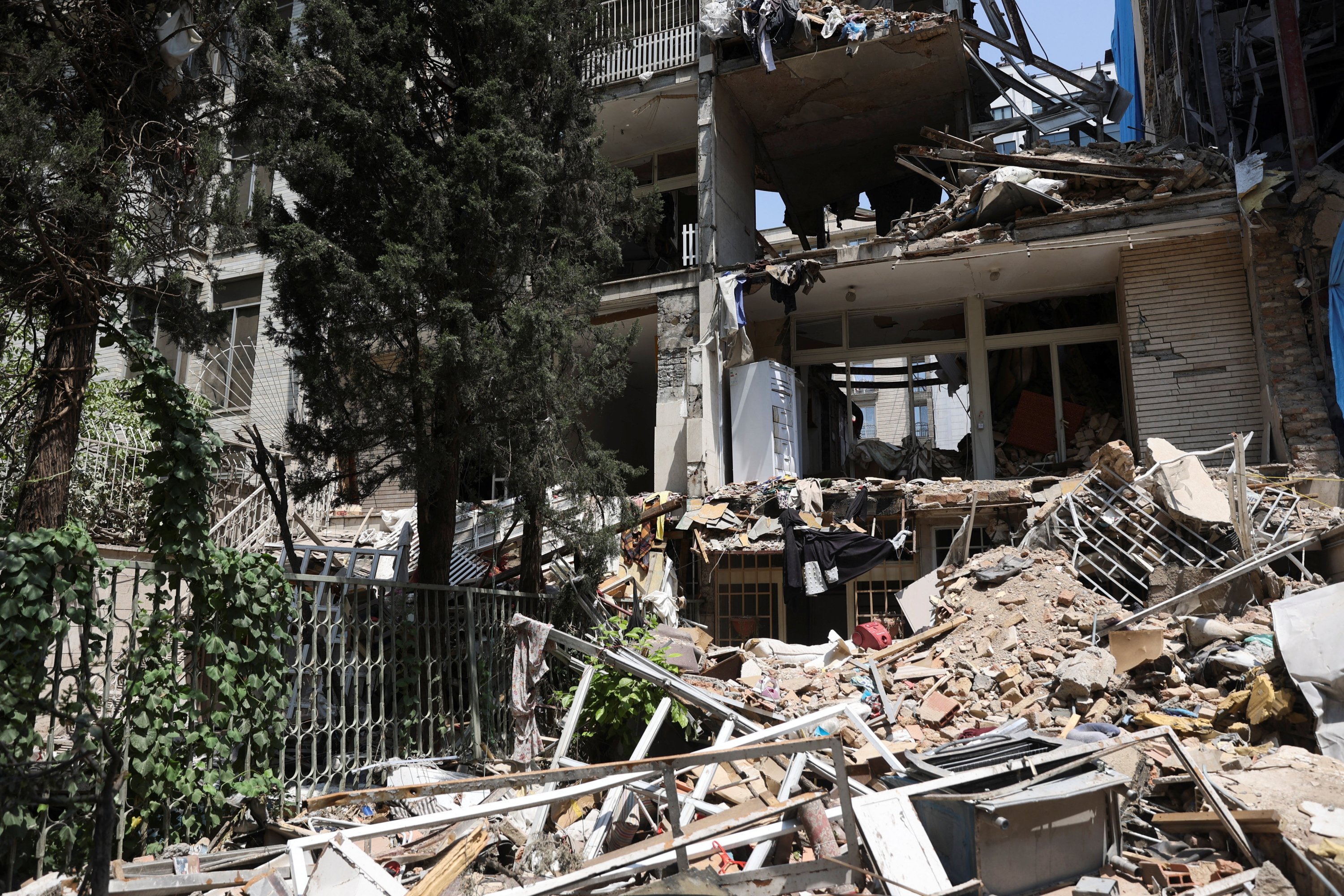
Iran will demand U.S. compensation for losses from last month’s war before resuming nuclear talks, Foreign Minister Abbas Araghchi told the Financial Times on Thursday, signaling a tougher stance toward the Trump administration.
"They should explain why they attacked us in the middle of...negotiations, and they have to ensure that they are not going to repeat that (during future talks)," Araghchi told FT in an interview in Tehran. "And they have to compensate (Iran for) the damage that they have done."
The report said Araghchi and U.S. special envoy Steve Witkoff exchanged messages with each other during and since the war, with the Iranian official emphasizing to his American counterpart the need for a "win-win solution" to end the long-running standoff over Iran's nuclear program.
Iran's chief nuclear negotiator told the newspaper that Iran needs real confidence-building measures from their side after Witkoff proposed resuming talks.
He said this should include financial compensation, without giving details and assurances that Iran would not be attacked during negotiations again, according to FT.
The U.S. launched strikes last month on Iranian nuclear facilities that Washington says were part of a program geared towards developing nuclear weapons. Tehran maintains that its nuclear program is for purely civilian purposes.
The White House and the U.S. State Department did not immediately respond to Reuters' request for comment.
In a separate development Thursday, Iran described as "malicious" fresh U.S. sanctions targeting a shipping empire controlled by the son of a top political advisor to the Islamic republic's supreme leader.
The U.S. Treasury Department on Wednesday imposed restrictions on more than 115 individuals, companies and ships accused of facilitating the sale of Iranian and Russian oil.
These include a fleet allegedly operated by Mohammad Hossein Shamkhani, son of Ali Shamkhani, a top political advisor to Iran's Supreme Leader Ayatollah Ali Khamenei.
Foreign ministry spokesperson Esmaeil Baqaei called the sanctions "a malicious act aimed at undermining the economic development and welfare of the Iranian people."
The U.S. Treasury Department said Hossein Shamkhani operates a fleet of more than 50 tankers and container ships transporting Iranian and Russian oil and petroleum products, generating tens of billions of dollars in profit.
"The Shamkhani family's shipping empire highlights how the Iranian regime elites leverage their positions to accrue massive wealth and fund the regime's dangerous behavior," Treasury Secretary Scott Bessent said in a statement.
Baqaei said the sanctions serve as "clear evidence of the enmity of American decision-makers toward Iranians", describing them as a "a crime against humanity."
The Wednesday sanction package marked the largest to date since the Trump administration reinstated its "maximum pressure" campaign against Iran, according to Bessent.
Under the campaign, the U.S. exited the landmark 2015 nuclear accord between Iran and world powers in 2018, during Donald Trump's first term as president, and reimposed harsh sanctions on Tehran.
Baqaei on Thursday accused Washington of pursuing "economic terrorism" through unilateral and coercive measures that he said violated international law and the basic rights of Iranians.
He also pointed to what he described as recent US and Israeli "military aggression" against Iranian territory, saying it was part of a broader campaign to destabilise the country and obstruct its development.
Washington joined Israel in attacking Iran last month, hitting key nuclear sites in the Islamic Republic.
Israel launched on June 13 strikes on Iran, targeting military and nuclear sites in Iran as well as residential areas, killing over 1,000 Iranians.
Iran also launched retaliatory strikes on Israel, killing 29 people.
A cease-fire between Iran and Israel has been in effect since June 24.