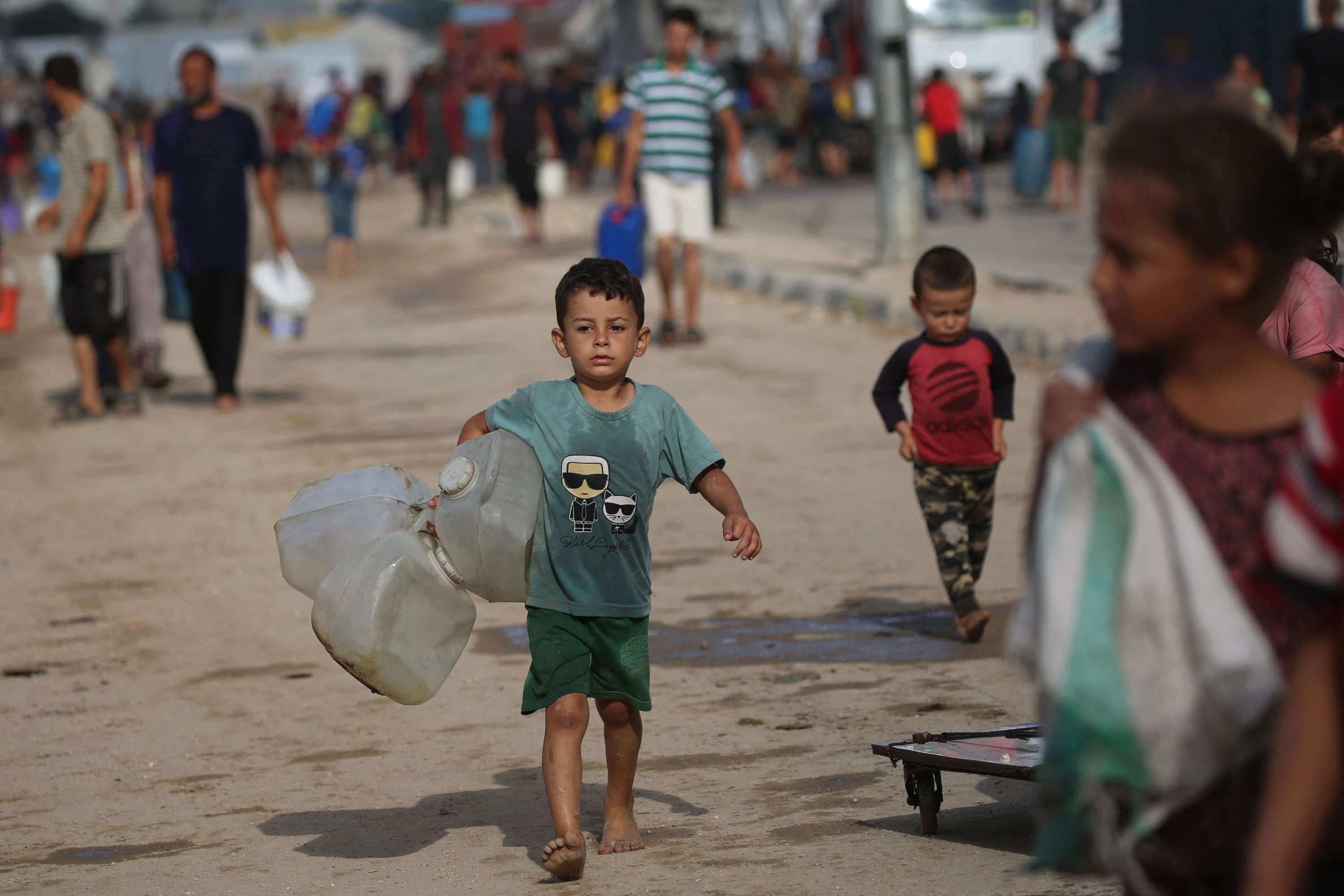
Israel has allowed fewer than 100 United Nations aid trucks a day to enter Gaza since the cease-fire earlier this month, far short of the 600 daily deliveries pledged under the plan brokered by U.S. President Donald Trump, according to U.N. data.
Between Oct. 10 and Oct. 21, Israel authorized an average of 1,011 tons of aid — roughly 94 trucks — to enter the enclave each day, U.N. figures show. While this marks an increase from the 62 daily trucks recorded before the cease-fire, the amount remains a fraction of what humanitarian agencies say is urgently needed.
“The situation still remains catastrophic because what’s entering is not enough,” World Health Organization chief Tedros Adhanom Ghebreyesus said Thursday. “There is no dent in hunger because there is not enough food.”
The U.N.’s “2720 Mechanism for Gaza,” which tracks aid deliveries, recorded the busiest day on Oct. 16 with 206 trucks entering the strip. U.N. Humanitarian chief Tom Fletcher warned that the flow remains “a fraction of what’s needed,” saying only “tens of trucks on a good day” are crossing instead of the hundreds required.
More than 93% of the aid entering Gaza is food, while just 1.7% consists of nutrition supplements for vulnerable groups, such as malnourished children and pregnant women. Since the U.N. declared a famine on Aug. 22 – the first in the Middle East – nearly 1,000 tonnes of nutrition supplies have reached Gaza.
The World Food Programme, which operates about 70% of the trucks tracked by the U.N., said it has delivered enough food for about half a million people for two weeks. Still, the U.N. says food aid, averaging 850 tonnes per day, remains well below the 2,000 tons needed daily.
Fuel deliveries have increased slightly, with an average of 164,000 liters entering Gaza each day since the cease-fire – still far short of the 270,000 liters per day needed to sustain relief operations.
Much of the aid, the U.N. warned, has not reached intended destinations due to looting or armed groups intercepting convoys inside Gaza.