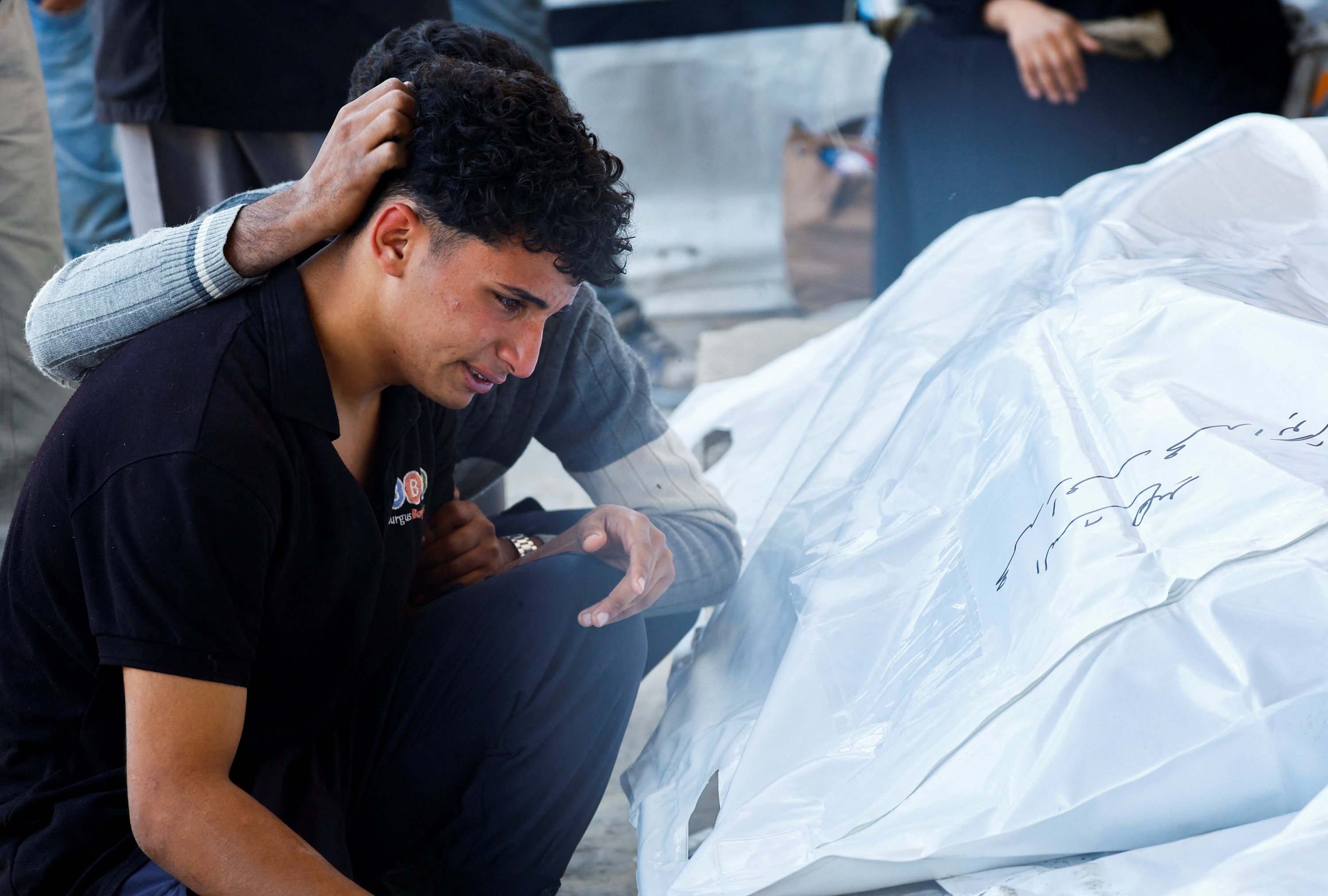
At least 24 Palestinians were killed and 54 more wounded Saturday when Israel struck Gaza in the latest test of the fragile cease-fire in the coastal territory.
The strikes, which Israel said were in response to gunfire at its troops, came after international momentum on Gaza, with the U.N. Security Council on Monday approving the U.S. blueprint to secure and govern the territory. It also authorizes an international stabilization force to provide security, approves a transitional authority to be overseen by President Donald Trump and envisions a possible future path to an independent Palestinian state.
Israel has previously carried out similar waves of strikes after reported attacks on its forces during the cease-fire. At least 33 Palestinians were killed over a 12-hour period Wednesday and Thursday, mostly women and children, health officials said.
One of Saturday's strikes targeted a vehicle, killing 11 and wounding over 20 Palestinians in Gaza City’s Rimal neighborhood, said Rami Mhanna, managing director of Shifa Hospital, where the casualties were taken. The majority of the wounded were children, Director Mohamed Abu Selmiya said.
An Associated Press video showed children and others inspecting the blackened vehicle, whose top was blown off.
A strike targeting a house near al-Awda Hospital in central Gaza killed at least three people and wounded 11 others, according to the hospital. It said a strike on a house in Nuseirat camp in central Gaza killed at least seven people, including a child and wounded 16 others.
Another strike, targeting a house in Deir al-Balah in central Gaza, killed three people, including a woman, according to Al-Aqsa Hospital.
"Suddenly, I heard a powerful explosion. I looked outside and saw smoke covering the entire area. I couldn’t see a thing. I covered my ears and started shouting to the others in the tent to run,” said Khalil Abu Hatab in Deir al-Balah. "When I looked again, I realized the upper floor of my neighbor’s house was gone."
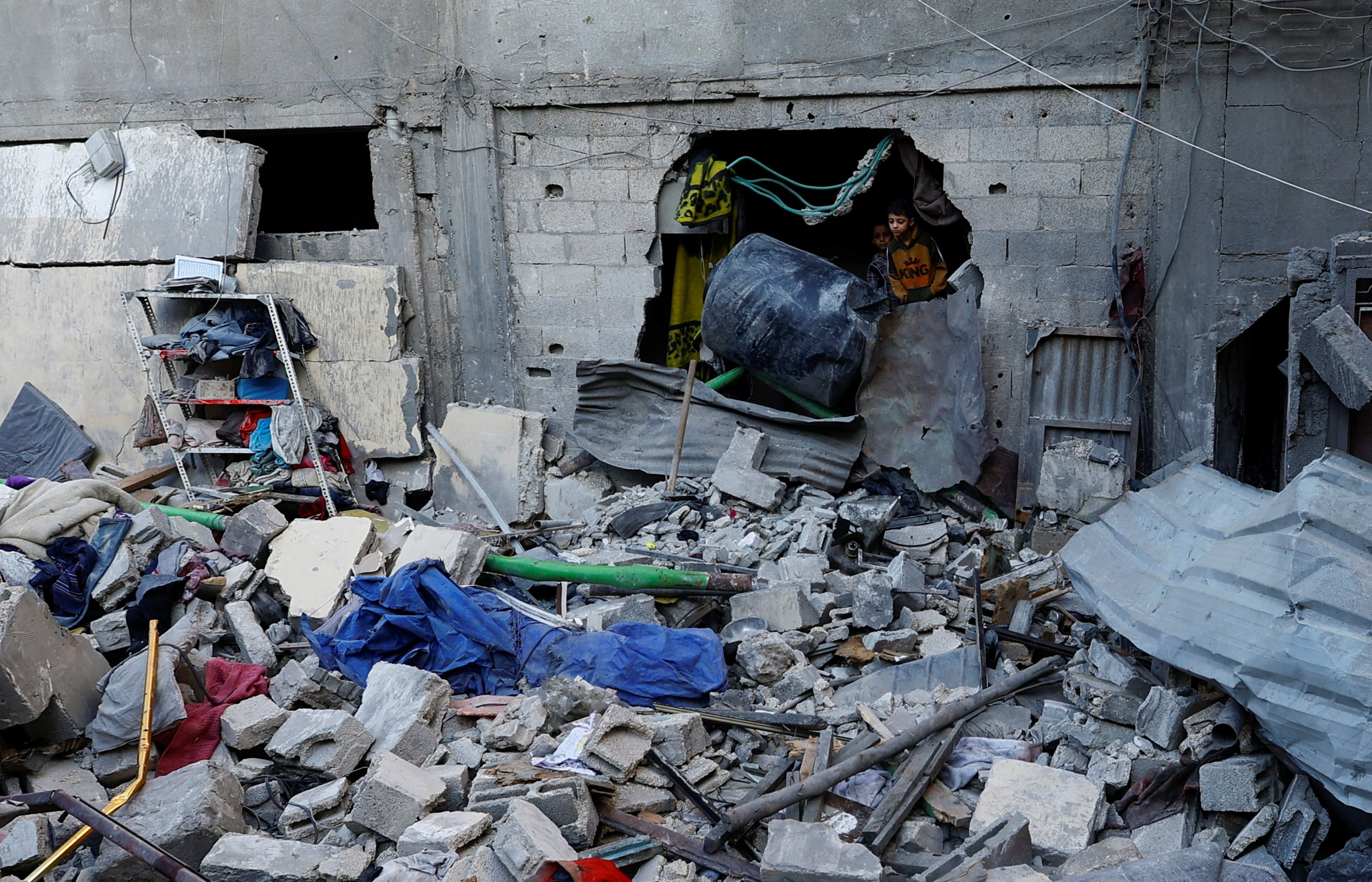
He added: "It’s a fragile cease-fire. This is not a life we can live. There’s no safe place."
Israel’s military, in a statement, said it launched attacks against Hamas after one of its members allegedly crossed into an Israeli-held area and shot at troops in southern Gaza. It said no soldiers were hurt. The military said the person had used a road on which humanitarian aid enters the territory, and called it an "extreme violation” of the cease-fire.
In other statements, the military said soldiers killed 11 people in the Rafah area and detained six others, who allegedly tried to flee an underground structure. It also said its forces killed two others who allegedly crossed into Israeli-held areas in northern Gaza and advanced toward soldiers.
Israeli forces remain in just over half of Gaza after withdrawing from some areas under the cease-fire.
A senior member of Hamas' political bureau, Izzat al-Rishq, in a statement, accused Israel of "fabricating pretexts to evade the (cease-fire) agreement and return to the war of extermination” and said Hamas had urged the U.S. and other mediators to compel Israel to implement the agreement.
The Hamas statement didn't comment on the claim by Netanyahu’s office of five senior members killed.
The war began with the Hamas-led attack on southern Israel on Oct. 7, 2023, that killed some 1,200 people and took over 250 hostage. Almost all of the hostages or their remains have been returned in cease-fires or other deals. The remains of three are still in Gaza.
Israelis rallied again Saturday night in Tel Aviv, demanding a state commission of inquiry into the events around the Oct. 7 incursion.
"The government of Israel failed in its most important mission: to protect its children, to protect its citizens, not to abandon soldiers on the battlefield without rescue and without assistance,” said Rafi Ben Shitrit, father of Staff Sgt. Shimon Alroy Ben Shitrit, who was killed in the incursion.
Gaza's Health Ministry says 69,733 Palestinians have been killed and 170,863 injured in Israel's genocidal war. The toll has gone up during the cease-fire, both from new Israeli strikes and from the recovery and identification of bodies of people killed earlier in the war.