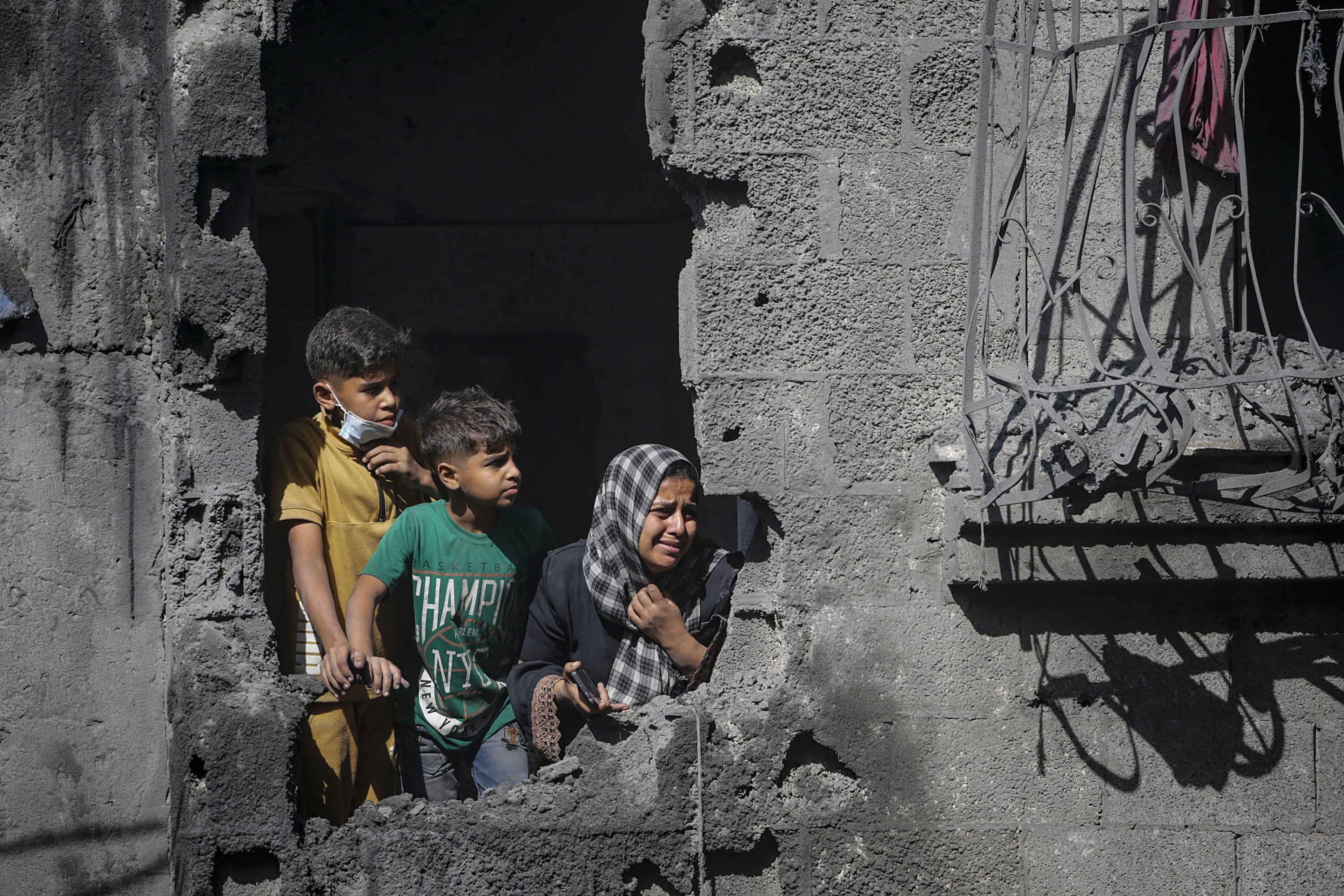
The Israeli military killed at least 104 people in Gaza overnight before claiming Wednesday that it will abide by a cease-fire accord.
Israel launched airstrikes in Gaza late Tuesday, after an alleged attack by Palestinian resistance groups killed one soldier, in the latest challenge to an already fragile cease-fire.
The Israeli military claimed in a statement that it would continue to uphold the cease-fire agreement and would respond firmly to "any violation."
U.S. President Donald Trump said that the U.S.-backed cease-fire was not at risk, even as Israeli planes struck across Gaza, with Israel and Hamas blaming each other for breaches of the truce.
The Gaza Health Ministry said that 46 children and 20 women were among the 104 people killed in Israeli strikes since Tuesday.
Reuters video showed several bodies of women and children inside a hospital during funeral processions.
"As I understand it, they took out an Israeli soldier," Trump told reporters aboard Air Force One. "So the Israelis hit back and they should hit back. When that happens, they should hit back," he added.
The Israeli military confirmed the soldier's death Wednesday.
"Nothing is going to jeopardize" the cease-fire, Trump said. "You have to understand Hamas is a very small part of peace in the Middle East, and they have to behave."
Some displaced Palestinians feared the truce was falling apart. Ismail Zayda, 40, a father of three children, recalled the sounds of explosions throughout the night, a reminder of a war that has killed tens of thousands.
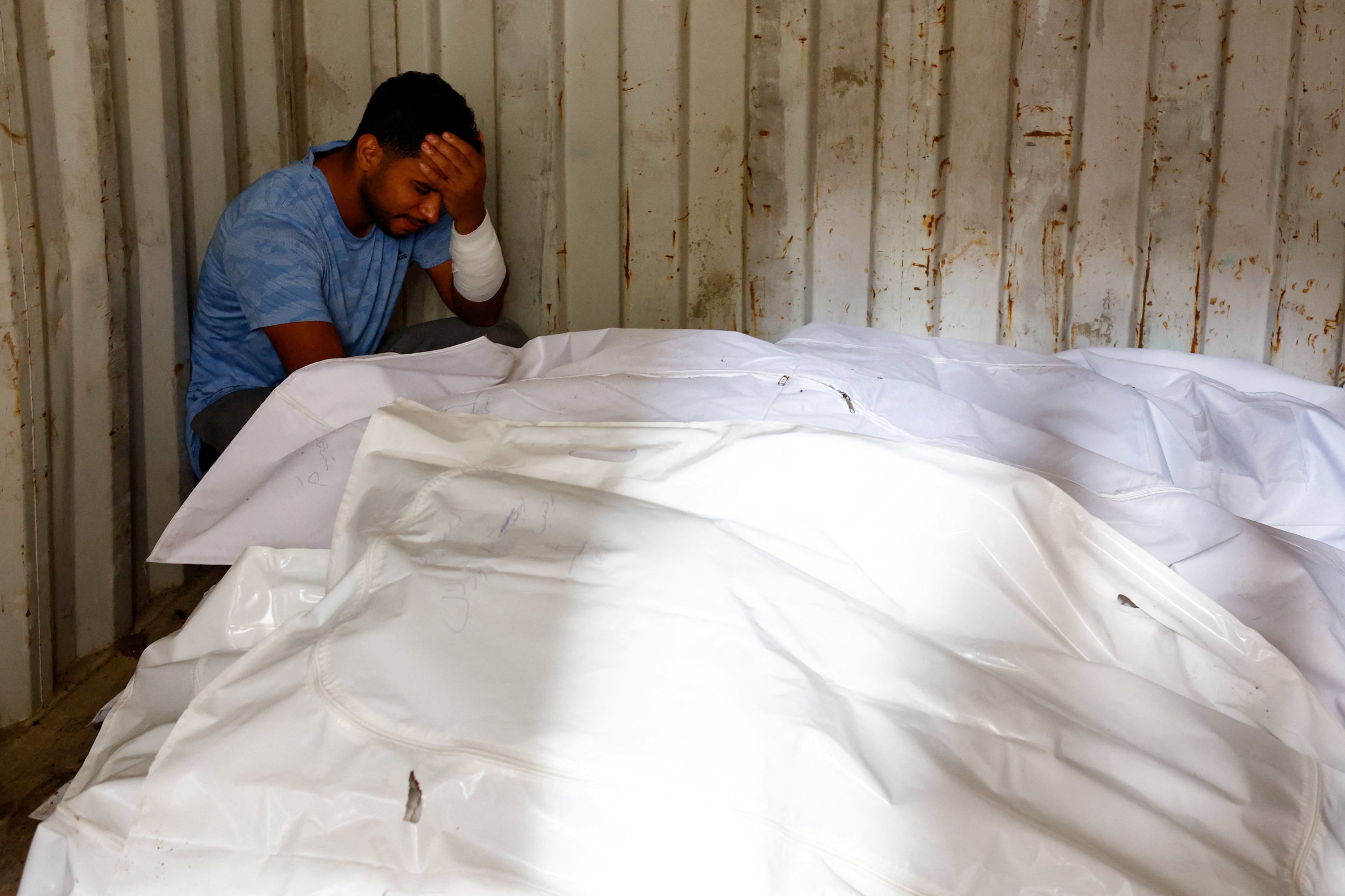
"It was one of the worst nights since the cease-fire was signed. The sounds of explosions and planes made us feel as if war had started again," Zayda, who lives in tents in western Gaza City with his 25-member family, told Reuters via a chat app.
An Israeli military official said Hamas had violated the cease-fire by attacking Israeli forces who were stationed within the so-called "yellow line," the deployment line agreed upon in the cease-fire.
Hamas denied responsibility for the attack on Israeli forces in Rafah, in southern Gaza, and said in a statement that it remained committed to the cease-fire deal.
The agreement went into effect on Oct. 10, halting Israel's two-year genocidal war triggered by the Hamas-led incursion of Israel on Oct. 7, 2023.
Under the accord, Hamas released all living hostages in return for nearly 2,000 Palestinian prisoners and wartime detainees, while Israel pulled back its troops and halted its offensive.
Hamas also agreed to hand over the remains of all dead hostages yet to be recovered, but has said that it will take time to locate and retrieve all of the bodies. Israel says the group can access the remains of most of the hostages.
The issue has become one of the main sticking points in the cease-fire, which Trump says he is watching closely.
Israeli Prime Minister Benjamin Netanyahu said human remains handed over on Monday night belonged to an Israeli killed during the Oct. 7 attack, whose body was recovered by Israeli forces in the early weeks of fighting.
The Israeli military claimed that Hamas had planted the remains at an excavation site before calling in a Red Cross team and pretending it had found a missing hostage, to create a "false impression of efforts to locate bodies."
Hamas did not immediately respond to a request for comment.
The ICRC said its team was unaware that the remains had been planted at the site before their arrival.
"It is unacceptable that a fake recovery was staged, when so much depends on this agreement being upheld and when so many families are still anxiously awaiting news of their loved ones," the ICRC said in a statement.