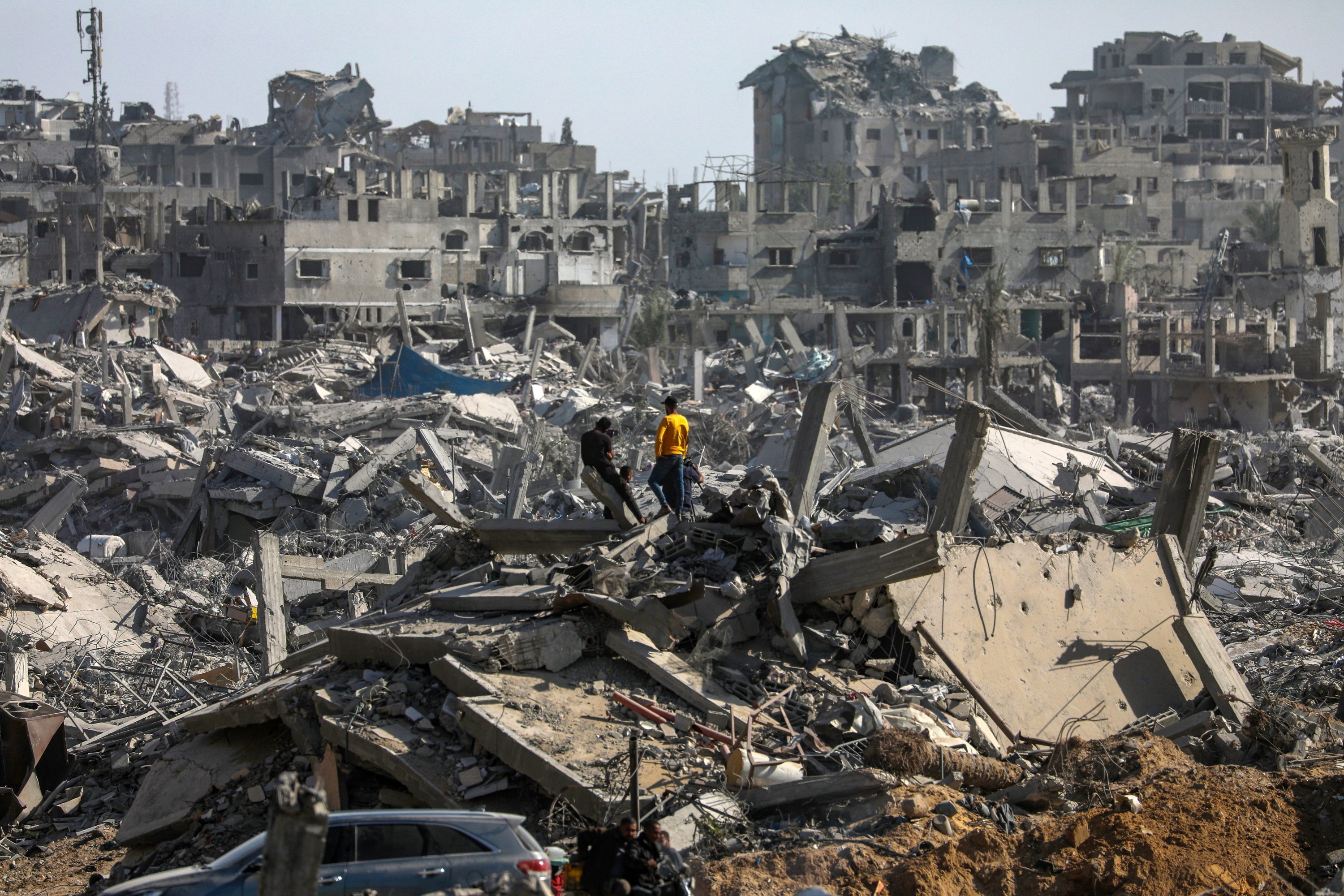
The fragile cease-fire in Gaza came under renewed strain Tuesday as Israel once again weaponized humanitarian aid, announcing plans to slash relief deliveries to the besieged enclave over delays in the return of deceased hostages — a move critics say punishes Palestinians already facing catastrophic conditions.
Word of the cut in aid was transmitted to U.S. officials and international aid groups, according to three AP sources who spoke on the condition of anonymity to discuss the matter. The Israeli government did not immediately comment.
A day earlier, Israelis celebrated the return of the last 20 living hostages in Gaza and Palestinians rejoiced at Israel's release of some 2,000 hostages and detainees as part of the cease-fire's first phase.
But now attention in Israel has turned to when Hamas will return all the bodies of hostages who died in captivity. While Israeli officials had understood there could be some delay in the recovery effort, the families of hostages and their supporters expressed dismay that only four of the 28 bodies were returned on Monday.
The Hostages Family Forum, a grassroots organization representing many of the hostage families, called it a "blatant violation of the agreement by Hamas.” The top official in Israel coordinating the return of hostages and the missing, Gal Hirsch, told the families in a note that pressure was being applied on Hamas through international mediators to expedite the process. A copy of the note was seen by The Associated Press and its authenticity was confirmed by someone with knowledge of the statement.
In Gaza, the Health Ministry said Tuesday that the bodies of three people killed by the Israeli military in the northern part of the territory were taken to Al Ahli hospital. The Israeli military said troops there had "opened fire to remove the threat” of several people approaching them and not complying with orders to stop. It didn’t immediately comment on any casualties.
Under the cease-fire deal, Israeli forces pulled back to where they were in August, before launching their latest offensive on Gaza City. The pullback leaves a number of hard-hit Palestinian neighborhoods under Israeli control, and Israel has warned residents not to try to return to homes there.
On Tuesday, the Israeli military identified two of the dead hostages returned from Gaza a day earlier - Guy Illouz from Israel and Bipin Joshi, a student from Nepal.
Both were in their 20s when Hamas took them during the Oct. 7, 2023, attack. Illouz was abducted from a music festival and Joshi from a bomb shelter.
Israel said Illouz died of his wounds while being held captive without proper medical treatment, while Joshi was murdered in captivity in the first months of the war.
But it also provided a mechanism if that didn’t happen, saying Hamas should share information about any remaining deceased hostages and "exert maximum effort to ensure the fulfillment of these commitments as soon as possible.” The agreement signed last week also said Israel would provide information on the remains of Palestinians who died in Israeli custody.
Hamas and the International Committee of the Red Cross have said that, because of the widespread destruction in Gaza, recovering the hostages’ bodies is a big challenge.