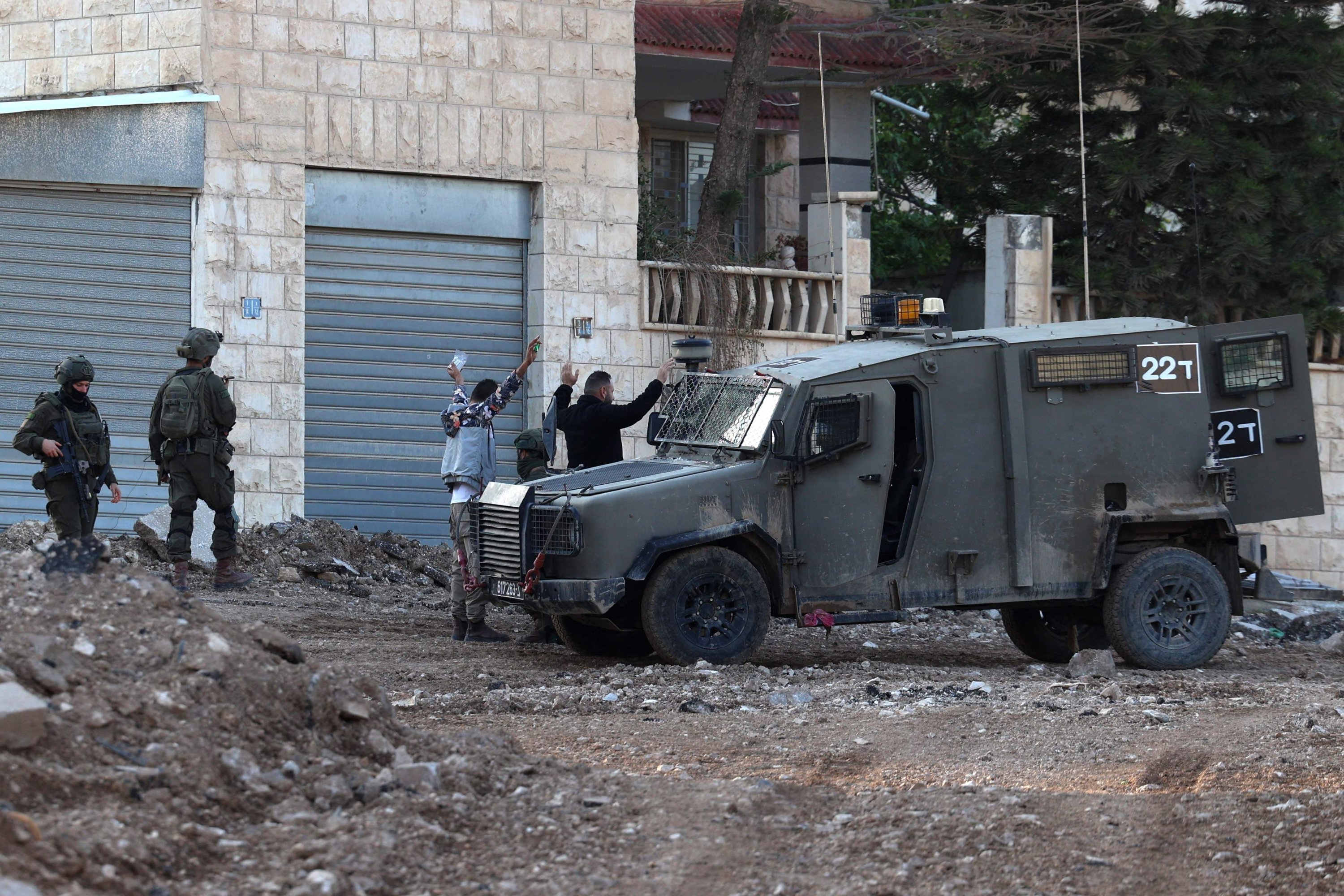
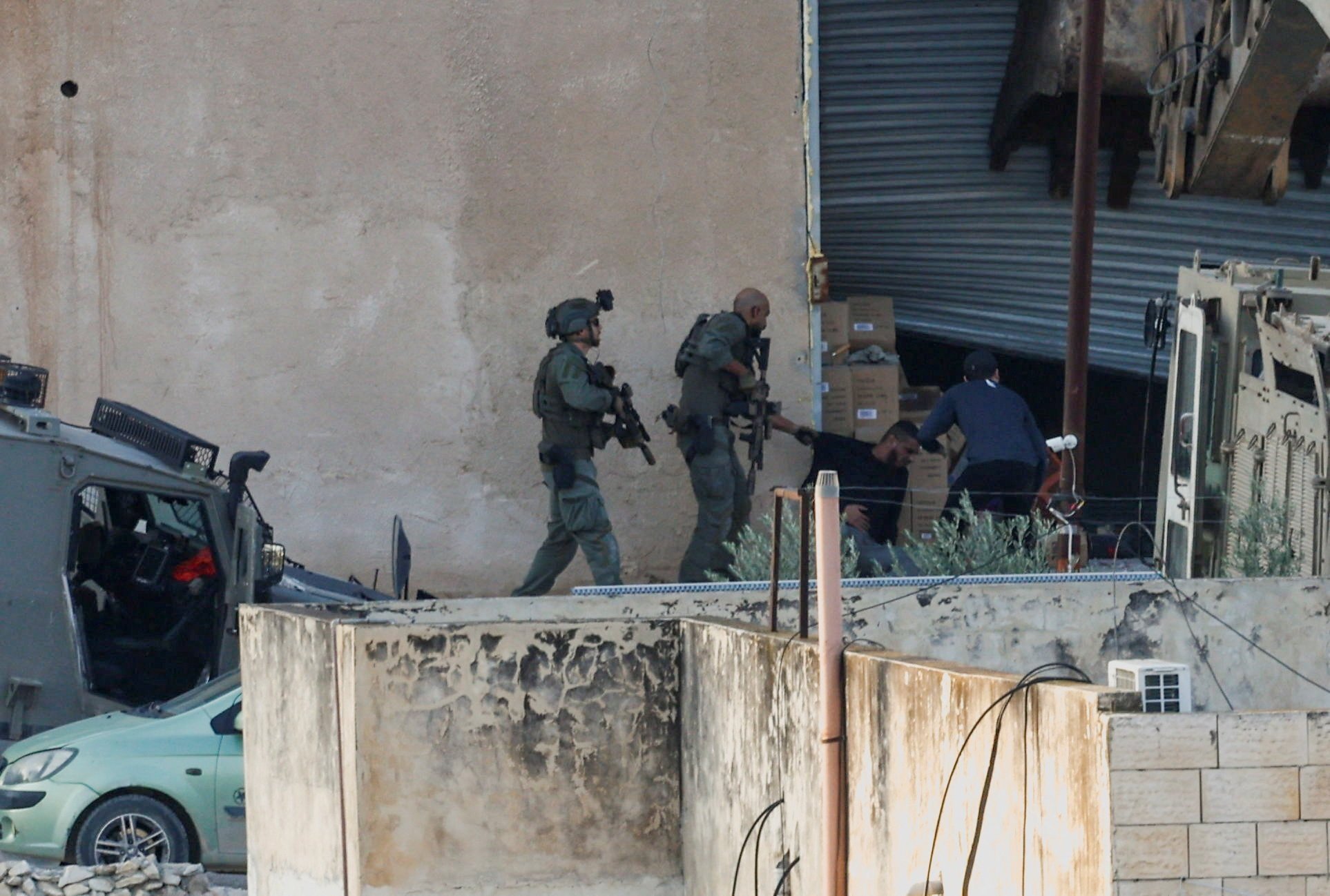
Israeli forces shot two Palestinian men on Thursday who appeared to be surrendering and unarmed during a raid in the Israeli-occupied West Bank, according to videos circulating on social media and broadcast by television channels.
In the footage, the men are seen exiting a building surrounded by armed Israeli forces in the northern West Bank city of Jenin, lifting their shirts and lying on the ground in an apparent surrender. The forces then appeared to direct the men back inside the building before opening fire at close range, with the men slumping down, apparently lifeless.
The Israeli army and police later on Thursday issued a joint statement announcing they had opened an investigation into the shooting, which the Palestinian Authority condemned as a "war crime" and a "brutal" summary execution.
The statement did not give any reason for why the forces opened fire, nor say that the two men had lain on the ground before they were directed back inside the building and shot. It said the shooting was "under review by the commanders on the ground, and will be transferred to the relevant professional bodies."
Palestinians and human rights groups say such investigations yield few results, and Israeli troops are rarely prosecuted.
The Palestinian Health Ministry identified the two men as 26-year-old Al-Muntasir Abdullah and 37-year-old Yousef Asasa. It added that their bodies were being held by Israeli forces.
In Ramallah, the Palestinian Prime Minister's office criticized Israel for executing the men "in cold blood." It called the shooting "an outright extrajudicial killing in blatant violation of international humanitarian law."
The Palestinian Foreign Ministry said it "strongly condemns the brutal field execution carried out by the Israeli occupation army against two Palestinian youths," calling it a "deliberate Israeli war crime."
It urged the international community to take "immediate action to stop the Israeli killing machine, deter these crimes, and impose urgent international protection mechanisms for the Palestinian people."
The Palestinian resistance group Hamas called it a "cold-blooded execution of two unarmed Palestinian youths."
Jenin Governor Kamal Abu al-Rub, also accused Israeli forces of carrying out a "cold-blooded execution" of two young men who he said were unarmed and had surrendered.
He said those who opened fire should face accountability, but expressed doubt that Israeli authorities would conduct a genuine investigation.
Israel's far-right National Security Minister Itamar Ben Gvir later issued a statement giving his "full backing" to the forces who opened fire.
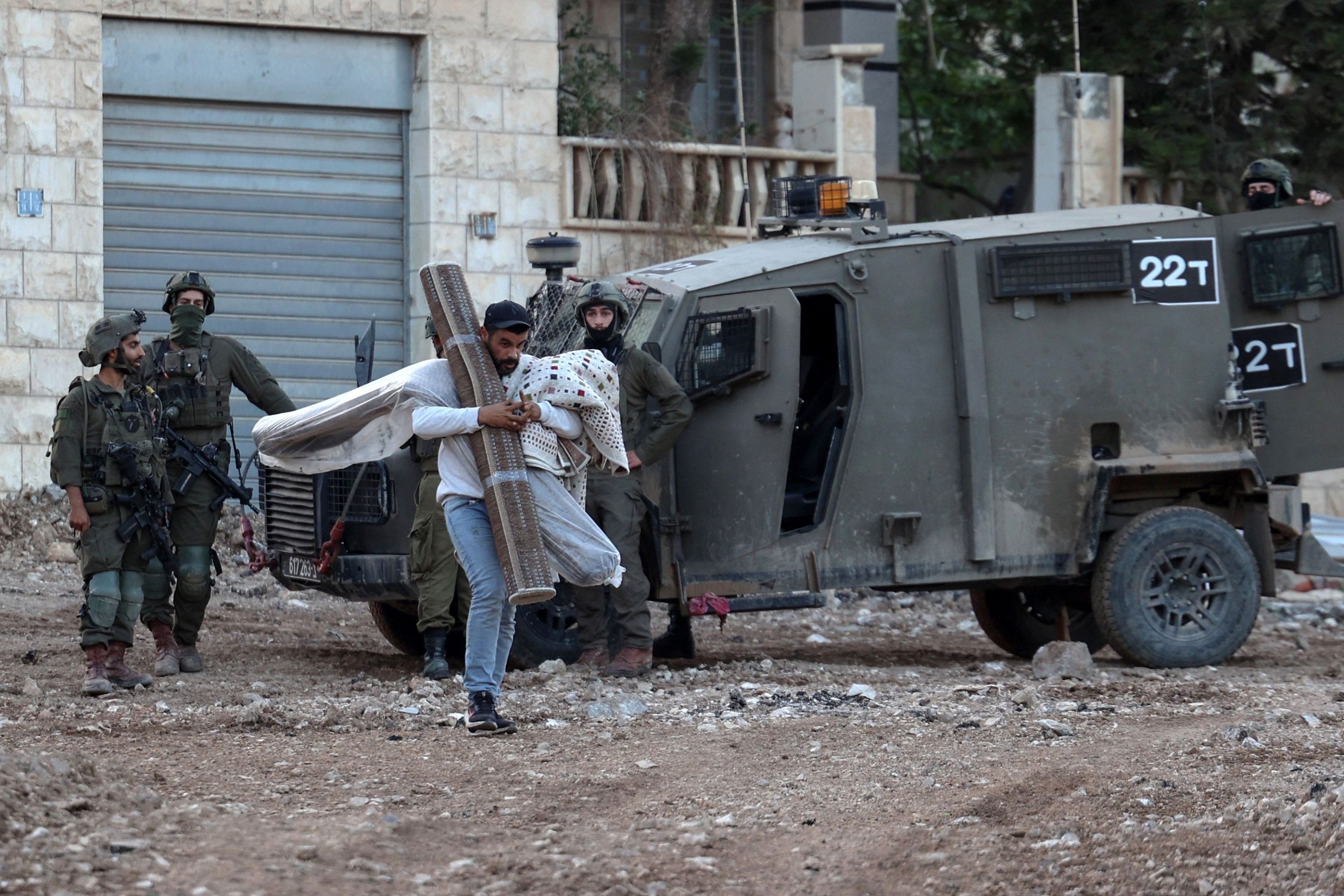
The killings come as Israel presses ahead with its latest assault in the West Bank, where it has stepped up its activities over the past two years. Israel claims it's cracking down on militants, but Palestinians and rights groups accuse it of using excessive force and say dozens of unarmed civilians have been killed.
Israel's military has detained more than 100 people since Tuesday in the town of Tubas, according to Abdullah al-Zaghari, spokesperson for the advocacy group Palestinian Prisoners' Club.
Israel's violence has not ceased despite the shaky cease-fire in Gaza coming into effect last month.
The latest attacks come amid a rising tide of Israeli settler violence in the West Bank. Israeli officials have played down the settler attacks as the work of a small minority. But Palestinians say the attacks are frequent, often in close proximity to Israeli troops, and the settlers are rarely punished.
Meanwhile, Israel on Thursday carried out another round of airstrikes on what it claimed to be Hezbollah sites in southern Lebanon. Ongoing assaults have fueled concerns that unrest could spill over and undermine the truce in Gaza.
The United Nations on Tuesday said Israel had killed at least 127 civilians, including children, in its strikes on Lebanon since the cease-fire came into effect last year. Things escalated earlier this week with a rare strike in Lebanon's capital of Beirut, killing Hezbollah's chief of staff.
Pope Leo XIV, who arrived in Türkiye on Thursday on his first foreign trip, is scheduled to visit the country on Sunday, when he will meet the crisis-hit nation's political and religious leaders.
Mohammed Ibrahim, a Palestinian-American teenager held in Israeli detention for nine months, was released Thursday evening and immediately checked into a hospital.
Visibly thin, head shaven and still in a grey jumpsuit, Ibrahim wiped tears away as he was embraced by family members shortly after his release in videos taken by the family. His father, Zaher Ibrahim, kissed his son and began to cry.
"He's skinny and pale, his eyes are sunken in and he still has signs of scabies," said Zeyad Kadur, his uncle.
The teen was visiting family in the West Bank with his parents when he was arrested at his family's home at night for allegedly throwing rocks at Israeli settlers in the West Bank, according to the Council on American-Islamic Relations and several members of Congress. In an affidavit, Mohammed said he only confessed to stone-throwing after he was threatened by interrogators with a beating.
His family and lawyers said he was held in poor conditions, suffered a scabies infection and lost weight in jail.