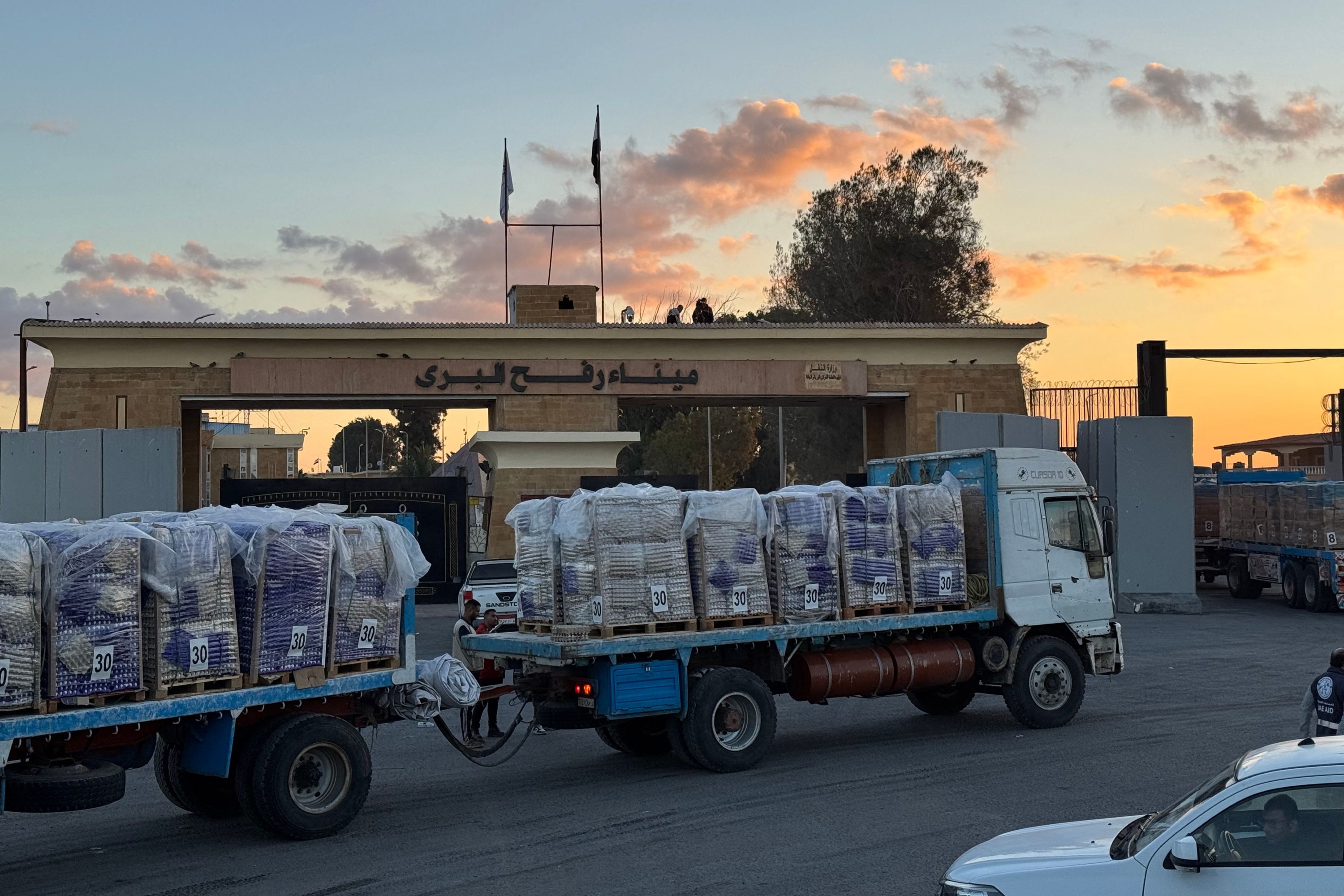
The Rafah border crossing between Gaza and Egypt is likely to reopen on Sunday, according to reports on Thursday citing Israeli Foreign Minister Gideon Saar, as Palestinians await a long-promised surge of aid into the enclave.
Saar claimed preparations were being made for the strategic crossing – a key entry point for humanitarian aid – to be reopened and that he "hoped" it will happen.
He made the comments after a meeting with European and other officials at the Med Dialogues meeting in Naples, Italy, the Italian news agency ANSA and the daily Yedioth Ahronoth reported.
"We are making all the necessary preparations. It is also coordinated with the EUBAM force of the European Union and, as far as I know, also with the Palestinians themselves," Saar said, referring to a unit of EU monitors at Rafah.
"So it will probably be opened this Sunday. I hope it will be open and everything possible will be done to make it so."
The crossing in the past has been an important entry point for food, medicine and other supplies that are desperately needed by Gaza's roughly 2.3 million people.
Earlier on Thursday, Egyptian Foreign Minister Badr Abdelatty said Cairo was holding discussions with Israel for the opening of the border "literally to flood Gaza with food and relief materials," as the situation in the enclave has reached "catastrophic" levels.
The Rafah crossing "is open from the Egyptian side 24/7," Abdelatty added.
The border remained closed from the Palestinian side despite a scheduled reopening on Wednesday under the first phase of a Gaza cease-fire agreement.
Since May 2024, the Israeli army has blocked the movement of Palestinians through the Rafah crossing, the territory's only window to the outside world that was not controlled by Tel Aviv before the start of the Israeli war in October 2023.
According to Israeli media, Tel Aviv refuses to reopen the crossing until it receives the remains of all Israeli hostages held by the Palestinian resistance group Hamas.
Hamas has already released 20 living Israeli hostages and handed over the remains of 10 more captives in exchange for nearly 2,000 Palestinian prisoners under the cease-fire deal.
The group said it had handed back all the bodies of deceased captives that it could access. The remains of 19 hostages are still unaccounted for, with Hamas saying it would need specialist recovery equipment to retrieve them from the ruins of Gaza.
The cease-fire agreement was reached between Israel and Hamas last week, based on a plan presented by U.S. President Donald Trump. Phase one included the release of Israeli hostages in exchange for Palestinian prisoners.
Much of the heavily urbanized enclave has been rendered a wasteland by two years of Israeli bombardments and airstrikes that have killed more than 67,900 Palestinians, mostly women and children.
The war began after Hamas' Oct. 7, 2023, incursion on southern Israel that caused 1,200 deaths and took 251 hostages, according to Israeli tallies.