Syria on Thursday accused Israel of fueling instability with a wave of airstrikes on military targets, including an airport and ground incursions that left 13 people dead.
Israel claimed it responded to fire from gunmen during an operation in southern Syria and warned interim President Ahmed al-Sharaa that he would face severe consequences if its security was threatened.
Israel has carried out an extensive bombing campaign against Syrian military assets since an anti-regime alliance toppled longtime dictator Bashar Assad in November. It has also carried out ground incursions into southern Syria in a bid to keep the forces of the new government back from the border.
Authorities in the southern province of Daraa said nine civilians were killed and several wounded in Israeli shelling near the city of Nawa.
The provincial government said the bombardment came amid Israel's deepest ground incursion into southern Syria so far.
The Syrian Observatory for Human Rights said the dead were local gunmen who were killed while attempting to confront Israeli forces.
According to the Israeli military, its forces were conducting operations in the Tasil area, near Nawa, seizing weapons and destroying alleged terrorist infrastructure when "several gunmen fired at our forces."
They responded by firing at them and eliminated several, a spokesperson claimed. There were no Israeli casualties.
"The IDF (military) will not allow the existence of a military threat in Syria and will act against it," the spokesperson added.
Israeli Prime Minister Benjamin Netanyahu demanded in February that southern Syria be completely demilitarized and said his government would not accept the presence of the forces of the new interim government near Israeli territory.
In December, Netanyahu ordered troops to enter the U.N.-patrolled buffer zone that separated Israeli and Syrian forces along the 1974 armistice line on the Golan Heights.
On Wednesday, Israel hit targets across Syria, including in the Damascus area.
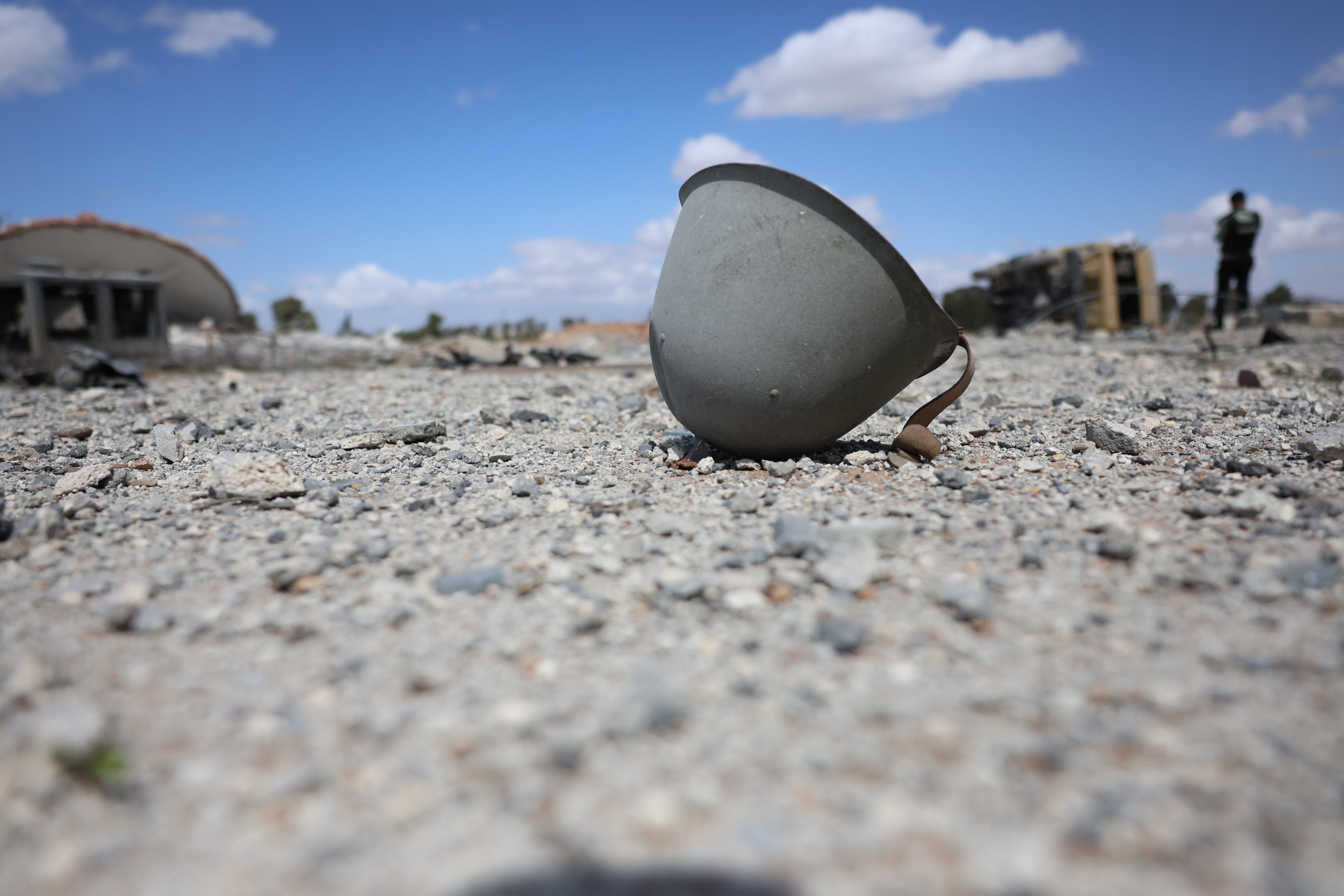
The Syrian Foreign Ministry said the strikes resulted in the "near-total destruction" of a military airport in the central province of Hama and wounded dozens of civilians and soldiers.
"This unjustified escalation is a deliberate attempt to destabilize Syria and exacerbate the suffering of its people," it said in a statement on Telegram.
Israeli Defense Minister Israel Katz hit back with a warning to al-Sharaa in which he pointedly referred to the president by the nom de guerre he used as a rebel commander.
"I warn Syrian leader Golani: If you allow hostile forces to enter Syria and threaten Israeli security interests, you will pay a heavy price," he said.
"The air force's activity yesterday near the airports in T4, Hama and the Damascus area sends a clear message and serves as a warning for the future," he added.
The Israeli military said its forces "struck military capabilities that remained at the Syrian bases of Hama and T4, along with additional remaining military infrastructure sites in the area of Damascus."
Israel has said it wants to prevent advanced weapons from falling into the hands of the new authorities.
The Syrian ministry said the Israeli strikes came as the country was trying to rebuild after 14 years of war, calling it a strategy to "normalize violence within the country."
During a visit to Jerusalem last month, EU foreign policy chief Kaja Kallas said that Israeli strikes on Syria were "unnecessary" and risked worsening the situation.