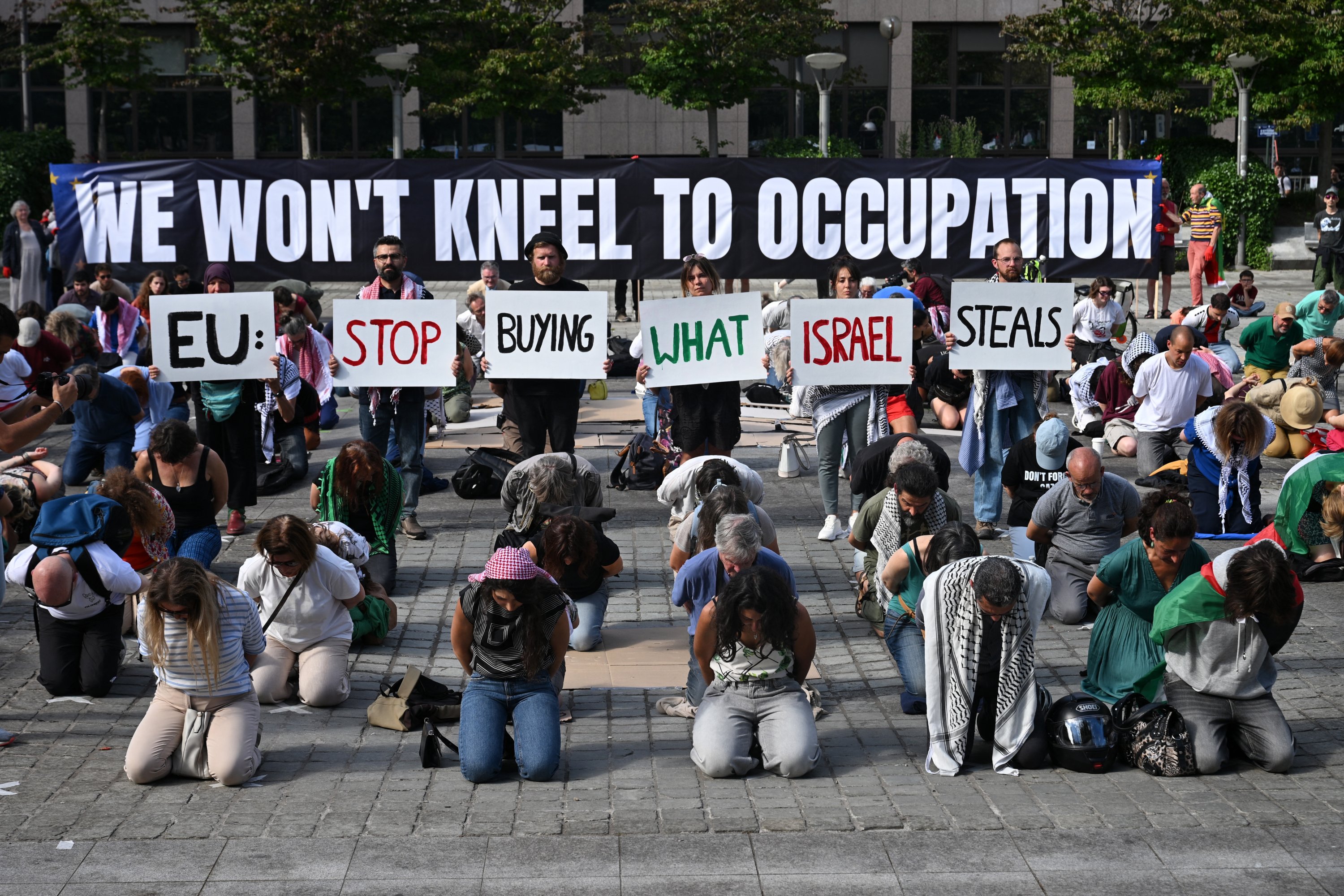
A coordinated push by 12 countries to restrict trade with illegal Israeli settlements in the occupied West Bank drew support Tuesday from a U.N. expert and advocacy groups, who hailed the measures as a significant first step while urging governments to intensify economic pressure over Israel's settlement policies.
U.N. Special Rapporteur on the occupied Palestinian territories Francesca Albanese welcomed Britain's decision, describing it as a "much-needed beginning."
Albanese said the shift did not yet reverse all policies she said were undermining Palestinian self-determination, while warning that the British government would likely face intense pressure over the move.
British Foreign Secretary Ed Miliband told lawmakers that London would ban imports of goods from illegal Israeli settlements, citing what he described as the "ethnic cleansing of Palestinians."
Miliband said legislation implementing the ban was expected within six to nine months, while other measures would be introduced sooner.
He characterized the policy as the "beginning of a new approach" toward Israel and said Britain wanted to send a clear signal that it would not accept the destruction of prospects for a two-state solution.
The sanctions would target illegal settlements and their expansion rather than Israel as a whole, he added.
In Canada, Canadians for Justice and Peace in the Middle East (CJPME) welcomed Ottawa's participation in the initiative but called on the government to expand restrictions beyond goods to services, investment and property linked to settlements.
CJPME President Yara Shoufani described the announcement as a victory for Palestinian rights advocates, saying it marked a significant shift toward imposing economic consequences for violations of international law.
The group also called on Ottawa to take stronger measures against Israel's wider settlement enterprise amid accelerating settlement expansion and violence against Palestinians in the West Bank.
Belgian Foreign Minister Maxime Prevot similarly welcomed the coordinated initiative, calling it an "important step" and arguing that violations of international law must be met with concrete measures.
Prevot urged Israel to halt settlement expansion and reiterated Belgium's support for a comprehensive and lasting peace based on a two-state solution.
The joint declaration said France, Britain and Canada would propose national measures prohibiting trade in goods originating from illegal settlements. It also welcomed restrictions already adopted by several European countries.
The initiative comes amid mounting concern over violence and settlement expansion across the occupied West Bank.
U.N. figures indicate more than 1,400 attacks by Israeli settlers resulting in casualties or property damage have been documented in 2026, reaching what the U.N. has described as unprecedented levels.
Around 750,000 Israeli settlers currently live across more than 500 settlements and outposts in the occupied Palestinian territories. Israeli settlements in the West Bank are considered illegal under international law.