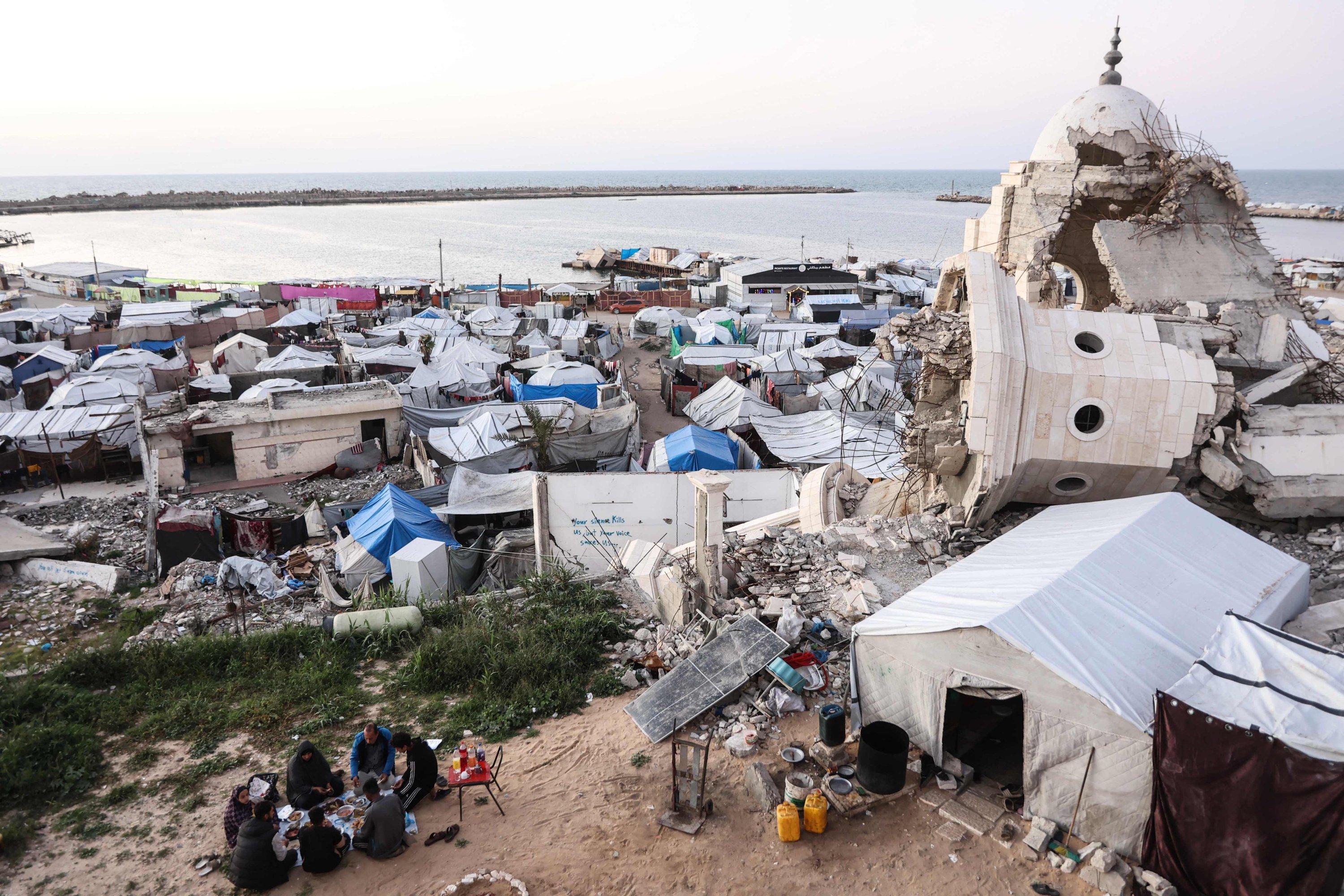
The United Nations’ top human rights official says Gaza remains in a state of catastrophe, warning that limited aid deliveries and a fragile cease-fire have failed to halt preventable deaths, mass displacement and the collapse of essential services.
Addressing the opening of the 61st session of the Human Rights Council in Geneva on Monday, Volker Türk delivered a stark assessment of conditions in the enclave more than four months after the fragile Gaza cease-fire took effect on Oct. 10, 2025.
“The situation in Gaza remains catastrophic,” Türk said, citing Palestinians still dying from Israeli fire, cold, hunger and treatable diseases.
The aid permitted into the territory, he added, is nowhere near enough to meet the massive scale of need.
He also raised concerns about possible ethnic cleansing in Gaza and the West Bank, alongside what he described as accelerated efforts toward unlawful annexation.
The truce has reduced the intensity of fighting that erupted after the war began on Oct. 7, 2023. But it has not ended civilian deaths or reversed the humanitarian collapse in a territory of roughly 2.1 million people.
According to figures from Gaza’s Health Ministry cited by the U.N. Office for the Coordination of Humanitarian Affairs, at least 72,045 Palestinians have been killed and 171,686 injured since the conflict began.
Those numbers include people who died because hospitals shut down, medicine ran out and water systems failed.
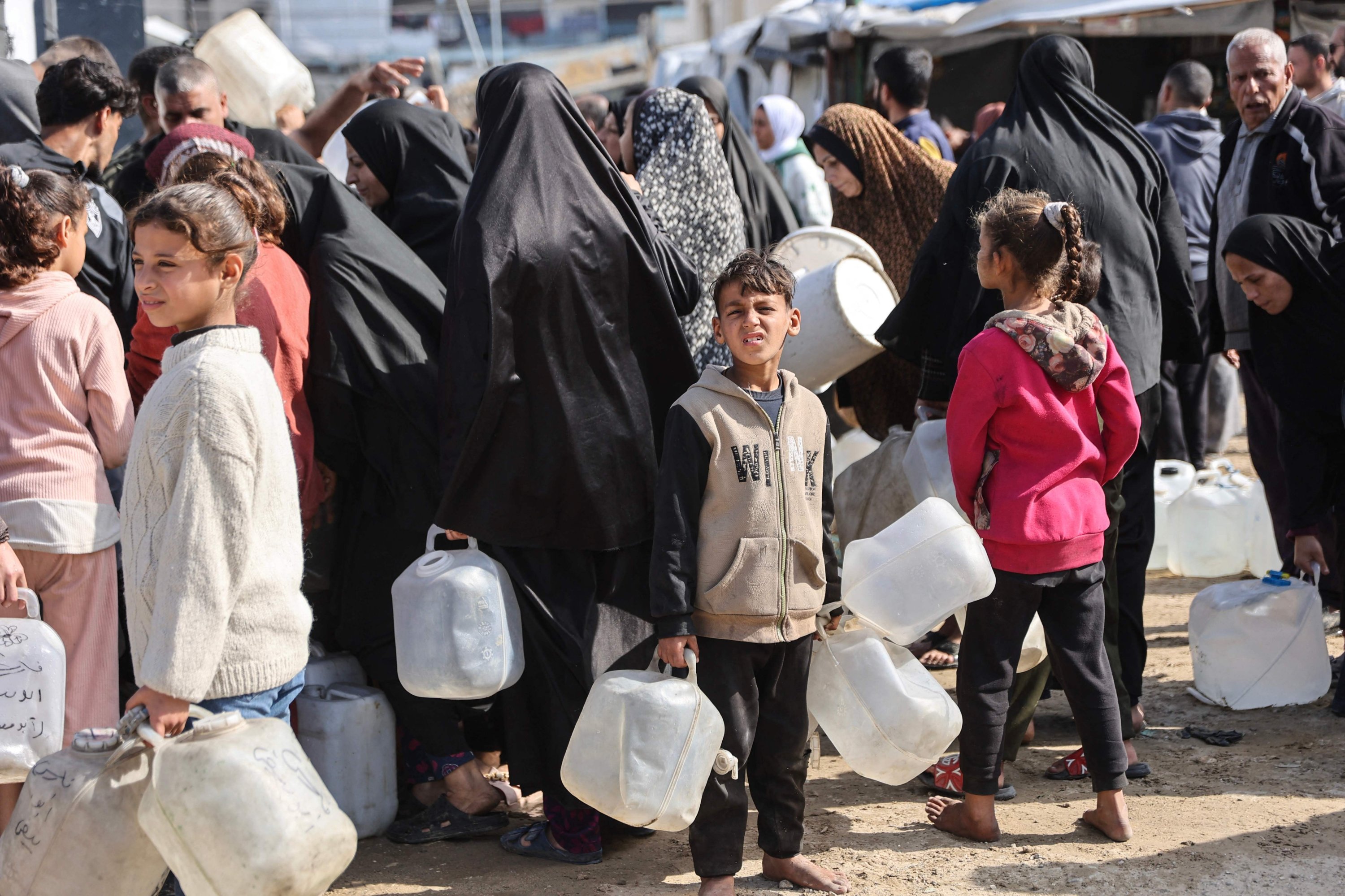
Since the cease-fire took hold, about 611 Palestinians have been killed and 1,630 injured through Feb. 19, 2026, including casualties from airstrikes, shelling and gunfire.
Israeli forces remain deployed across an estimated 53% to 58% of Gaza, restricting access to farmland, infrastructure and humanitarian facilities.
U.N. agencies report a marked increase in aid deliveries compared with the period of near-total blockade that preceded the cease-fire.
Between the truce and mid-February, more than 308,000 pallets of humanitarian cargo were offloaded at crossings, with the vast majority collected by U.N. agencies and partners. Nearly 200,000 metric tons of assistance have entered Gaza.
In the latest reporting week alone, about 13,000 pallets were offloaded, roughly 71% of them food.
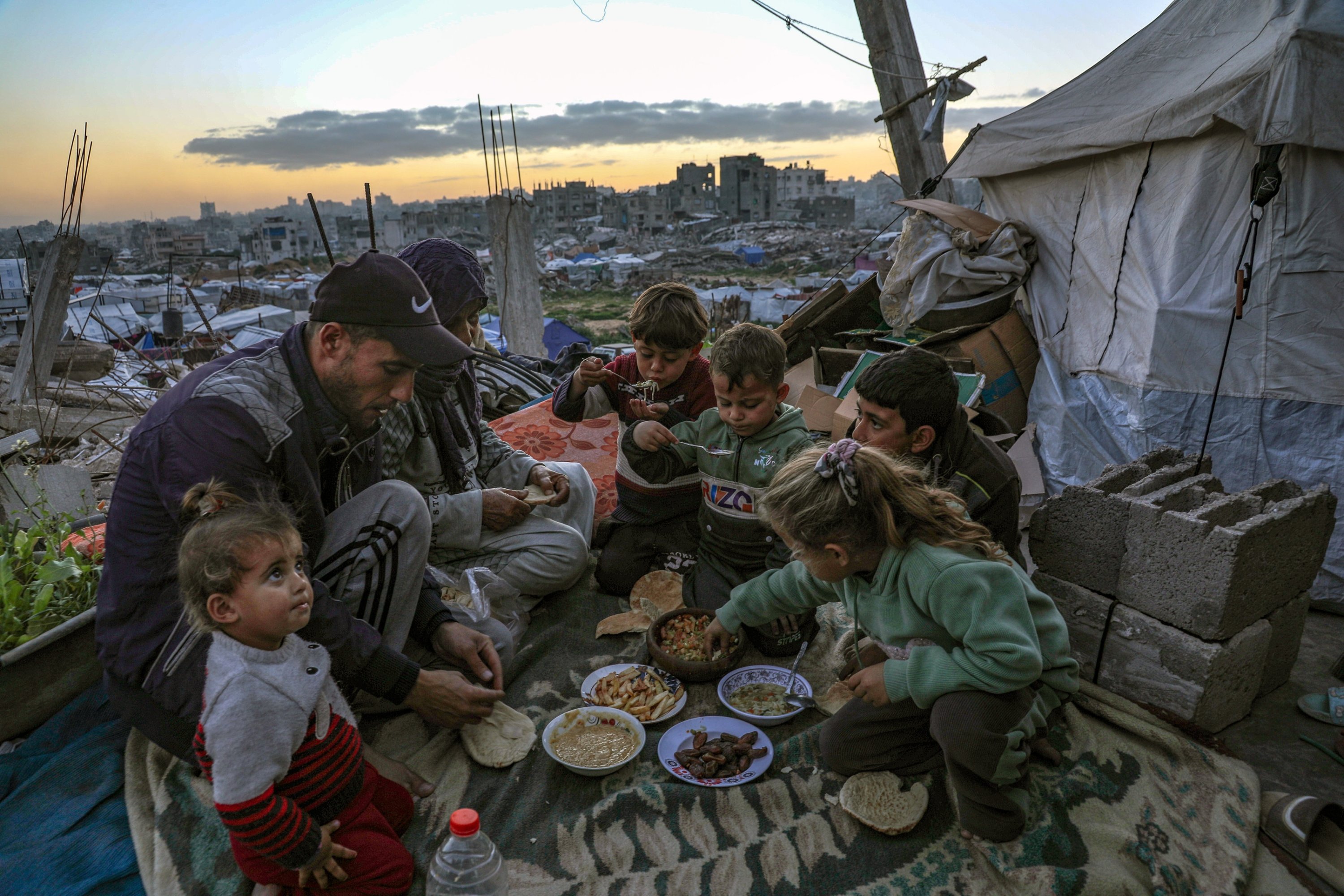
Community kitchens are preparing around 1.75 million hot meals a day.
Food assistance reached about 134,000 families in the most recent monthly cycle, though rations cover only half the minimum caloric requirement because stocks are insufficient.
Water partners are delivering nearly 20,000 cubic meters of drinking water daily through hundreds of distribution points.
Medical evacuations through Rafah have resumed on a limited basis, with more than 800 patients and caregivers transported since the crossing partially reopened.
Yet the improvements fall far short of what is required.
Food security assessments in late 2025 showed that improved access helped avert outright famine in some areas, but hundreds of thousands of people remained in emergency or catastrophic conditions.
In February, aid agencies warn they cannot sustain even reduced food rations for a full month without new supplies.
Agriculture has been devastated. Only a small fraction of cropland is both accessible and undamaged. Most livestock has perished. Winter conditions have spoiled food stocks stored in inadequate facilities.
The health system is barely functioning. Of 611 health points, just 252 are operational, many only partially.
Only 19 of 37 hospitals remain open. Shortages of medicines for chronic illnesses are acute. Water contamination has fueled rising cases of diarrhea and hepatitis A.
Overcrowded displacement sites increase the risk of disease and gender based violence.
At least two-thirds of Gaza’s population, about 1.4 million people, remain displaced across roughly 1,000 sites, most of them makeshift tents offering little protection from cold and rain.
Fires in crowded camps have destroyed shelters and injured residents. Although hundreds of thousands have attempted to return north, many neighborhoods remain inaccessible or uninhabitable.
Funding gaps compound the crisis. The 2026 Flash Appeal for the Occupied Palestinian Territory seeks $4.06 billion, with 92% earmarked for Gaza. As of mid-February, only about 5% had been disbursed.
Aid operations themselves are under strain. Of 67 coordinated missions in one recent week, several were denied or delayed. Since October 2023, 588 aid workers have been killed.
At the same Geneva session, Antonio Guterres warned that human rights are under assault worldwide, pointing to civilian suffering in Sudan, Gaza and Ukraine.
He said the rule of law is being overtaken by the rule of force and defended a U.N. human rights system he described as operating in survival mode amid funding cuts and political attacks.
The United States, historically the U.N.’s largest donor, has sharply reduced contributions. Washington paid about $160 million in February toward more than $4 billion it owes the organization, according to a U.N. spokesperson.
Türk argued that only a political settlement grounded in international law and long-standing U.N. resolutions can end the cycle of destruction. Any sustainable solution, he said, must be based on two states living side by side in equal dignity and rights.