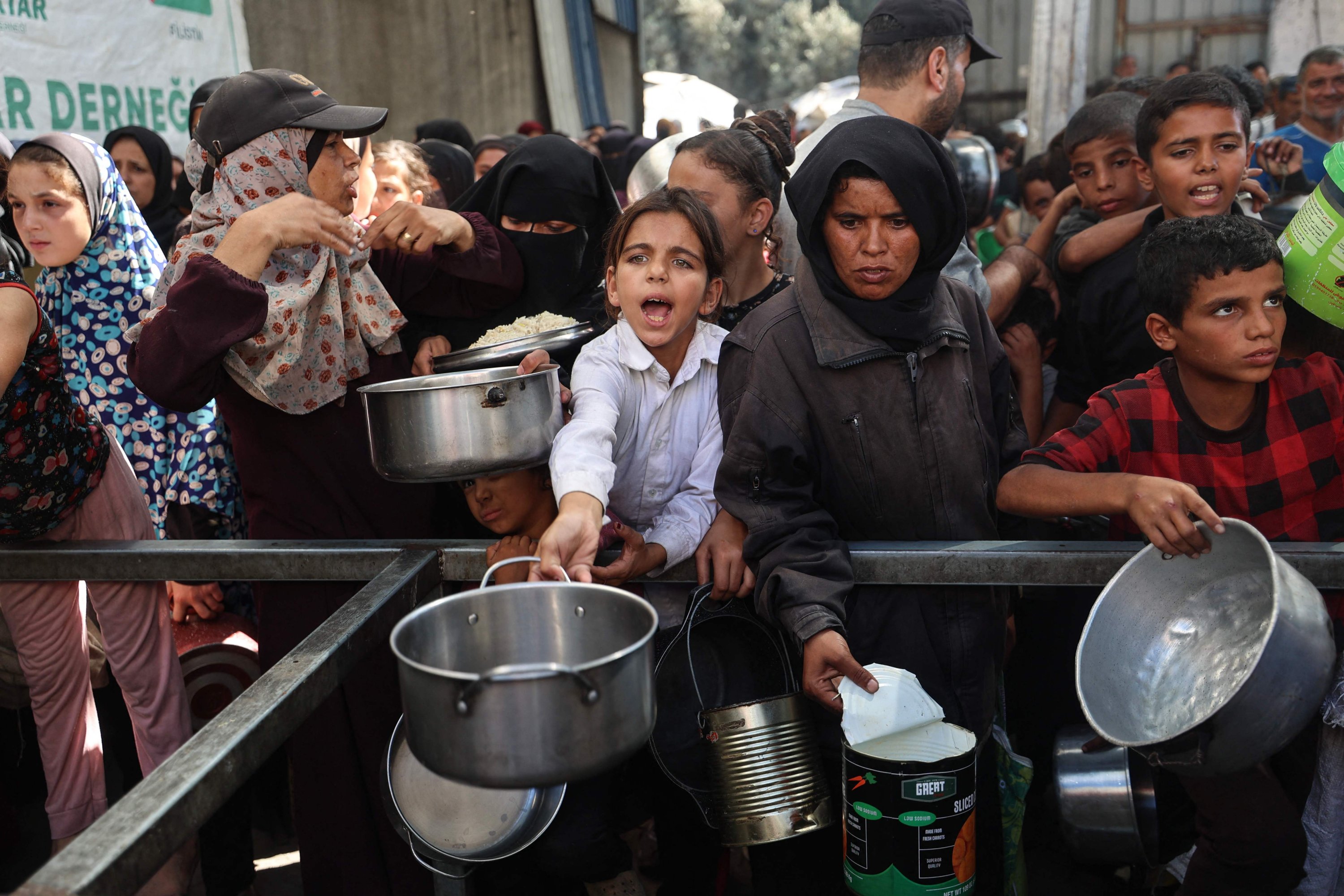
The United Nations called for a major increase in aid to Gaza, saying the few hundred relief trucks allowed in under the cease-fire fall far short of the thousands needed to address the worsening humanitarian crisis.
Tom Fletcher, the U.N. under-secretary-general for humanitarian affairs and its top emergency relief coordinator, told Reuters in an interview that thousands of humanitarian vehicles must enter weekly to avert further catastrophe.
"We have 190,000 metric tons of provisions on the borders waiting to go in and we're determined to deliver. That's essential life-saving food and nutrition," Fletcher said.
Israel's two-year genocidal war on Gaza drove almost all its 2.2 million people from their homes and famine is present in the north, global monitors say.
Israeli officials said 600 trucks have been approved to enter the blockaded territory under the current U.S.-brokered truce deal. Fletcher called that a "good base” but said it was not enough to meet the scale of need.
Fletcher called for over 50 international NGOs, including Oxfam and the Norwegian Refugee Council, to be allowed to bring in aid, saying the issue has been raised with Israel, the United States and other regional partners.
"We cannot deliver the scale necessary without their presence and their engagement. So we want to see them back in. We are advocating on their behalf," he said.
Fletcher said the looting of aid trucks – a frequent scourge while fighting continued – had dropped sharply in recent days as deliveries increased.
"If you’re only getting in 60 trucks a day, desperate, hungry people will attack those trucks. The way to stop the looting is to deliver aid at massive scale and get the private sector and commercial markets operating again,” he added.
Fletcher welcomed the Western-backed Palestinian Authority’s offer to play a role in reopening the Rafah border crossing with Egypt to aid deliveries, expected Thursday after a delay imposed by Israel over what it called Hamas' slowness to return bodies of dead hostages under the cease-fire deal.
He said medical evacuations through the crossing would be a priority, citing recent talks with Egyptian President Abdel Fattah al-Sisi and Palestinian President Mahmoud Abbas.
He said that for the fresh aid efforts to succeed the cease-fire agreement must be sustained. "We need peace. That way we can massively scale up our operations. We need the world to stay behind this peace plan.”
Vast swathes of the narrow, heavily urbanized coastal territory have been reduced to a wasteland by Israeli bombardments and airstrikes that have killed nearly 68,000 Palestinians, mostly women and children, according to Gaza health authorities.
The war was triggered by Hamas' Oct. 7, 2023, incursion on southern Israel that caused 1,200 deaths and took 251 hostages, according to Israeli tallies.
Twenty remaining living hostages were freed on Monday in exchange for thousands of Palestinians jailed in Israel.