United States and Israel on Thursday cut short Gaza cease-fire talks in Qatar following Palestinian resistance group Hamas' response to the latest cease-fire and hostage deal proposal.
President Donald Trump's special envoy Steve Witkoff said the U.S. was bringing home its negotiating team for consultations.
"While the mediators have made a great effort, Hamas does not appear to be coordinated or acting in good faith," Witkoff said in a statement. "We will now consider alternative options to bring the hostages home and try to create a more stable environment for the people of Gaza."
Hamas said it was surprised by Witkoff's remarks claiming the group lacked a desire to reach a cease-fire in Gaza and said it was committed to continuing negotiations.
"The movement affirms its keenness to continue negotiations and engage in them in a manner that helps overcome obstacles and leads to a permanent ceasefire agreement," Hamas said in a statement early on Friday.
It was unclear what "alternative options" the U.S. was considering.
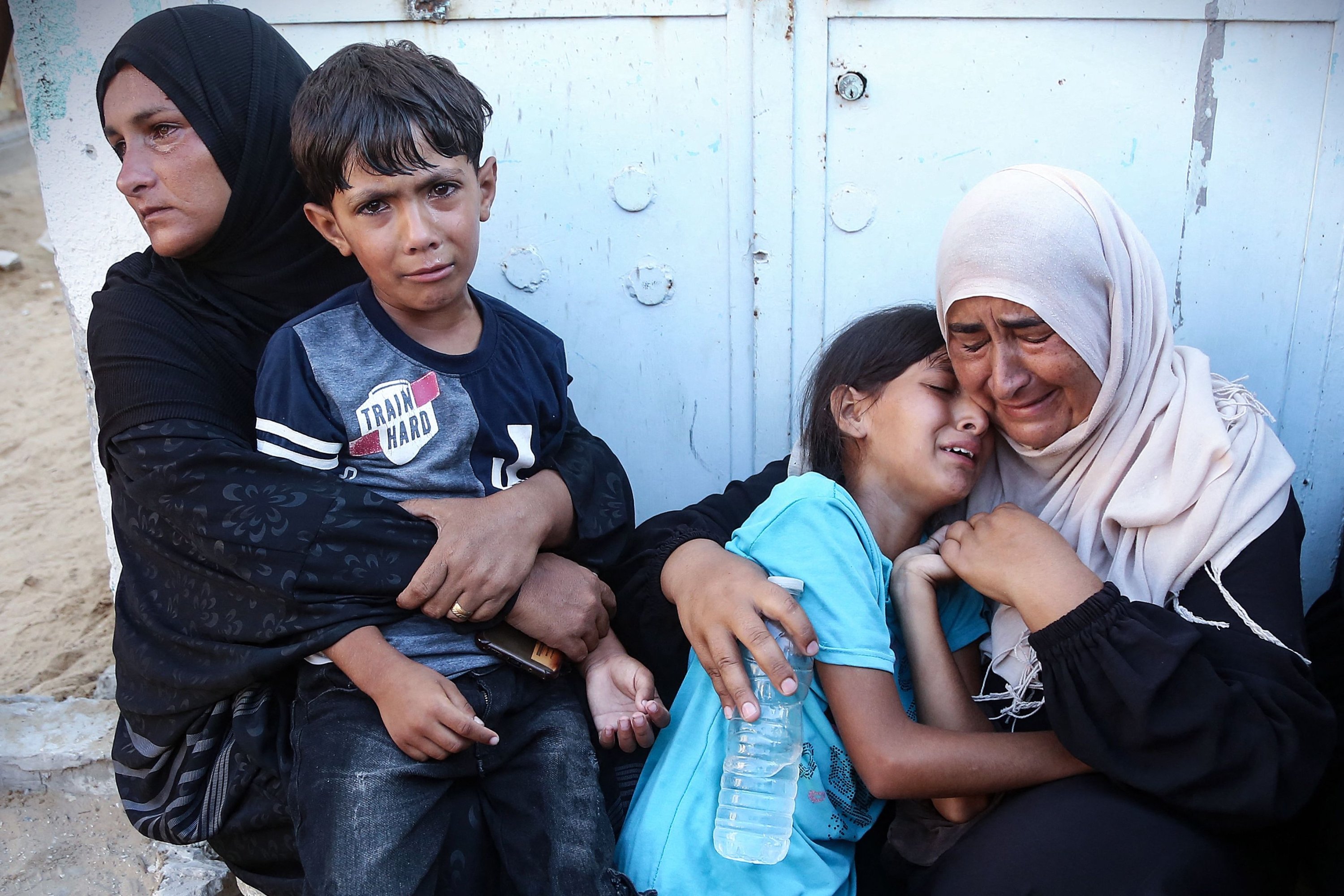
A breakthrough in talks on a cease-fire deal between Israel and Hamas has eluded Trump's Republican administration for months as conditions worsen in Gaza amid Israel's genocidal war.
The territory recently had its deadliest day yet for aid-seekers in over 21 months of war, with at least 85 Palestinians killed while trying to reach food Sunday.
The sides have held weeks of talks in Qatar, reporting small signs of progress but no major breakthroughs. Officials have said a main sticking point is the redeployment of Israeli troops after any cease-fire takes place.
Earlier Thursday, Israeli Prime Minster Benjamin Netanyahu's office recalled his country's negotiating team back to Israel in light of Hamas' response.
In a brief statement, Netanyahu's office expressed its appreciation for the efforts of Witkoff and mediators Qatar and Egypt, but it gave no further details.
An Israeli official, speaking to Israel's public broadcaster KAN on condition of anonymity, said the decision to recall the delegation does not indicate a collapse of talks.
Earlier Thursday, Hamas said that it had delivered its response – along with that of other Palestinian factions – to the mediators. Netanyahu's office confirmed receipt of the response and said it is under review. Neither side disclosed the contents.
The deal under discussion is expected to include a 60-day cease-fire in which Hamas would release 10 living hostages and the remains of 18 others in phases in exchange for Palestinians imprisoned by Israel. Aid supplies would be ramped up and the two sides would hold negotiations on a lasting truce.
Tel Aviv estimates that there are 50 hostages, 20 of whom are held captive in Gaza. More than 10,800 Palestinians are held in Israeli prisons, subjected to torture, starvation, and medical neglect, which has resulted in many deaths, according to Palestinian and Israeli human rights and media reports.
Hamas says it will only release all hostages in exchange for a full Israeli withdrawal and end to the war. Israel says it will not agree to end the war until Hamas gives up power and disarms, a condition the group rejects.
Israel's genocidal war has been raging for nearly two years since the October 2023 Hamas incursion caused around 1,200 deaths and took 251 hostages from southern Israel.
Israel has since killed nearly 60,000 Palestinians in Gaza, reduced most of the territory to ruins and forced nearly the entire population to flee their homes multiple times.
Last November, the International Criminal Court (ICC) issued arrest warrants for Netanyahu and his former Defense Minister Yoav Gallant for war crimes and crimes against humanity in Gaza.
Israel also faces a genocide case at the International Court of Justice (ICJ) for its war on the enclave.