Daily Sabah
Politics
Diplomacy
Legislation
War On Terror
EU Affairs
Elections
News Analysis
TÜRKİYE
Istanbul
Education
Investigations
Minorities
Expat Corner
Diaspora
World
Mid-East
Europe
Americas
Asia Pacific
Africa
Syrian Crisis
Islamophobia
Business
Automotive
Economy
Energy
Finance
Tourism
Tech
Defense
Transportation
News Analysis
Lifestyle
Health
Environment
Travel
Food
Fashion
Science
Religion
History
Feature
Expat Corner
Arts
Cinema
Music
Events
Portrait
Reviews
Performing Arts
Sports
Football
Basketball
Motorsports
Tennis
Opinion
Columns
Op-Ed
Reader's Corner
Editorial
PHOTO GALLERY
Politics
Diplomacy
Legislation
War On Terror
EU Affairs
Elections
News Analysis
TÜRKİYE
Istanbul
Education
Investigations
Minorities
Expat Corner
Diaspora
World
Mid-East
Europe
Americas
Asia Pacific
Africa
Syrian Crisis
Islamophobia
Business
Automotive
Economy
Energy
Finance
Tourism
Tech
Defense
Transportation
News Analysis
Lifestyle
Health
Environment
Travel
Food
Fashion
Science
Religion
History
Feature
Expat Corner
Arts
Cinema
Music
Events
Portrait
Reviews
Performing Arts
Sports
Football
Basketball
Motorsports
Tennis
Gallery
Opinion
Columns
Op-Ed
Reader's Corner
Editorial
Arts
Cinema
Music
Events
Portrait
Reviews
Performing Arts
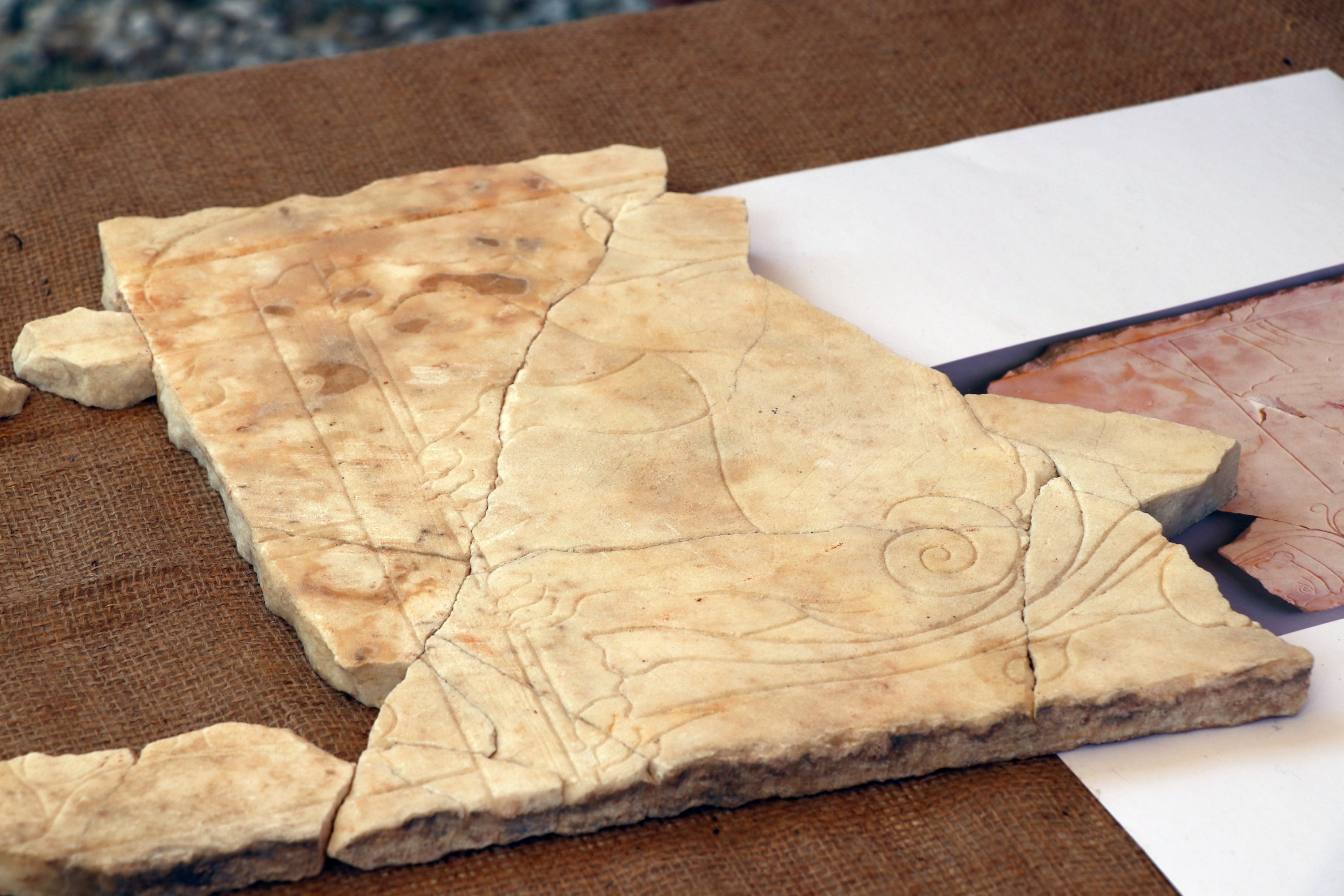
Archaeologists uncover rare Egyptian motif in Türkiye's Sagalassos
by Daily Sabah with AA
Istanbul
Oct 05, 2025 - 12:00 pm GMT+3
Excavations at Sagalassos have uncovered a Roman bath featuring the Egyptian god Tutu, carved on Afyon marble slabs, Burdur, southern Türkiye, Oct. 4, 2025. (AA Photo)
by Daily Sabah with AA
Oct 05, 2025 12:00 pm
2246: implode(): Passing glue string after array is deprecated. Swap the parameters