Superstition exists in many cultures, but in Italy it holds a particularly strong influence, shaping behavior, language and even careers. One of the most striking examples is the singer Mia Martini (1947-1995). Widely believed to bring bad luck, she was gradually excluded from television appearances and professional opportunities, and misfortunes that occurred around her were often blamed on her presence.
However, superstition is far from a modern invention. Archaeologists have identified traces of early superstitious beliefs among prehistoric humans living between 130,000 and 40,000 B.C., whose burial practices suggest attempts to understand death and the unknown.
Superstitious thinking is not unique to Italy. Archaeologists have identified traces of similar beliefs among Neanderthals living between 130,000 and 40,000 B.C., whose burial practices suggest early attempts to explain death and the unknown.
According to Paolo D’Achille, professor of Italian linguistics and current president of Accademia della Crusca, an institution dedicated to the study, protection and promotion of the Italian language: “Rather than in language itself, superstition leaves some traces perhaps more in gestures and especially in behavioral dynamics. There are not many strong remnants in the way people speak or converse, but rather in how they behave.”
Opening an umbrella indoors, spilling salt or oil on the table, or placing a hat on a bed are still considered unlucky in Italy. The belief in the evil eye also exists in Italy as “malocchio.” Italians believe that jealous looks can cause misfortune or harm.
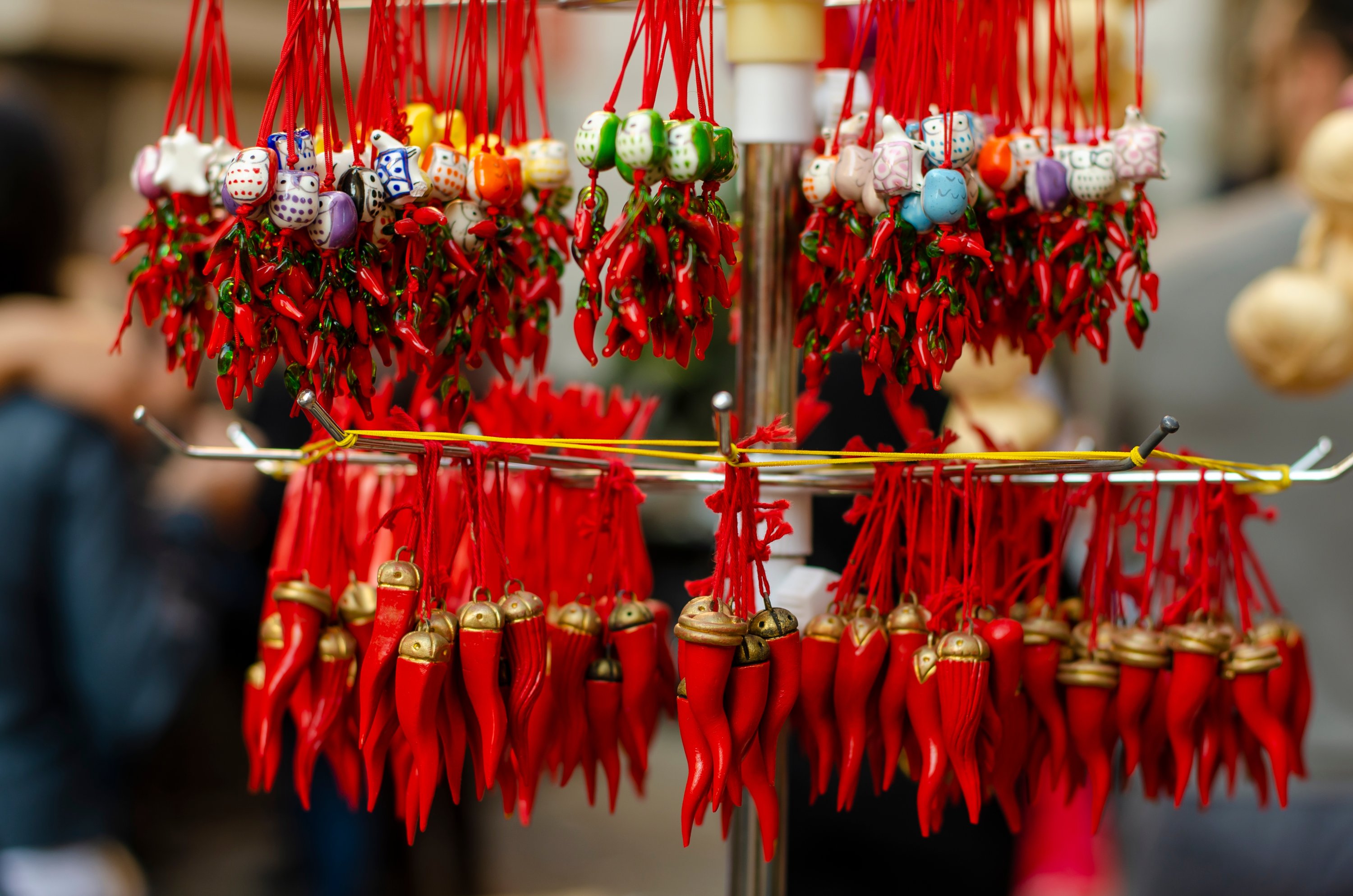
They use a small talisman called the “cornicello” (“little horn”) to protect against the evil eye and negative energy. Worn as a necklace or bracelet, it is especially common in southern Italy, particularly Naples and is thought to attract luck and abundance. Another superstition about it is that the Cornicello should never be bought for oneself; it must be given as a gift, otherwise it does not bring good luck.
“There is certainly a very strong connection between language and culture, culture also understood in a material sense. Just as the names of objects can be explained by their shape or function, the same applies to certain expressions, habits and particular features of a language,” explained D’Achille.
One of the most widely used Italian expressions with superstitious roots is, “In bocca al lupo” (“into the wolf’s mouth”), commonly said to wish someone good luck before an exam, a performance, or an important event. As D’Achille summarizes: “‘Best wishes’ is too direct. ‘In bocca al lupo’ can be interpreted in an antiphrastic sense: If someone ends up in a wolf’s mouth, it means something bad happens. So you wish precisely what should not happen.”
Another one is “Tocca ferro” (“Touch iron”). This superstitious gesture is used to ward off a potential evil eye. It dates back to the Middle Ages, when iron, especially horseshoes, was believed to have the power to keep bad luck away. However, despite their superstitious origins, these expressions have now become routine, D’Achille noted.
The world of Italian entertainment has long been one of the areas most affected by superstition. D’Achille observes that superstition “is a bit more widespread in the world of entertainment,” even though it “has declined over time” and now persists largely as a kind of habit.
Mia Martini, who fell victim to this superstition-driven mindset, decided to take a break from music between 1983 and 1989. Reflecting on that period, she said, “My life had become impossible. Whatever I did was destined to fail, and all doors were closed in my face.” She recalled that people were afraid of her. “They refused to take part in events where I was supposed to appear.” And remembered one manager begging her not to attend a festival because, with her there, no record label would send their artists. “It had all become absurd,” she concluded, so she decided to step back.
The actor and playwright Peppino De Filippo addressed superstition in one of his most famous plays, "Non è vero ma ci credo" ("It's Not True but I Believe It"). The protagonist, Gervasio Savastano, is a man obsessed with superstition, whose fear of bad luck pushes him into a series of absurd yet tragicomic situations.
The title of the play captures a mindset that still resonates with many Italians today, revealing how superstition continues to shape behavior and everyday choices.