
Daily Sabah logo

Politics
Diplomacy Legislation War On Terror EU Affairs Elections News Analysis
TÜRKİYE
Istanbul Education Investigations Minorities Expat Corner Diaspora
World
Mid-East Europe Americas Asia Pacific Africa Syrian Crisis Islamophobia
Business
Automotive Economy Energy Finance Tourism Tech Defense Transportation News Analysis
Lifestyle
Health Environment Travel Food Fashion Science Religion History Feature Expat Corner
Arts
Cinema Music Events Portrait Reviews Performing Arts
Sports
Football Basketball Motorsports Tennis
Opinion
Columns Op-Ed Reader's Corner Editorial
PHOTO GALLERY
JOBS ABOUT US RSS PRIVACY CONTACT US
© Turkuvaz Haberleşme ve Yayıncılık 2025

Daily Sabah - Latest & Breaking News from Turkey | Istanbul

  • Politics
    • Diplomacy
    • Legislation
    • War On Terror
    • EU Affairs
    • Elections
    • News Analysis
  • TÜRKİYE
    • Istanbul
    • Education
    • Investigations
    • Minorities
    • Expat Corner
    • Diaspora
  • World
    • Mid-East
    • Europe
    • Americas
    • Asia Pacific
    • Africa
    • Syrian Crisis
    • Islamophobia
  • Business
    • Automotive
    • Economy
    • Energy
    • Finance
    • Tourism
    • Tech
    • Defense
    • Transportation
    • News Analysis
  • Lifestyle
    • Health
    • Environment
    • Travel
    • Food
    • Fashion
    • Science
    • Religion
    • History
    • Feature
    • Expat Corner
  • Arts
    • Cinema
    • Music
    • Events
    • Portrait
    • Reviews
    • Performing Arts
  • Sports
    • Football
    • Basketball
    • Motorsports
    • Tennis
  • Gallery
  • Opinion
    • Columns
    • Op-Ed
    • Reader's Corner
    • Editorial
  • TV
  • Arts
  • Cinema
  • Music
  • Events
  • Portrait
  • Reviews
  • Performing Arts

Keeping tradition alive: Art of metalworking

by İREM YAŞAR

Jan 14, 2022 - 4:09 pm GMT+3
A metal vessel with traditional tughra of Ottoman sultans. (Shutterstock)
by İREM YAŞAR Jan 14, 2022 4:09 pm

Ornamental arts created with materials such as iron, steel, copper, brass, bronze, silver and gold make up the art of metalworking. Since ancient times, metals were of great importance to people due to their multifunctionality. While they were initially useful in the productions of various items, from eating vessels to weapons, they also became a significant element of decorative art over time with the invention of new processes. It is still mesmerizing to see ancient ceremonial items, sculptures and ritualistic or decorative objects made out of metal, especially out of gold, today.
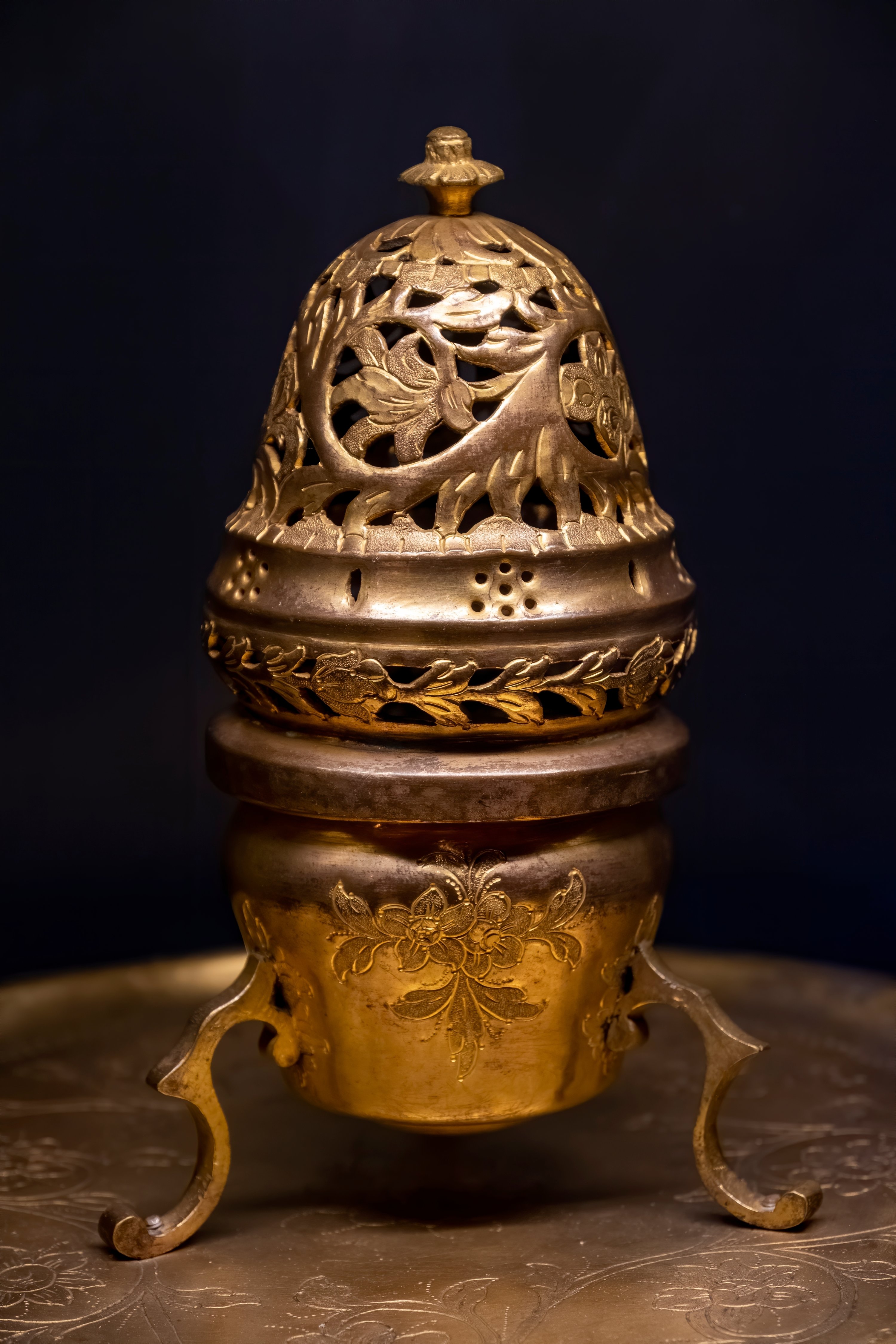
A close-up of an Ottoman incense burner and tombac tray from 19th century on display at Yapı Kredi Kazım Taşkent Art Gallery, Beyoğlu, Istanbul, Oct. 8, 2021. (Shutterstock)

The Turks are one of the rare nations that began using metal in the early period of their history and knew how to work it skillfully. Offering rich diversity from the depths of history from Central Asia to the present, the art of metalworking has developed as an important branch of Turkish arts over time. The evolution of this art form continued in the hands of masters from the Great Seljuk Empire and the Rum Seljuk Sultanate and was passed down to the Ottomans, where it reached its artistic peak.

During the Great Seljuk Empire period, metalworkers pioneered new forms and techniques. Spellbinding examples of their artwork that managed to survive to date can be still seen in various museum collections around the world today. The Great Seljuk metalworking tradition in terms of both technique and material was sustained by the Rum Seljuk Sultanate, and this legacy was inherited by the Ottoman Empire in the later period.

As the Ottoman Empire consisted of many lands and peoples, it improved on the Seljuk heritage in this art with a variety of innovations. The art of metalworking especially began to flourish after the Ottoman Empire conquered the Balkan region. The land was rich in gold and silver, and the empire also had metalworking artists who possessed not only the necessary raw materials but also a long-standing tradition.

Decorated Ottoman pistols from Istanbul's Hisart Museum. (Sabah File Photo)

The Ottomans produced many fascinating objects, from daggers to knives and swords to helmets. Among the Ottoman metalwork that has survived to the present day, the artifacts from the period of Sultan Bayezid II (1481-1512) are particularly noteworthy. The impact of Sultan Bayezid II's passion for precious objects positively influenced the art of metalworking.

After diverse methods were introduced by masters from various parts of the empire, particularly following the conquest of Tabriz and Egypt, the Ottoman metal art shook off explicit influences and found its own unique style in the 16th century. This period’s most marvelous technique was to embed precious stones on the metal surfaces of swords and daggers. The natural style featuring decorative motifs like floral patterns on metal surfaces dominant in the 17th and 18th-century Ottoman metal works saw a return to the art's roots, that is, to traditional motifs inherited from the Seljuk culture. However, the effect of Western taste started to be felt in this art in the 19th century.
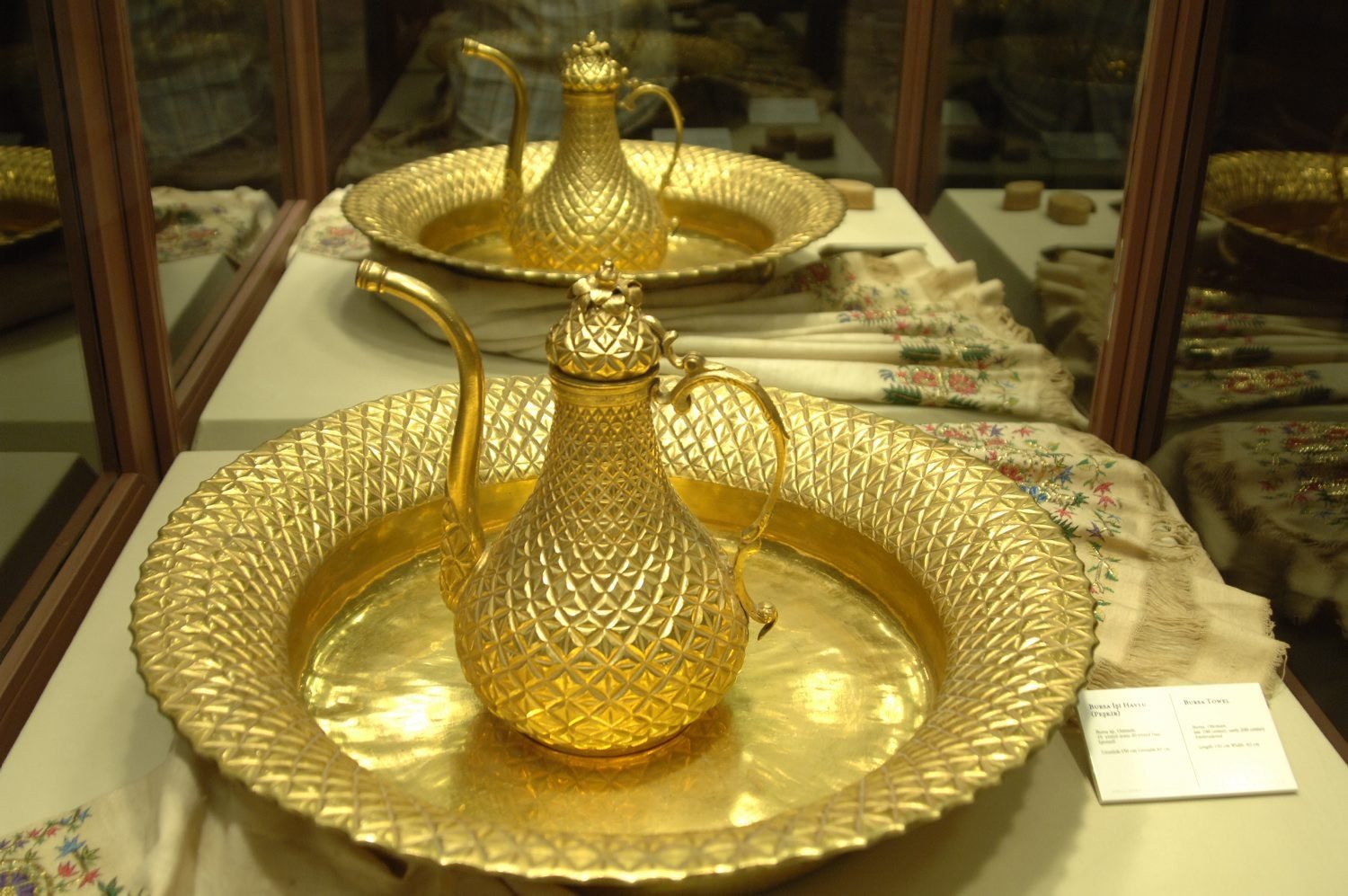
A photo of an Ottoman tombac ibrik (container with a spout) from the Museum of Turkish and Islamic Arts, Istanbul. (Photo by Ali Şahin)

Housed in Topkapı Palace Museum and the Museum of Turkish and Islamic Arts today, the most important examples of Ottoman metalwork are presented in unique displays of metal objects of all kinds, extremely original in both form and design. Among the splendid examples of the Ottoman metalworking culture are silver and copper trays, pots and pans, jugs, sherbet vessels, bowls, mortars, pestles, Turkish coffee pots, cupholders, water-pipe accessories and all kinds of weapons, including firearms.


  • shortlink copied
  • KEYWORDS
    traditional arts metalworking ottoman empire seljuks
    The Daily Sabah Newsletter
    Keep up to date with what’s happening in Turkey, it’s region and the world.
    You can unsubscribe at any time. By signing up you are agreeing to our Terms of Use and Privacy Policy. This site is protected by reCAPTCHA and the Google Privacy Policy and Terms of Service apply.
    No Image
    Sunset offers glimmer of beauty in war-torn Gaza
    PHOTOGALLERY
    • POLITICS
    • Diplomacy
    • Legislation
    • War On Terror
    • EU Affairs
    • News Analysis
    • TÜRKİYE
    • Istanbul
    • Education
    • Investigations
    • Minorities
    • Diaspora
    • World
    • Mid-East
    • Europe
    • Americas
    • Asia Pacific
    • Africa
    • Syrian Crisis
    • İslamophobia
    • Business
    • Automotive
    • Economy
    • Energy
    • Finance
    • Tourism
    • Tech
    • Defense
    • Transportation
    • News Analysis
    • Lifestyle
    • Health
    • Environment
    • Travel
    • Food
    • Fashion
    • Science
    • Religion
    • History
    • Feature
    • Expat Corner
    • Arts
    • Cinema
    • Music
    • Events
    • Portrait
    • Performing Arts
    • Reviews
    • Sports
    • Football
    • Basketball
    • Motorsports
    • Tennis
    • Opinion
    • Columns
    • Op-Ed
    • Reader's Corner
    • Editorial
    • Photo gallery
    • DS TV
    • Jobs
    • privacy
    • about us
    • contact us
    • RSS
    © Turkuvaz Haberleşme ve Yayıncılık 2021