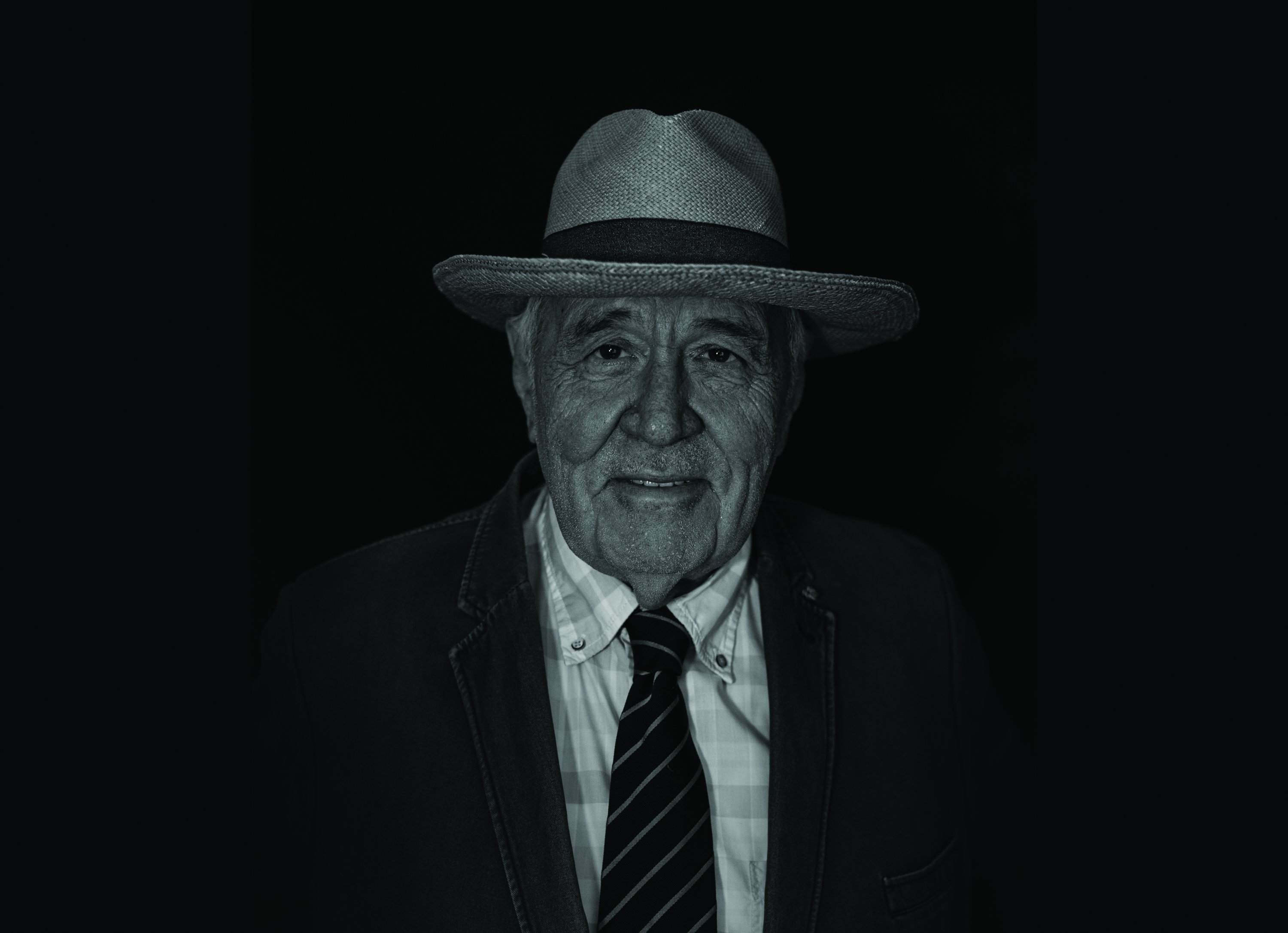
The first thing you notice when you step into a city is not its skyline. It is the logic underneath it: Why a road bends where it does, why a district rises where another collapsed, why certain streets still carry the weight of centuries in their geometry. I have spent years reading cities this way, as an urban engineer. And it was Ilber Ortaylı who first taught me that this kind of reading has a name and that it is called history.
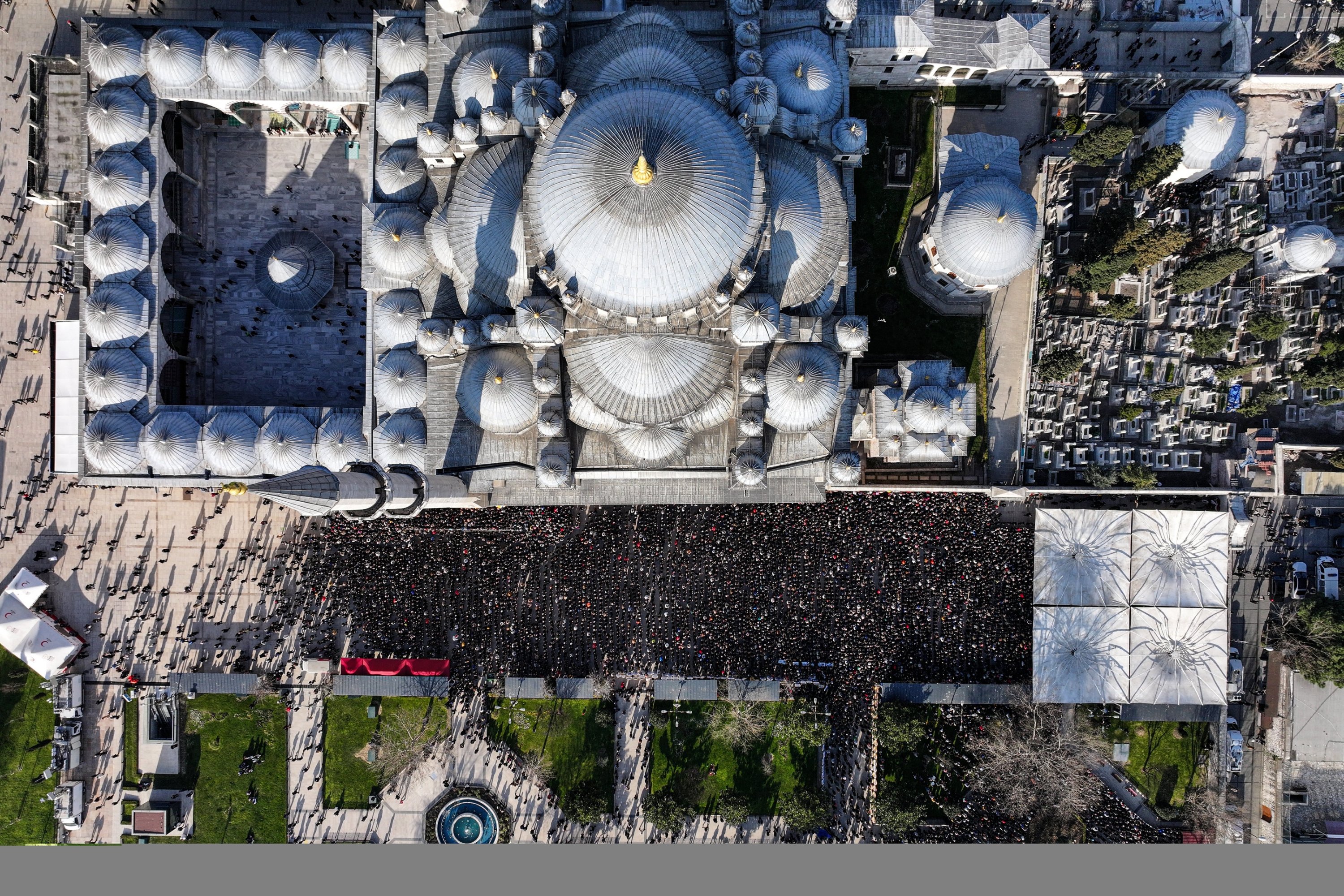
Ortaylı passed away on March 13 at Koç University Hospital in Istanbul, at the age of 78. His death sent a wave of grief through the academic and cultural world. Thousands gathered for a memorial service at Galatasaray University, followed by a funeral at Fatih Mosque. These are not trivial gestures. They are the city's way of acknowledging that certain people alter the texture of the place itself.
For Ortaylı, history was not just a succession of dates, but a living account of the past. Many in Türkiye became interested in history not by reading scholarly books, but by listening to "Ilber Hoca." On television, in lecture halls, in newspaper columns, he proved that history does not have to be a closed-off academic discipline. For countless readers and students, his voice became synonymous with history itself.
He did not just recount the long historical journey from the Ottoman Empire to the republic; he also showed how to think along that path. That distinction matters enormously. Recounting is what textbooks do. Showing how to think is what teachers do, and the rarest teachers manage to do it without you ever feeling taught.
In 2013, I had the opportunity to work with him through a publishing house. While preparing his book "Türklerin Tarihi" ("A History of the Turks") for publication, we spent months immersed in the text together. The goal was clear: to find a voice that an 11 or 12-year-old child, a shopkeeper, a university student, a homemaker and an academic could all pull something meaningful from, on the same page. It was never an easy balance to strike, but Ortaylı's language was, by its very nature, inclined toward exactly that kind of equilibrium.
What left the deepest impression on me during that period was the correction notes the professor sent through himself in multiple languages, all on paper. Sometimes a marginal note in German, sometimes a citation correction in French, sometimes an explanation woven through with Ottoman Turkish. I still keep those notes in my library. Language was not a tool for him. It was almost a mode of thought. As an engineer, I work in layers: what sits on the surface, what the structure below can bear, and what the original ground conditions were before anyone built anything. Ortaylı operated the same way. His scholarship was never just about the visible event. It was about the load-bearing logic underneath, the administrative architecture, the institutional memory that held an empire together across centuries.
But perhaps his least talked-about legacy was the unusual relationship he built with young people. The advice he gave in his book "Bir Ömür Nasıl Yaşanır?" ("How to Live a Lifetime") and in countless interviews stood in direct opposition to Türkiye's typical tradition of elders handing down wisdom from above. Do not save up for a dowry; see the world. Memorize what you need to memorize before you are 30, then start asking questions. Music, sports, foreign languages: These things cannot be learned after a certain age; those windows close. Do not squeeze yourself into a narrow frame.
These words might sound simple on the surface. But when they came from a scholar of his weight, said openly and on national television, they served a different function entirely. They legitimized things that were still considered taboo. He was saying that straying from the path your family laid out for you, choosing to leave rather than stay put, none of these things had to come with a price. For many young people, this is what Ortaylı was before anything else, before the historian, before the professor: a permission slip.
There is more than one way to evaluate a historian. You can count footnotes, list incorrect dates and catalog inconsistent sentences. All of that is legitimate academic work. But you also have to factor in this: trying to measure Ortaylı's impact with those tools is like trying to measure a city with a ruler. The instrument is not wrong. The scale just does not fit.
Ortaylı did not understand the Ottomans only as a political structure, but as a civilizational space where languages, religions and cultures coexisted in a complex mosaic. He presented the Ottomans neither as a golden age fairy tale nor as a catalog of shame, but as a structure that needed to be understood on its own terms. The question "How did this society actually work?" replaced "Should we love or hate this society?" In Türkiye, that was not a small rupture. For an engineer who grew up reading city plans and infrastructure reports, this shift in framing was immediately recognizable: the difference between ideological noise and structural analysis.
This journey was not without its flaws. As with any intellectual career produced at high speed across a wide terrain, Ortaylı had his inconsistent moments, his missteps, his sentences that fell apart. To look past those would be to sever him from his real greatness. But to put them at the center is its own form of looking away, a refusal to acknowledge that moment when millions of people encountered history with genuine curiosity for the very first time.
In the days following his passing, journalists and academics alike noted that Ortaylı was not only a scholar who narrated history but a voice that reminded society who it was. That framing gets at something important. Permanence is not measured by flawlessness. It is measured by the depth of influence, by what questions you leave behind. What Ortaylı left behind is this: Is knowing where you come from a prerequisite for understanding who you are? That question was being asked long before his books, and it will keep being asked long after them.
He was buried in the cemetery surrounding the tomb of Mehmed II, the Ottoman sultan who conquered Istanbul in 1453 and whom Ortaylı frequently praised in his lectures and writings. It is a fitting geography for a man who spent his life insisting that the past is not behind us, but below us, holding up everything we call the present. That, in all likelihood, is the greatest thing a historian can achieve.