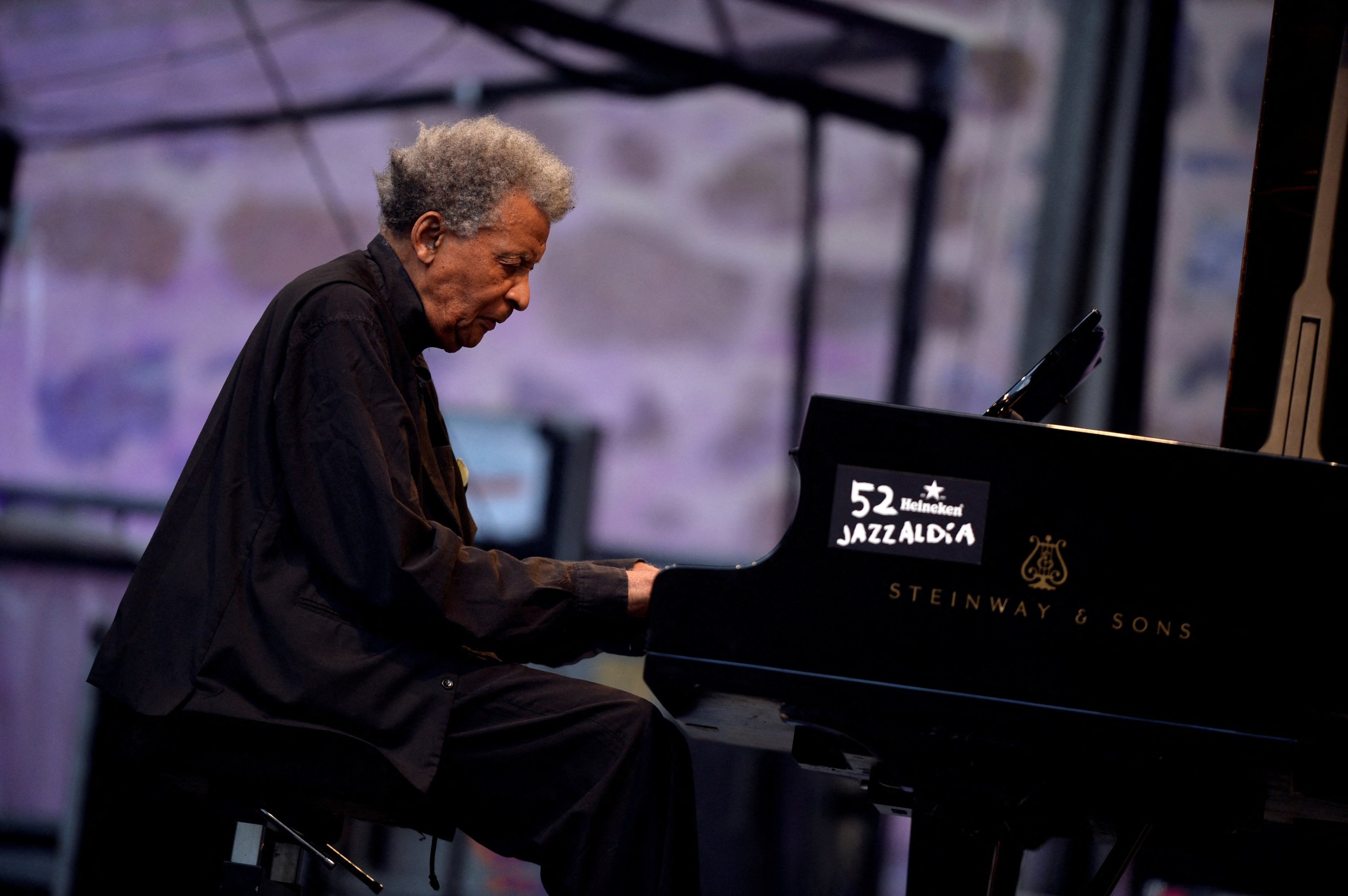
Abdullah Ibrahim was not born Muslim. Before embracing Islam in 1968, he was known as Adolph Johannes Brand. Following his conversion, he adopted the name Abdullah Ibrahim, although many jazz listeners still recognize him by the name Dollar Brand, under which many of his albums were released.
During the early 1960s, performing as Dollar Brand, he toured extensively with his trio, traveling from city to city across Europe and performing in numerous countries around the world. The discrimination and racial segregation he experienced throughout his childhood in South Africa played a significant role in shaping his worldview. While Ibrahim rarely spoke publicly about the reasons behind his conversion to Islam, when asked, he often responded simply: “Let us always try to spread goodness in the world.”
Writer Ryan De Leon once remarked, “A jazz musician’s shield must be protection from a hostile world of racial tensions and social expectations.” In many ways, Abdullah Ibrahim found such a shield in Islam. Though this interpretation is personal, his faith undoubtedly became an important part of his identity and artistic journey.

Jazz is a musical form that absorbs influences and transforms them into something new. While it originated in the United States, it gradually inspired musicians across the globe to create their own interpretations of the genre. Today, countless forms of jazz exist within the broader category of world music.
The U.S. remains the birthplace and historical capital of jazz, but over time every region developed its own distinctive sound. Dutch jazz, for example, often incorporates theatrical elements. During a visit to the Netherlands, I attended a jazz performance where the musicians combined music with movement, dance, humor and visual storytelling.
Similarly, jazz in Sweden and Norway has its own recognizable character, while French jazz musicians have pursued particularly innovative and experimental directions. Some critics argue that “jazz is simply jazz” and should not be categorized by nationality. There is truth in that view. Yet it would be impossible to deny the Turkish influences in the music of Okay Temiz or the traditional Azerbaijani elements in the work of Aziza Mustafa Zadeh. Jazz has always thrived by embracing and transforming the cultures it encounters.
Between the 1950s and the 1970s, jazz experienced a golden age. Records, concerts, festivals, radio broadcasts and later television helped bring the music to audiences around the world.
Born in Cape Town in 1934, Abdullah Ibrahim emerged as one of the pioneers of South African jazz. In 1959, he co-founded The Jazz Epistles, widely regarded as one of South Africa’s first modern jazz groups.
It is fair to describe Ibrahim as one of the architects of the African jazz model. Facing racial oppression, police harassment and restrictions on artistic freedom under apartheid, he left South Africa for Europe in search of a place where he could make music freely.
As Dollar Brand, he toured Europe extensively with his trio during the early 1960s. A turning point came in Zurich, where the legendary Duke Ellington attended one of his performances. That encounter transformed Ibrahim’s life and career.
Duke Ellington became much more than a supporter. He served as a mentor, teacher, inspiration and advocate for the young pianist.
To understand the significance of this relationship, one must recognize Ellington’s stature in jazz history. Just as classical music is associated with figures such as Beethoven, Mozart and Bach, jazz is inseparable from names like Duke Ellington, Count Basie, Charlie Parker, Woody Herman and Cecil Taylor.
Ellington was deeply impressed by Ibrahim’s playing. He helped Ibrahim and his trio – featuring bassist Johnny Gertze and drummer Makaya Ntshoko – record an album and secure its release through Reprise Records. Ellington even lent his own name to the project, which appeared as Duke Ellington Presents the Dollar Brand Trio.
This endorsement opened doors to the world’s most prestigious jazz festivals and established Abdullah Ibrahim as an important figure in jazz history.
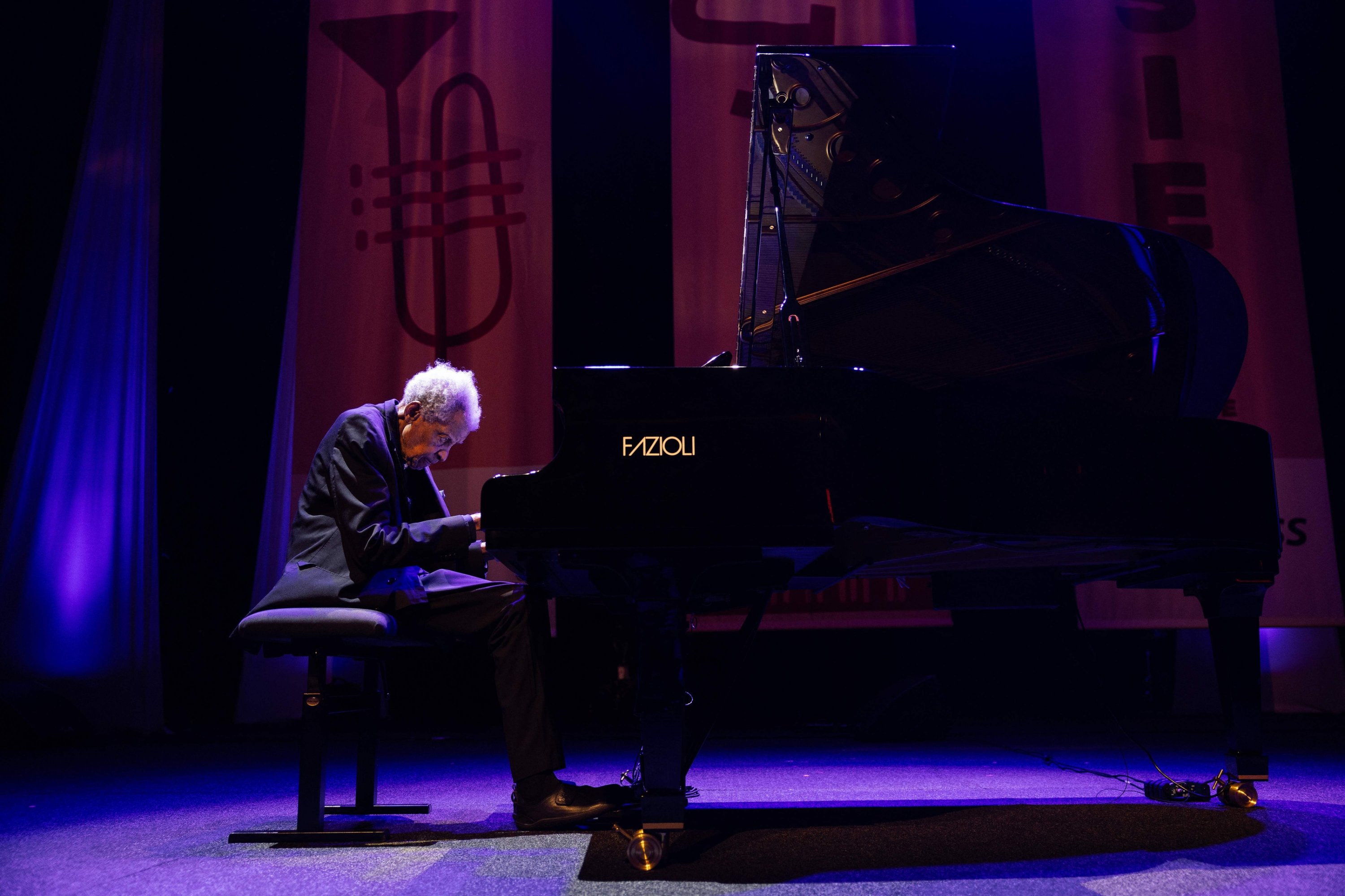
Ibrahim is a musician who masters both tradition and innovation. More importantly, he created a musical language entirely his own.
His piano playing is immediately recognizable. No matter what genre, ensemble, or orchestra he performs with, his improvisational style and sound remain unmistakably personal. Beneath his memorable melodies lie elegant bass harmonies that are often deceptively simple. His music creates a lyrical and deeply expressive soundscape.
Each time I listen to Ibrahim, I discover something new. Through his music, I am transported to Cape Town, New Orleans and New York. I hear the voice of an African child confronting the world with resilience despite hardship and vulnerability.
His compositions possess a universal quality that ensures their longevity. They continue to demonstrate the timeless depth and emotional power of jazz.
Ibrahim’s musical and social philosophy draws from the diverse musical and religious traditions of South Africa. His influences include Duke Ellington, Thelonious Monk and South Africa’s Marabi music tradition.
Raised among traditional African songs, jazz and religious music, he earned the nickname “Dollar Brand” because he used dollars to purchase jazz records from American Navy sailors.
In 1959, he founded The Jazz Epistles. During the 1960s, he developed a close professional relationship with Duke Ellington and performed at the Newport Jazz Festival in 1965. He was later voted the world’s best pianist three times by DownBeat magazine.
By the late 1960s, he had embraced Islam, a faith that would profoundly influence his worldview. His musical output spans an extraordinary range, from large-scale orchestral works such as African Suites to intimate solo piano pieces. His repertoire encompasses jazz traditions, gospel music, Indian raga-inspired forms, free jazz experimentation, and tonal works rooted in African themes.
For Abdullah Ibrahim, the essence of Islam was unity – Tawhid, the belief in the oneness of God and the interconnectedness of creation.