Daily Sabah logo

Politics
Diplomacy Legislation War On Terror EU Affairs Elections News Analysis
TÜRKİYE
Istanbul Education Investigations Minorities Expat Corner Diaspora
World
Mid-East Europe Americas Asia Pacific Africa Syrian Crisis Islamophobia
Business
Automotive Economy Energy Finance Tourism Tech Defense Transportation News Analysis
Lifestyle
Health Environment Travel Food Fashion Science Religion History Feature Expat Corner
Arts
Cinema Music Events Portrait Reviews Performing Arts
Sports
Football Basketball Motorsports Tennis
Opinion
Columns Op-Ed Reader's Corner Editorial
PHOTO GALLERY
JOBS ABOUT US RSS PRIVACY CONTACT US
© Turkuvaz Haberleşme ve Yayıncılık 2026

Daily Sabah - Latest & Breaking News from Turkey | Istanbul

  • Politics
    • Diplomacy
    • Legislation
    • War On Terror
    • EU Affairs
    • Elections
    • News Analysis
  • TÜRKİYE
    • Istanbul
    • Education
    • Investigations
    • Minorities
    • Expat Corner
    • Diaspora
  • World
    • Mid-East
    • Europe
    • Americas
    • Asia Pacific
    • Africa
    • Syrian Crisis
    • Islamophobia
  • Business
    • Automotive
    • Economy
    • Energy
    • Finance
    • Tourism
    • Tech
    • Defense
    • Transportation
    • News Analysis
  • Lifestyle
    • Health
    • Environment
    • Travel
    • Food
    • Fashion
    • Science
    • Religion
    • History
    • Feature
    • Expat Corner
  • Arts
    • Cinema
    • Music
    • Events
    • Portrait
    • Reviews
    • Performing Arts
  • Sports
    • Football
    • Basketball
    • Motorsports
    • Tennis
  • Gallery
  • Opinion
    • Columns
    • Op-Ed
    • Reader's Corner
    • Editorial
  • TV
  • Arts
  • Cinema
  • Music
  • Events
  • Portrait
  • Reviews
  • Performing Arts

Researchers unearth ancient Roman diets in sister town of Pompeii

by French Press Agency - AFP

WASHINGTON Aug 26, 2021 - 2:25 pm GMT+3
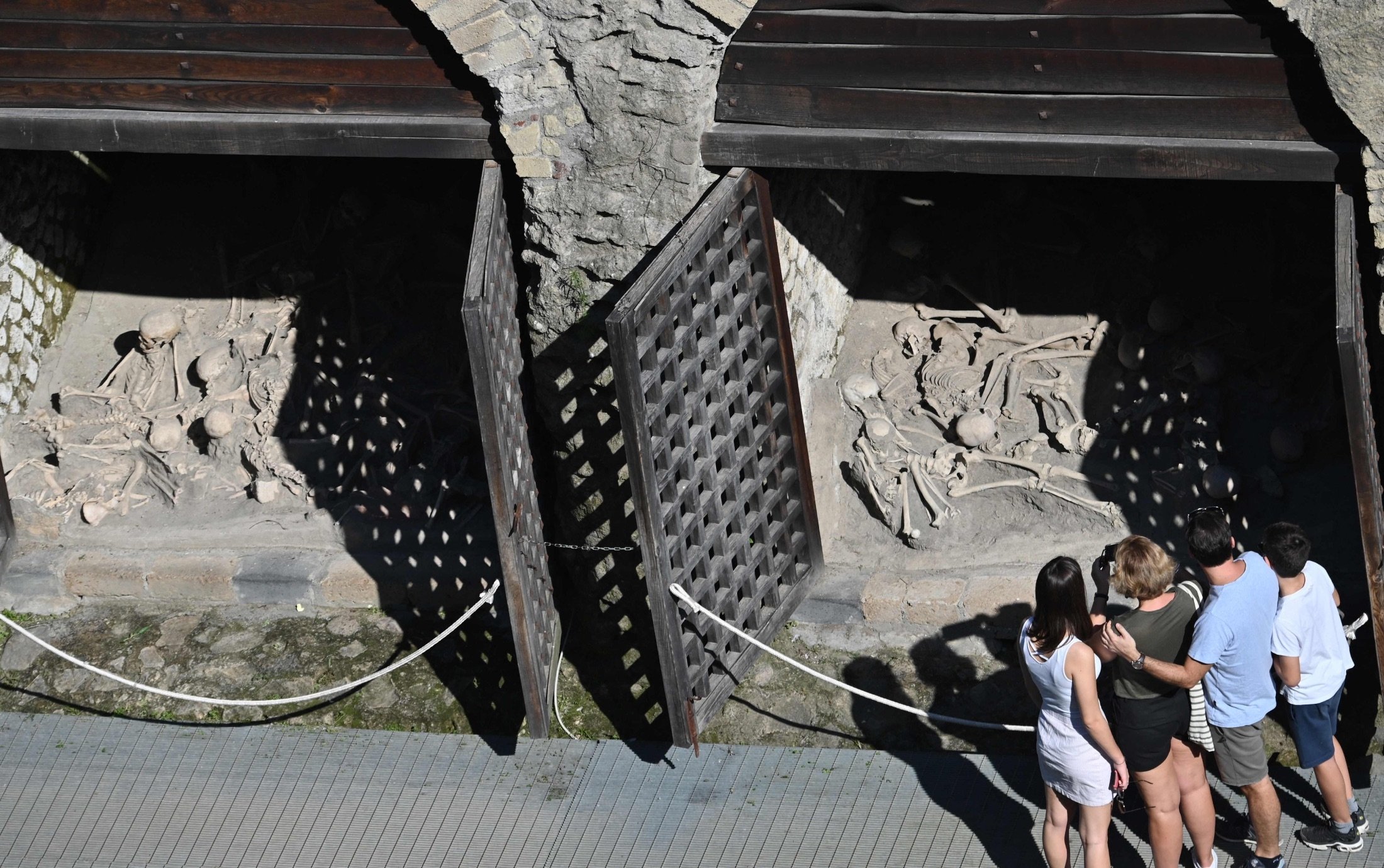
Visitors view human skeletons at the archaeological site of Herculaneum in Ercolano, near Naples, Italy, Oct. 23, 2019. (AFP Photo)
by French Press Agency - AFP Aug 26, 2021 2:25 pm

Imagine the classic tale of the old man and the sea – except this time it is an ancient man engaged in an epic struggle with a shellfish, not a giant marlin. After examining the victims from the eruption of Mount Vesuvius in 79 A.D., archaeologists have concluded that people of the time and region ate far more fish than modern Italians. So, the ancient Roman man and the shellfish of the sea... It doesn't have quite the same ring to it, but it is still a "shell-shocking" find.

The researchers, led by a team at the University of York, analyzed amino acids – the building blocks of proteins – in 17 adult skeletons excavated from the city of Herculaneum, a popular seaside resort that remained buried under volcanic ash until the 18th century.

By studying the ratio of carbon and nitrogen isotopes of the amino acids and applying a statistical model, they were able to differentiate between food groups with a new level of precision, the team wrote in the journal Science Advances on Wednesday.

A visitor walks through the archaeological site of Herculaneum in Ercolano, near Naples, Italy, Oct. 23, 2019. (AFP Photo)

Lead author and Ph.D. student Silvia Soncin told Agence France-Presse (AFP) that Herculaneum provided an "extraordinary population" to study historic diets because the natural disaster gives archaeologists a snapshot in time.

"Cemeteries are usually used over a certain period, we're talking about hundreds of years, and the food sources may have changed because of changing climate or different trade routes," she said.

Though Herculaneum and nearby Pompeii were destroyed by the volcano, most inhabitants managed to escape in time, senior author Oliver Craig, a professor of bioarchaeology told AFP.

The 11 men and six women studied by the team were picked at random from 340 people who died on the beach and from nine adjacent fornici – stone chambers for boats – where they had sought shelter from the pyroclastic flow.
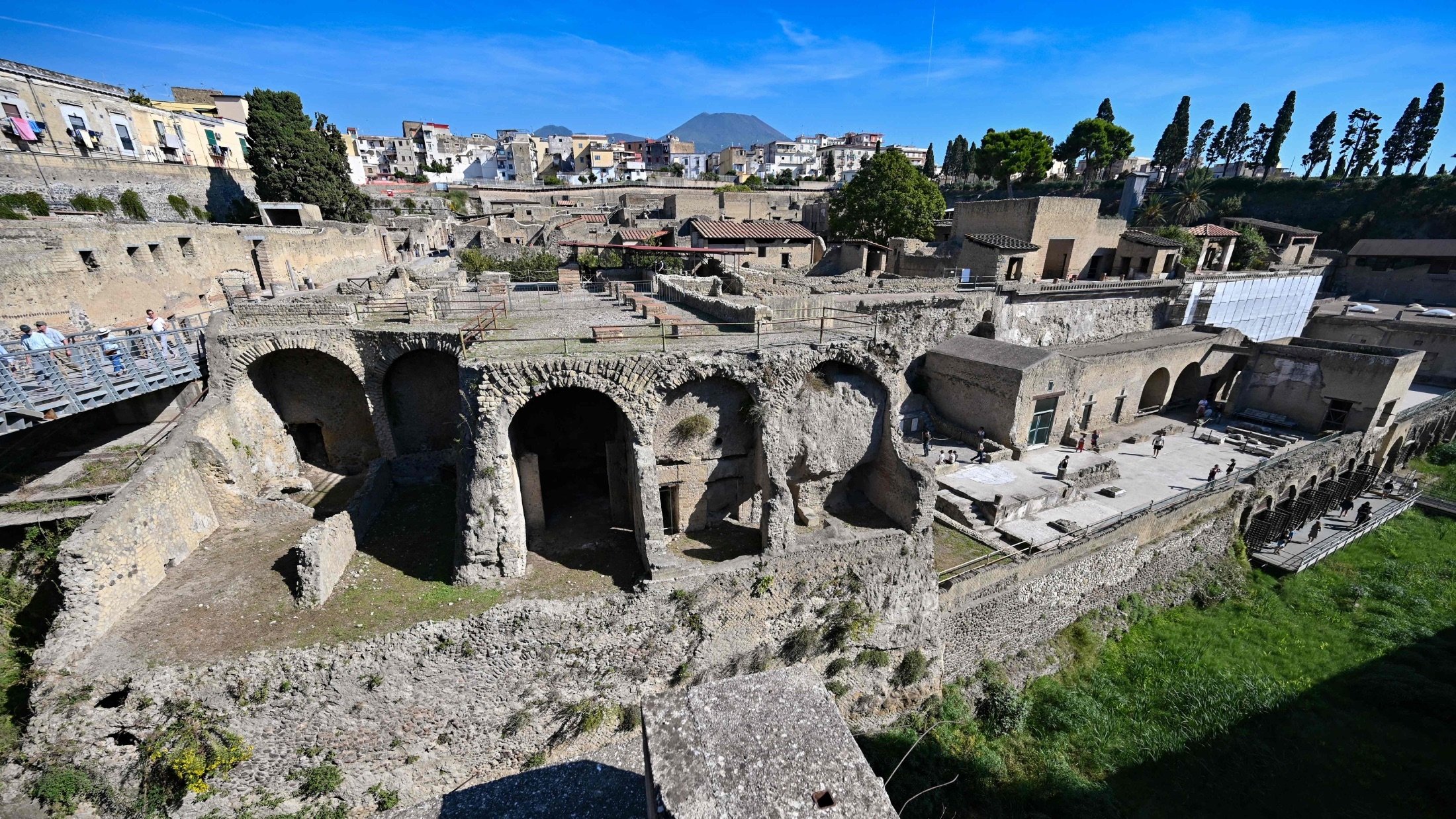
A general view shows the archaeological site of Herculaneum in Ercolano, near Naples, Italy, Oct. 23, 2019. (AFP Photo)

"We found a surprisingly high amount of marine contribution to the diet of these people, particularly compared to the modern Mediterranean population," said Soncin, with the ancient dwellers eating about three times the amount of seafood compared to their counterparts today.

Herculaneum's sewers were filled with fish bones, prior research has shown. Typical species would have included porgies, tuna and shellfish.

Gender gap

They also discovered a significant sex gap within the group, with males on average getting 50% more of their protein from seafood compared to females.

Men also got slightly more protein from cereals compared with their female contemporaries, while women obtained more of their proteins from animal products and locally grown fruits and vegetables.

The team put forward several possible reasons: men may have been more involved in fishing than women, but the historical record also shows that certain fish such as tuna were considered high-status food in Roman society, with men having more access.
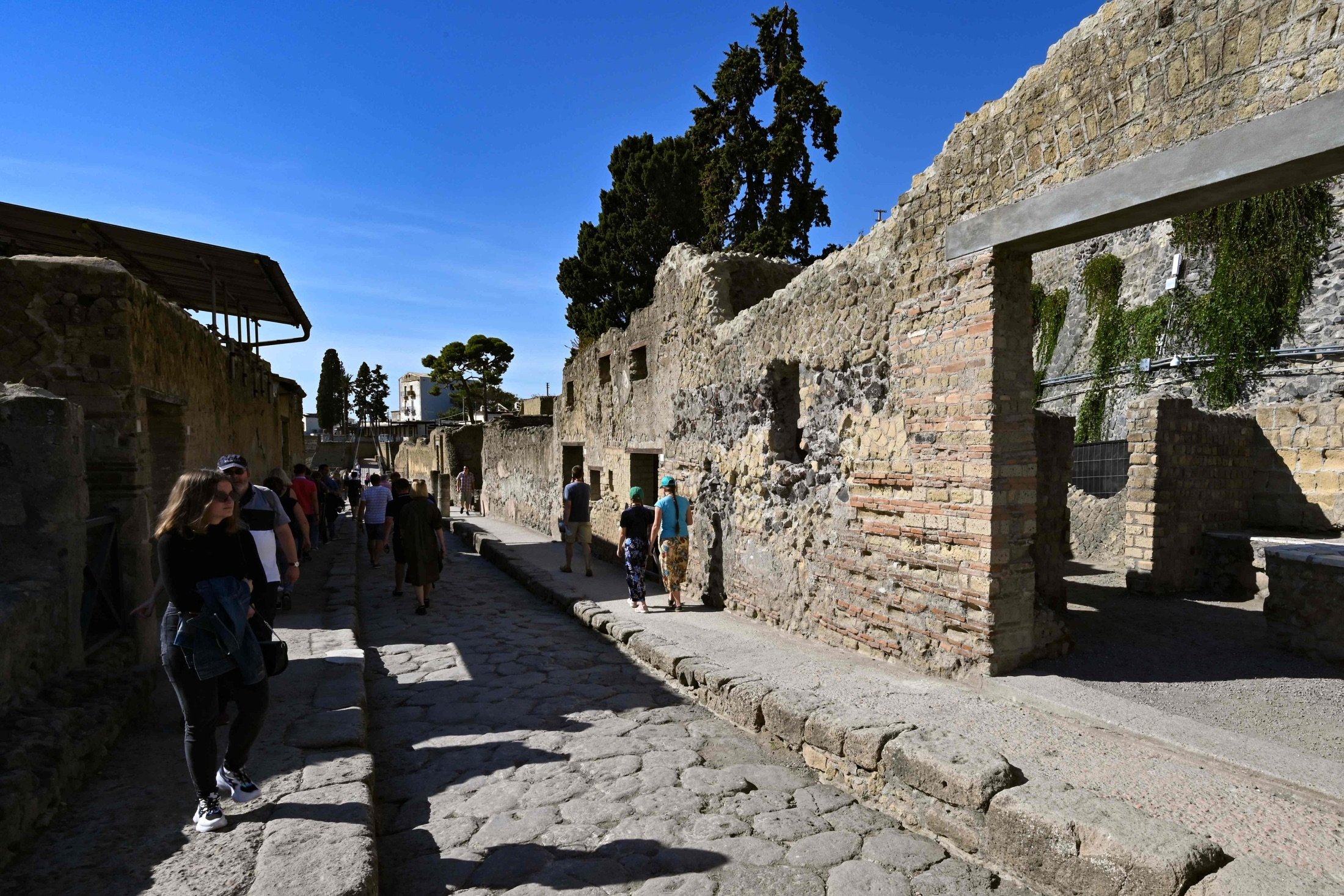
Visitors walk through the archaeological site of Herculaneum in Ercolano, near Naples, Italy, Oct. 23, 2019. (AFP Photo)

Another aspect is that, although Herculaneum was known as a resort for the elite, it was also home to many slaves and freedmen, said Craig.

Male slaves had a higher chance of emancipation than women and were generally freed at an earlier age, giving them more access to coveted foods.

"Now we've got a way and approach for actually quantifying diet in the past, so what we want to do is apply this more widely through time and space," said Craig.

He hopes to next examine how quickly diets shifted when prehistoric humans moved from hunter-gathering activities to agricultural societies.


  • shortlink copied
  • Last Update: Aug 26, 2021 4:12 pm
    KEYWORDS
    archaeology culture ancient times ancient rome roman culture
    The Daily Sabah Newsletter
    Keep up to date with what’s happening in Turkey, it’s region and the world.
    You can unsubscribe at any time. By signing up you are agreeing to our Terms of Use and Privacy Policy. This site is protected by reCAPTCHA and the Google Privacy Policy and Terms of Service apply.
    Winter fairy tale in Limni Lake Park in Turkey's Gümüşhane
    PHOTOGALLERY
    • POLITICS
    • Diplomacy
    • Legislation
    • War On Terror
    • EU Affairs
    • News Analysis
    • TÜRKİYE
    • Istanbul
    • Education
    • Investigations
    • Minorities
    • Diaspora
    • World
    • Mid-East
    • Europe
    • Americas
    • Asia Pacific
    • Africa
    • Syrian Crisis
    • İslamophobia
    • Business
    • Automotive
    • Economy
    • Energy
    • Finance
    • Tourism
    • Tech
    • Defense
    • Transportation
    • News Analysis
    • Lifestyle
    • Health
    • Environment
    • Travel
    • Food
    • Fashion
    • Science
    • Religion
    • History
    • Feature
    • Expat Corner
    • Arts
    • Cinema
    • Music
    • Events
    • Portrait
    • Performing Arts
    • Reviews
    • Sports
    • Football
    • Basketball
    • Motorsports
    • Tennis
    • Opinion
    • Columns
    • Op-Ed
    • Reader's Corner
    • Editorial
    • Photo gallery
    • DS TV
    • Jobs
    • privacy
    • about us
    • contact us
    • RSS
    © Turkuvaz Haberleşme ve Yayıncılık 2021