
Daily Sabah logo

Politics
Diplomacy Legislation War On Terror EU Affairs Elections News Analysis
TÜRKİYE
Istanbul Education Investigations Minorities Expat Corner Diaspora
World
Mid-East Europe Americas Asia Pacific Africa Syrian Crisis Islamophobia
Business
Automotive Economy Energy Finance Tourism Tech Defense Transportation News Analysis
Lifestyle
Health Environment Travel Food Fashion Science Religion History Feature Expat Corner
Arts
Cinema Music Events Portrait Reviews Performing Arts
Sports
Football Basketball Motorsports Tennis
Opinion
Columns Op-Ed Reader's Corner Editorial
PHOTO GALLERY
JOBS ABOUT US RSS PRIVACY CONTACT US
© Turkuvaz Haberleşme ve Yayıncılık 2025

Daily Sabah - Latest & Breaking News from Turkey | Istanbul

  • Politics
    • Diplomacy
    • Legislation
    • War On Terror
    • EU Affairs
    • Elections
    • News Analysis
  • TÜRKİYE
    • Istanbul
    • Education
    • Investigations
    • Minorities
    • Expat Corner
    • Diaspora
  • World
    • Mid-East
    • Europe
    • Americas
    • Asia Pacific
    • Africa
    • Syrian Crisis
    • Islamophobia
  • Business
    • Automotive
    • Economy
    • Energy
    • Finance
    • Tourism
    • Tech
    • Defense
    • Transportation
    • News Analysis
  • Lifestyle
    • Health
    • Environment
    • Travel
    • Food
    • Fashion
    • Science
    • Religion
    • History
    • Feature
    • Expat Corner
  • Arts
    • Cinema
    • Music
    • Events
    • Portrait
    • Reviews
    • Performing Arts
  • Sports
    • Football
    • Basketball
    • Motorsports
    • Tennis
  • Gallery
  • Opinion
    • Columns
    • Op-Ed
    • Reader's Corner
    • Editorial
  • TV
  • Arts
  • Cinema
  • Music
  • Events
  • Portrait
  • Reviews
  • Performing Arts

Spray cans, freedom: How graffiti transforms Guinea's Conakry

by Associated Press

CONAKRY, Guinea Oct 26, 2025 - 10:28 am GMT+3
Motorcyclists ride past a mural depicting a powerful woman on a street wall in Conakry, Guinea, Oct. 19, 2025. (AP Photo)
by Associated Press Oct 26, 2025 10:28 am

It was the middle of the day when Omar Diaw, known by his artist name "Chimere” - French for chimera - approached a blank wall off the main thoroughfare in Guinea 's capital and started spray-painting.

"They know who I am,” he said confidently. Though it wasn’t clear who ”they” were, civilians and police didn’t bat an eye as Diaw's fellow artists unloaded dozens of paint cans onto the roadside in Conakry.

Graffiti has thrived for years in Diaw’s native Senegal, where the modern urban street art first took off in West Africa. But when he moved to Guinea in 2018 to explore a new place, he said such art was nearly nonexistent.

"It was thought that graffiti was vandalism,” he said.

To win over the public, Diaw took a gentle approach, using graffiti for public awareness campaigns. One of his first was to raise awareness about COVID-19 preventive measures.
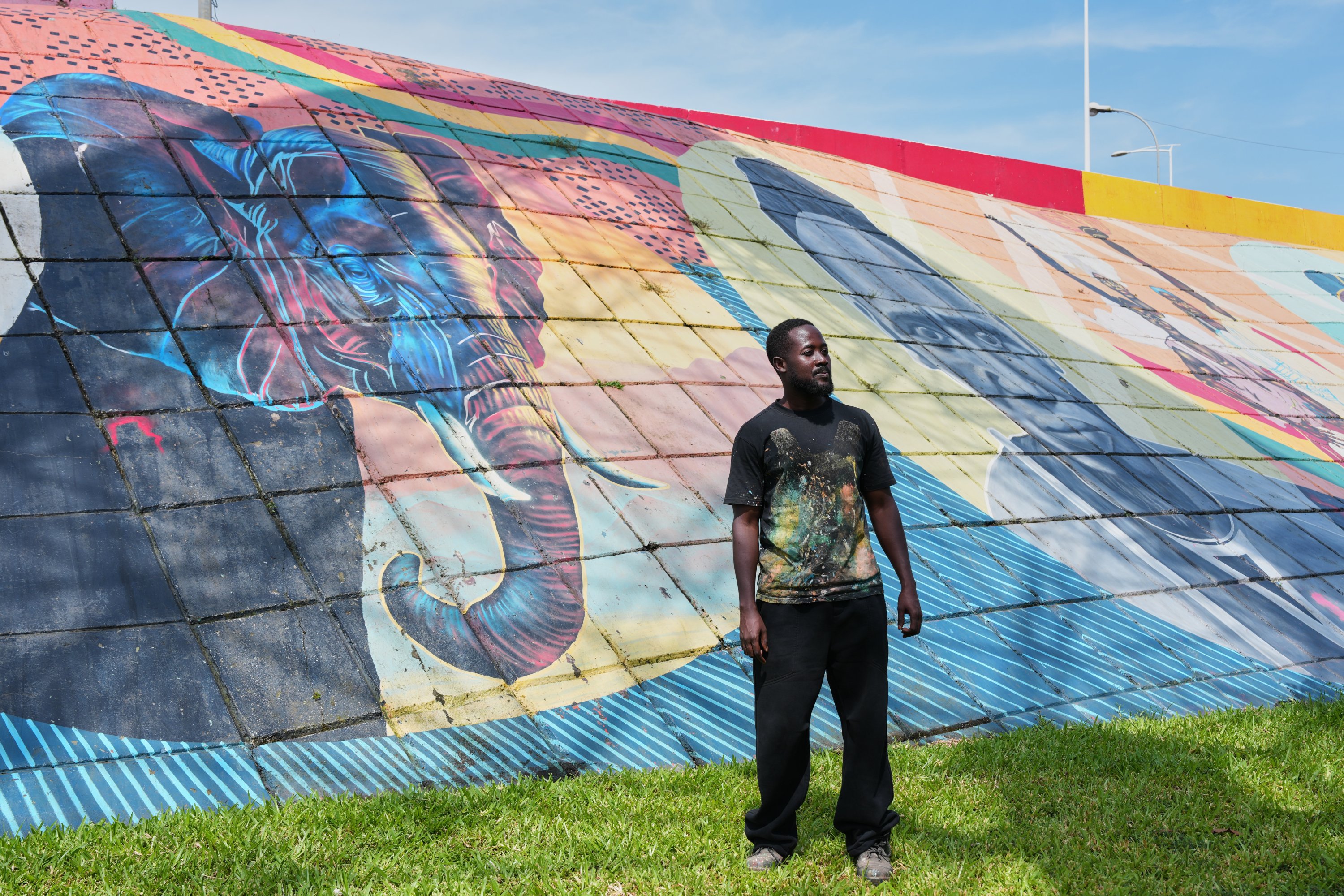
Graffiti artist Omar Diaw stands in front of one of his murals in Conakry, Guinea, Sep. 20, 2025. (AP Photo)

"We had to seduce the population,” he said.

The port city of Conakry faces rapid urbanization. Diaw’s graffiti has become an undeniable part of its crowded, concrete-heavy landscape.

His larger-than-life images of famous Guinean musicians and African independence leaders now dwarf the overloaded trucks that drive by. Drying laundry hung over the portrait of the West African resistance fighter Samory Toure.

The tag of Diaw’s graffiti collective, Guinea Ghetto Graff, is on murals all over the city.

Graffiti as it’s known today began in the 1960s and ’70s in the United States. It arrived in West Africa via Dakar, Senegal, in 1988, when the region’s first graffiti artist, Amadou Lamine Ngom, started painting on the city’s walls.

Known by his artist name, "Docta,” Ngom and a group of fellow artists was commissioned the following year to paint murals for an awareness campaign aimed at cleaning up Dakar’s streets.

Ngom, 51, said that at the beginning, aside from such campaigns, he did graffiti mostly at night. He later changed his approach.

"I decided to do it in broad daylight,” he said. "So as not to copy what’s happening in the United States, Europe or elsewhere. To create graffiti that resembles the African reality, taking into account our reality, our values.”

Ngom, who later mentored the teenage Diaw, said communities grew to respect the public artwork since it reflected their lives and experiences.

With the public’s backing, "the authorities didn’t have a choice," Ngom said.

These days, graffiti has grown more assertive in Senegal, becoming part of the political messaging around anti-government protests. In Guinea, Diaw’s graffiti has addressed issues like migration.

Diaw said Conakry’s governor supports much of his work and has given him carte blanche to do it wherever he wants.

As his latest work beside the thoroughfare took shape, passersby began to stop and admire the portrait of Guinea’s military leader, Gen. Mamadi Doumbouya, who took power in a 2021 coup.

A 22-year-old driver, Ousmane Sylla, said he was already familiar with Diaw’s gigantic paintings near Conakry's airport.

"It reminds us of old Guinean musicians. It reminds us of history,” he said. "Graffiti is good for Africa, it’s good for this country, it’s good for everyone. I like it, and it changed the face of our city.”

The next step might be bringing in a wider range of artists.

"I would really like to see more women become a part of this, because they say that (graffiti) is for men,” said Mama Aissata Camara, a rare one on Guinea’s graffiti scene.


  • shortlink copied
  • KEYWORDS
    graffiti guinea street art senegal
    The Daily Sabah Newsletter
    Keep up to date with what’s happening in Turkey, it’s region and the world.
    You can unsubscribe at any time. By signing up you are agreeing to our Terms of Use and Privacy Policy. This site is protected by reCAPTCHA and the Google Privacy Policy and Terms of Service apply.
    Playa Zipolite, Mexico
    Swim at your own risk: World's deadliest beaches
    PHOTOGALLERY
    • POLITICS
    • Diplomacy
    • Legislation
    • War On Terror
    • EU Affairs
    • News Analysis
    • TÜRKİYE
    • Istanbul
    • Education
    • Investigations
    • Minorities
    • Diaspora
    • World
    • Mid-East
    • Europe
    • Americas
    • Asia Pacific
    • Africa
    • Syrian Crisis
    • İslamophobia
    • Business
    • Automotive
    • Economy
    • Energy
    • Finance
    • Tourism
    • Tech
    • Defense
    • Transportation
    • News Analysis
    • Lifestyle
    • Health
    • Environment
    • Travel
    • Food
    • Fashion
    • Science
    • Religion
    • History
    • Feature
    • Expat Corner
    • Arts
    • Cinema
    • Music
    • Events
    • Portrait
    • Performing Arts
    • Reviews
    • Sports
    • Football
    • Basketball
    • Motorsports
    • Tennis
    • Opinion
    • Columns
    • Op-Ed
    • Reader's Corner
    • Editorial
    • Photo gallery
    • DS TV
    • Jobs
    • privacy
    • about us
    • contact us
    • RSS
    © Turkuvaz Haberleşme ve Yayıncılık 2021