2025 felt like one of those rare years in London when art and fashion didn’t simply run parallel, but truly collided. Moving through exhibitions, fashion weeks and cultural gatherings, there was a quiet yet unmistakable shift in the city’s creative energy. London felt less concerned with approval and more comfortable with complexity – less about spectacle, more about substance.
One of the defining moments of the year was the Leigh Bowery retrospective at Tate Modern. It was not just an exhibition, but a powerful reminder of London’s unapologetic spirit. Bowery’s exploration of identity, performance and the body felt profoundly current, particularly at a time when fashion and art are once again questioning norms rather than smoothing them over. The exhibition drew designers, artists and a younger generation seeking honesty over perfection – a recurring theme throughout the year.
This sense of fearless expression extended into Frieze London 2025, which once again became the city’s cultural heartbeat. Beyond the headline names, what stood out most was the confidence of emerging voices. The work felt bold, emotionally charged and unrestrained – less interested in fitting into a market narrative and more focused on personal truth. The conversations happening around Frieze felt as important as the works themselves, reinforcing London’s role as a city of dialogue rather than consensus.
Photography also had a particularly strong year. Photo London continued to bridge historical perspectives with experimental contemporary voices, reminding us how imagery – whether in fashion or fine art – shapes collective memory and desire. In a world saturated with images, London’s photographers seemed intent on slowing the gaze rather than overwhelming it.
Fashion in 2025 was deeply embedded in this broader cultural conversation. Exhibitions such as Cartier at the V&A demonstrated how craftsmanship and heritage can feel relevant without chasing trends. At the same time, more conceptual shows explored beauty, imperfection and decay – challenging traditional notions of glamor and reinforcing the idea that fashion is as much about ideas as it is about aesthetics.
At London Fashion Week, what resonated most was not a single trend, but an attitude. There was a clear return to individuality: designers embracing personal heritage, experimental silhouettes and slower, more thoughtful forms of luxury. Craft and handwork re-emerged as a form of resistance – not nostalgia, but a quiet rebellion against speed, excess, and disposability. Texture, imperfection and time became values in themselves.
In contrast to other fashion capitals, London once again defined itself through intellect rather than polish. While Paris continues to perfect luxury and Milan masters refinement, London’s strength lies in its ability to question. In 2025, it wasn’t about producing the most glamorous image, but the most interesting conversation.
Moving between galleries, shows and cultural spaces, I was reminded that London’s true power lies in its intersections – where artists sit next to designers, where heritage meets rebellion, and where tradition is never preserved untouched, but constantly re-examined. Many of the strongest works this year subtly responded to a world shaped by uncertainty, addressing themes of identity, transformation, memory and the body with honesty rather than escapism.
Ultimately, 2025 was not defined by a single exhibition or collection. It was defined by a city reaffirming its identity. London proved that creativity does not need to shout to be influential. Its impact lies in depth, diversity and the courage to ask difficult questions.
In a global cultural landscape driven by speed and spectacle, London in 2025 reminded us of something far more enduring: true relevance comes not from chasing attention, but from vision.
While contemporary art and fashion questioned identity and form, musicals remained London’s emotional constant in 2025. The West End continued to offer something rare in today’s fragmented cultural landscape: collective experience. Productions such as "Cabaret," "Hamilton," "Les Miserables" and the enduring power of "The Phantom of the Opera" reminded audiences why London theatre remains unmatched. What stood out was not novelty alone, but longevity – these productions didn’t chase trends, they refined them. Even newer or reimagined stagings leaned into intimacy, political undertones and immersive storytelling, proving that musicals can be both spectacle and substance. In a year defined by uncertainty, they offered shared emotion, ritual and continuity.
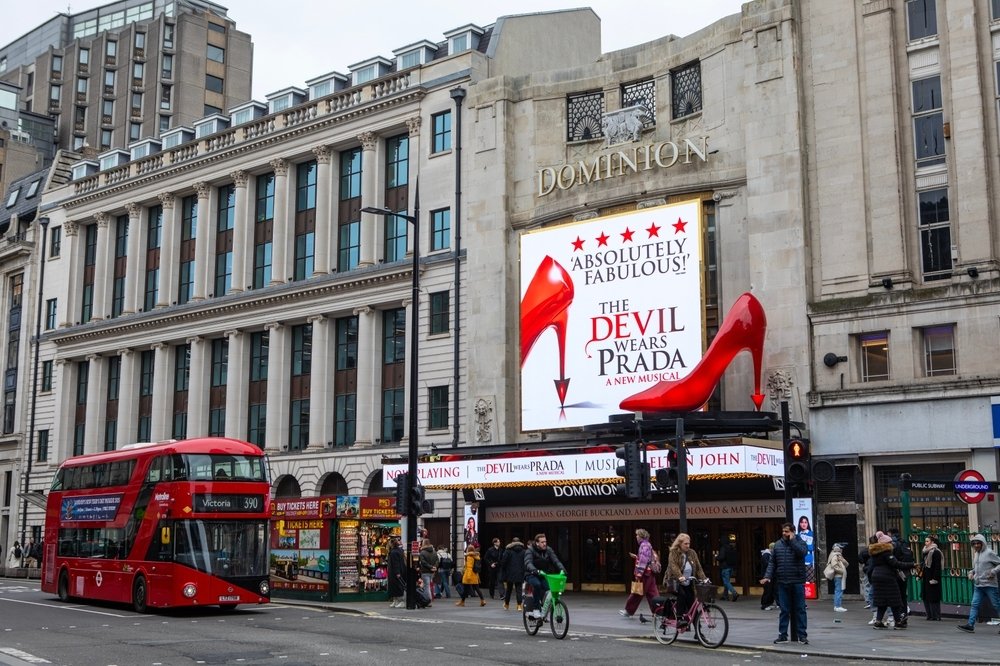
One of the most culturally resonant moments of the year was the West End debut of "The Devil Wears Prada." More than a musical adaptation, it became a commentary on fashion itself – ambition, power, reinvention and the cost of success. With its sharp humor, polished production and unmistakable fashion narrative, the show bridged two worlds London understands instinctively: style and storytelling. What made it particularly relevant in 2025 was its timing. In a year when fashion was re-examining values such as authorship, identity and labour, "The Devil Wears Prada" felt less like nostalgia and more like reflection. It reminded audiences that fashion is not just about clothes, but about hierarchy, desire, resilience and transformation.