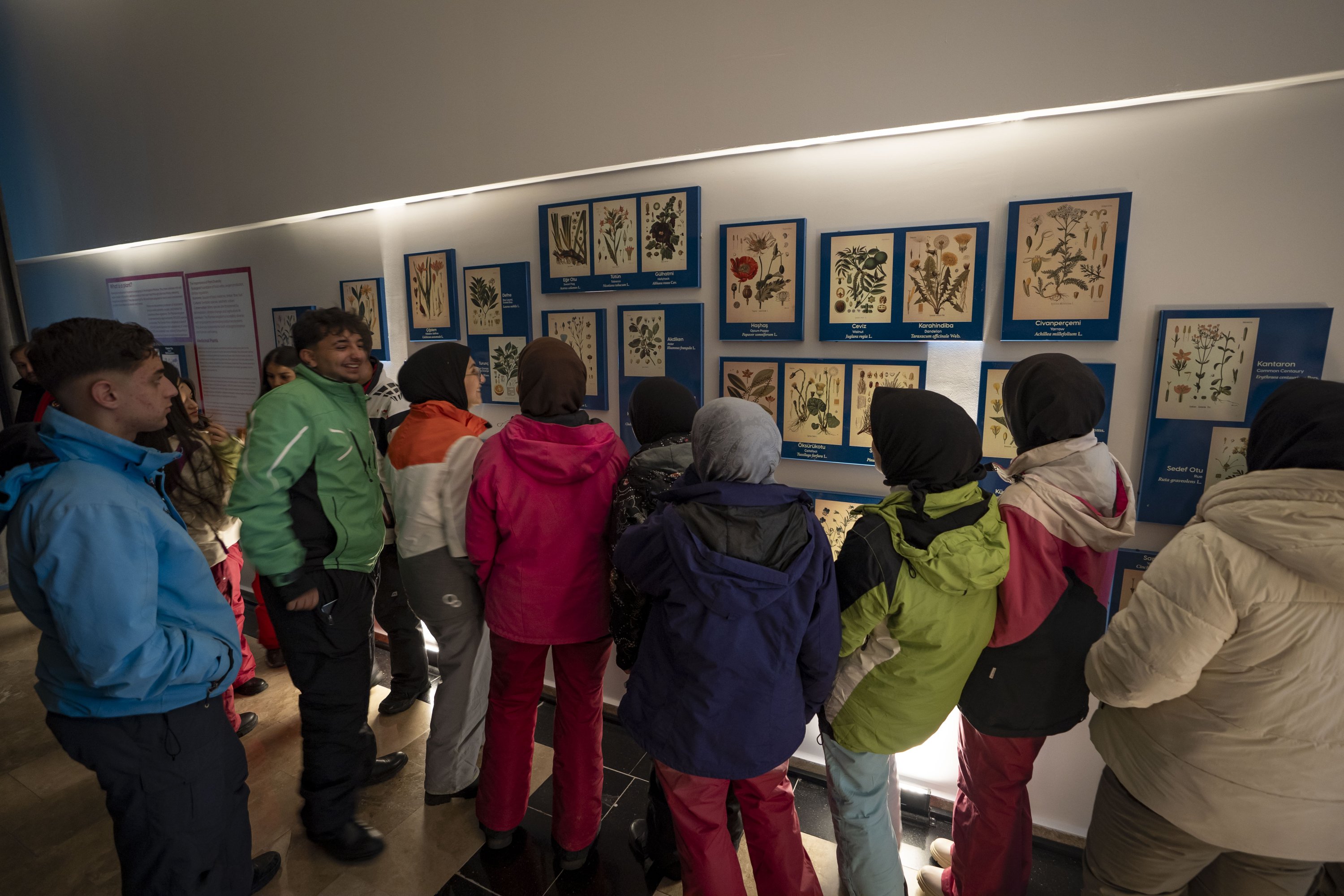
The Biodiversity Science Museum at Atatürk University in Erzurum, eastern Türkiye, has gained significant attention with its exhibition featuring 88 medicinal plants alongside endangered bird species.
The museum, renowned for carefully preserving its scientific collections and facilitating research, houses an impressive array of exhibits, including life-sized replicas of mammoths, dinosaurs and whales. In addition, it showcases a diverse collection of plants, insects, mammals, reptiles, fish, crabs, lobsters, corals and fossils dating back millions of years.
Thanks to the support of Atatürk University Rector professor Ahmet Hacımüftüoğlu, the museum has recently launched new exhibitions aimed at promoting awareness and conservation of medicinal plants.
The museum, which welcomes around 10,000 visitors annually, also highlights endangered bird species, further enhancing its appeal through a rich and diverse collection.
Professor Levent Gültekin, Founder and Director of the Atatürk University Biodiversity Application and Research Center and Biodiversity Science Museum, expressed his gratitude to Rector Hacımüftüoğlu for his contributions to the creation of these exhibitions.
Gültekin emphasized the importance of plants, noting that they are among the most immediately noticeable groups of living organisms. “Globally, there are approximately 390,000 plant species and in Türkiye, plant diversity occupies a significant position. Plants are vulnerable organisms; while they have high reproductive capacity, their inability to move makes them extremely sensitive to environmental changes and human pressures,” he said.
He added that the museum aims to raise awareness about endangered bird species in Türkiye by featuring them prominently in its exhibitions.
Highlighting the pharmacological significance of medicinal plants, Gültekin explained: “Around 40% of plant species are considered vulnerable and in need of protection, with some populations at critically low levels. One of the most important aspects is their use as medicinal plants. This exhibition was created to raise awareness and provide information. Presentations include original illustration prints of 88 medicinal plants.”
Professor Gültekin also noted that approximately 18,000 plant species worldwide are recognized for their medicinal value, while in Türkiye this number ranges between 1,000 and 1,200. He emphasized the importance of educating the public about medicinal knowledge.
In addition, the museum features a herbarium-style exhibition dedicated to plants. “Our medicinal plant exhibition draws significant interest from visitors. At the same time, our university houses the Institute of Pharmaceuticals, Vaccines and Biotechnology, which facilitates collaborative scientific research,” Gültekin concluded.