It is no coincidence that the earliest traces of the Turkish-Islamic civilization in Anatolia are found in Ani. I also do not believe the term “ruins” applied to Ani is accurate, for Ani is not a city that can be devalued by the concept of ruins. Though its unique architecture may not have survived to the present day, it is an ancient city whose remnants have endured.
This city, which acquired a Turkish-Islamic identity through structures such as mosques, masjids, domed tombs, bathhouses, palaces and bazaars built during the Seljuk period, represents the “zero point” of Anatolian Turkish art and urban planning. Added to the UNESCO World Heritage List in 2016, Ani is not merely a settlement. It is the first gateway through which the Turks entered Anatolia and the earliest center where they demonstrated their determination to build a civilization.
Ani is a multi-layered city with a history extending back to prehistoric times. In this region, where different peoples and faiths have left overlapping traces, the Fire Temple stands as one of the oldest known structures. Dating from the fifth century B.C. to the third century A.D., this temple reflects Ani’s pre-Islamic religious heritage. Experts suggest that the Fire Temple, believed to have been a domed structure with column bases and capitals, may have been converted into a church as early as the fourth century A.D. with the spread of Christianity in the region. This transformation represents one of the earliest examples of the adaptability of Ani’s sacred spaces over time.
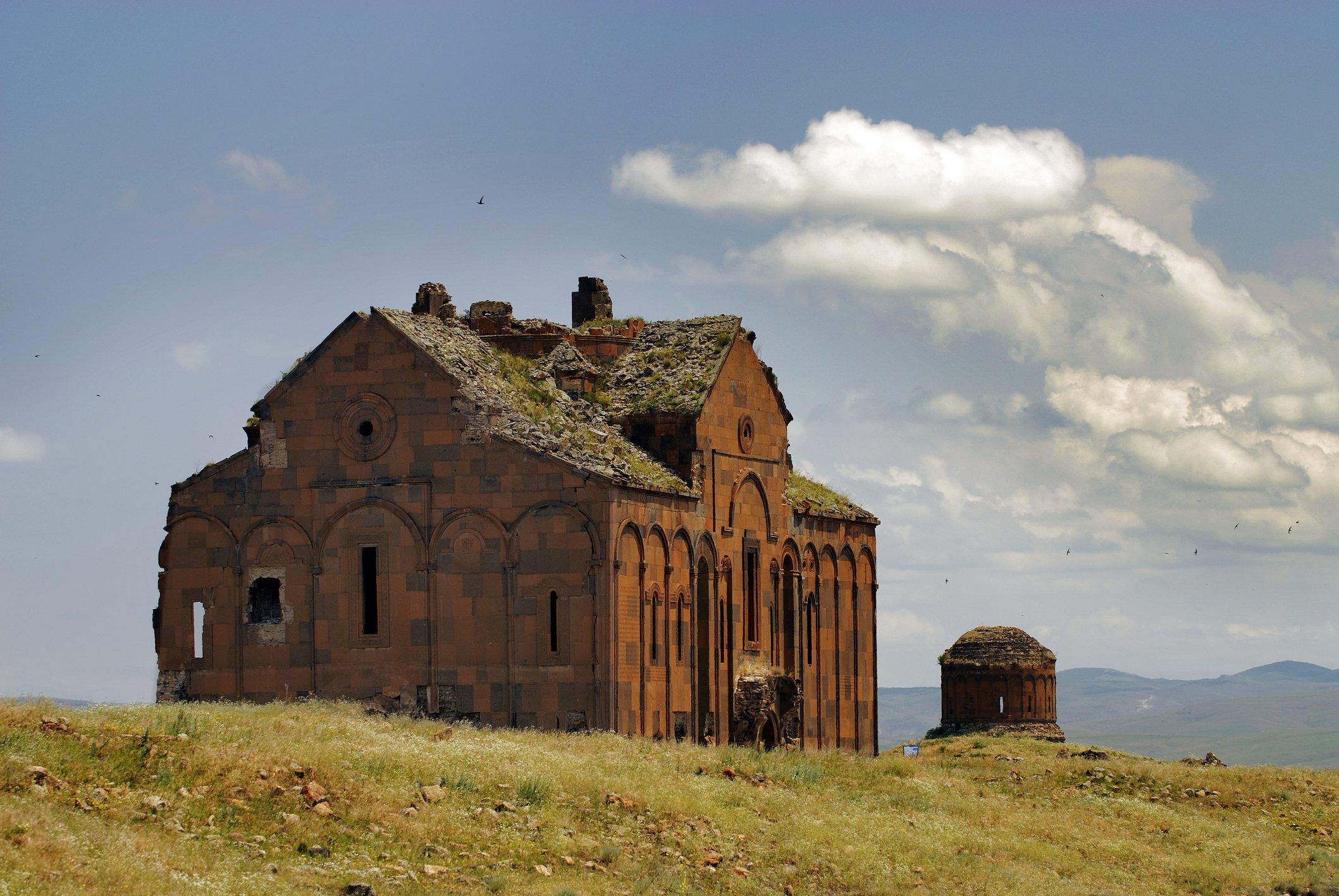
When entering Ani through the Lion’s Gate, the first imposing structure that draws attention is the Great Cathedral. Construction began during the reign of Gagik I and was completed in 1001 under his wife Katranide. The cathedral is a landmark that significantly influenced the history of architecture. Its architect, Trdat, was also responsible for restoring the dome of Hagia Sophia. In this structure, Trdat employed vertical lines, massive columns and pointed arch forms – approximately 200 years before the emergence of the Gothic movement in Europe. Designed in the shape of a cross and built from warm-toned red tuff stone, the structure later served as a model for many Armenian churches.
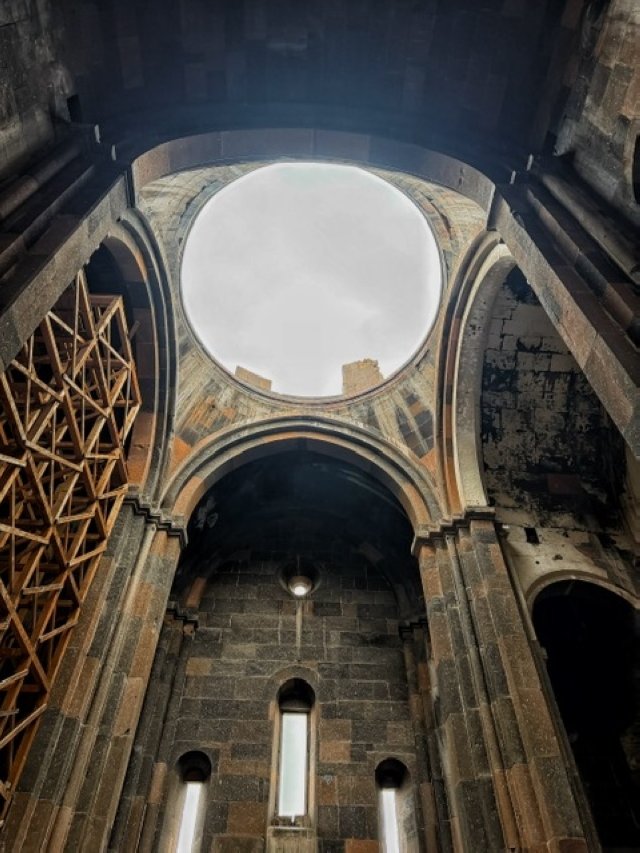
Currently under restoration and now lacking its dome, the building still captivates visitors with its monumental presence. Even in its incomplete state, it continues to impress through its architectural ingenuity and acoustics.
One can imagine the moment when the first call to prayer was heard in the city. After Sultan Alparslan conquered Ani on Aug. 16, 1064, the cross was removed from the structure and replaced with a crescent and the first prayer of the conquest was performed with his army. In this context, the structure later known as the "Fethiye Mosque" can be regarded as the "Hagia Sophia of Ani." Although the building today is supported by steel reinforcements, it remains one of the most significant symbols of the convergence of two civilizations, marked by the traces of a mihrab and minbar.
Rising at one of the highest and most central points of the city, the Ebu’l Menûçihr Mosque is of great importance as the first mosque built by the Turks in Anatolia. Constructed between 1072 and 1086 by Abu Shuja’ Menûçihr of the Shaddadid dynasty, the structure reflects the characteristics of early Seljuk architecture. Its most striking feature is the inscription “Bismillah” on its minaret, written in Kufic script using white stone.
However, the mosque also suffered significant damage during the excavations led by Nikolai Marr between 1892 and 1904. While using the site as an excavation base, Marr removed artifacts related to Turkish-Islamic heritage and transported them to the Soviet Union. An inscription on the mosque wall, which indicated that the structure was built by order of Sultan Malik Shah, was also destroyed during these interventions. Today, this inscription is known only through archival photographs.
The mosque, reopened for worship in 2021, now hosts the call to prayer five times a day and stands as an important monument reflecting the layered history of Ani.
From the upper levels of the Menûçihr Mosque, one can see a ruined bridge spanning the Arpaçay River, which forms the border between Türkiye and Armenia. Believed to have been constructed by the Great Seljuks in the 11th or 12th century, this Silk Road bridge marked one of the key crossings of the 6,400-kilometer trade route. It was designed with two levels: the lower level for caravans and the upper level for pedestrians and soldiers. Today, with one end in Türkiye and the other in Armenia, the bridge stands as a powerful symbol of a once-unified route that now lies divided.
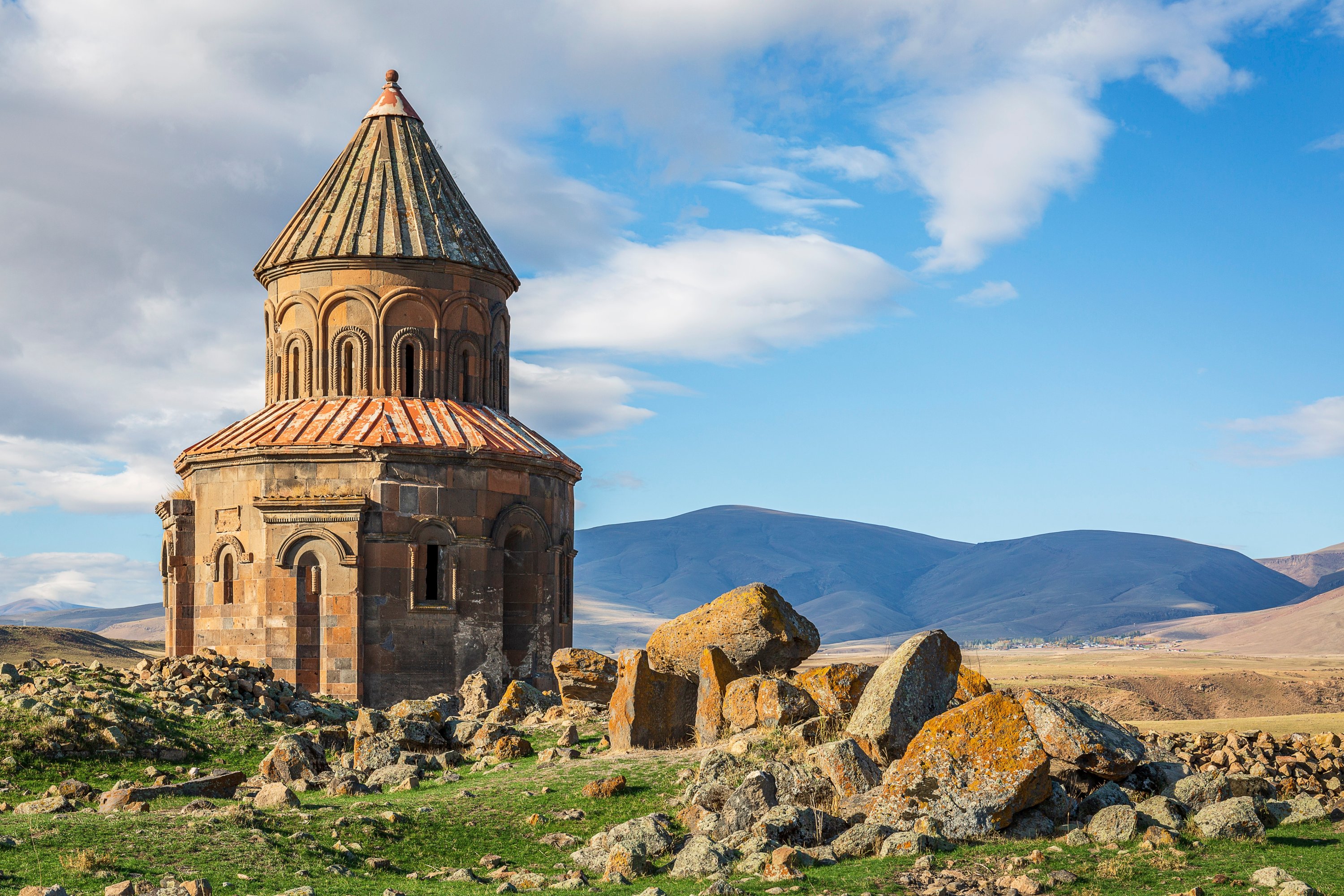
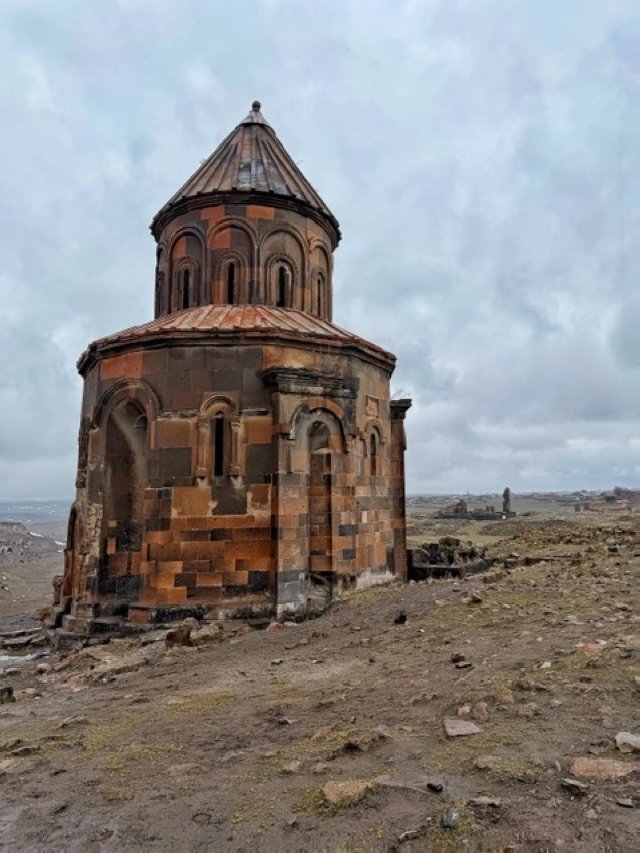
One of the most frequently photographed structures in the archaeological site, St. Gregory’s Church was commissioned by Prince Gregory in 994. With its decagonal architectural plan, it represents a high point of stone craftsmanship and functioned as a dynastic complex. The inscriptions on its walls reflect the commemorative use of architecture as a form of memory preservation. Archaeological findings from the 2012 restoration, including kitchen hearths and ceramics, indicate that the site was not only a religious center but also a vibrant social space.
Baths, cemeteries, early urban life
One of the most remarkable technical features of the city is the presence of an early bathhouse structure, which reflects the development of hygiene and medical practices in the 12th century. According to historical accounts attributed to Qadi Burhan al-Din (1143), he was born in a bathhouse in Ani based on medical advice given to his mother, suggesting the importance of such facilities in daily life. Excavations conducted in 2022, which uncovered bathing installations, further support the significance of water-based practices in the city’s urban culture.
Similarly, the earliest Turkish-Islamic cemetery in Anatolia discovered in Ani, predates comparable sites such as Ahlat. Featuring octagonal domes and burial chambers, it reflects early funerary architecture in the region. The earliest Turkish-Islamic inscription in Anatolia, depicting a lion motif and referring to the reconstruction of city walls, demonstrates the rapid establishment of Seljuk authority in the region.