When we look at a photograph, what are we really looking at? The lines etched across a face? The memory embedded in a street? Or perhaps that small yet powerful piece of evidence left behind by time itself?
Photography is often described with the simple phrase “capturing a moment.” Yet the story of photography in Türkiye is about much more than freezing time. It is the story of making identity visible, preserving memory, documenting modernization, understanding the city and its people, and sometimes revealing what would otherwise remain unseen.
Situated at the crossroads of Europe, Asia and the Middle East, Türkiye has long been a meeting point of civilizations, empires and visual traditions. Photography therefore developed here not merely as a documentary tool but as a medium through which the country negotiated questions of identity, memory and its evolving relationship with modernity. This geographical and cultural position gave Turkish photography a character that has always been both deeply local and unmistakably international.
Perhaps that is why photography occupies such a quiet yet remarkably powerful place in our artistic history. It has never been romanticized to the same extent as painting, perceived as distant as sculpture, or considered as intellectually intimidating as contemporary art. Photography speaks directly to its audience. It presents a face, opens a door, places a street before us. Yet this immediacy should not be mistaken for simplicity. Photography’s greatest strength lies in its ability to transform something utterly familiar into something unexpectedly unfamiliar.
When discussing photography in Türkiye, the first name that usually comes to mind is Ara Güler. Naturally, the story cannot be told without him. But neither can it be told through him alone. Photography in these lands stretches across a far more layered journey; from Ottoman portrait studios to the documentary vision of the early republic, from photojournalism to the conceptual practices of contemporary art.
The story begins with the arrival of photography in the Ottoman Empire and the emergence of a thriving studio culture. Among its earliest and most influential pioneers were the Abdullah Freres, or the Abdullah Brothers. During the second half of the 19th century, they were far more than portrait photographers. They became the visual chroniclers of an empire.
Their camera documented the imperial court, bureaucrats, cityscapes and monumental architecture. Many of the images through which we imagine the late Ottoman world today originate from their lens. Their photographs circulated not only within the empire but also across Europe, shaping international perceptions of Ottoman society and its cultural heritage. At this stage, photography had not yet fully emerged as an autonomous art form in the contemporary sense. It functioned primarily as a means of representation and documentation. Yet perhaps this is precisely where photography’s enduring dilemma begins: Is it a document, or is it art?
I do not believe that is the right question.
Photography can be documentary, it can be art, and sometimes it is both simultaneously. In fact, this duality is precisely where its greatest strength resides. One foot stands firmly in reality; the other belongs to interpretation.
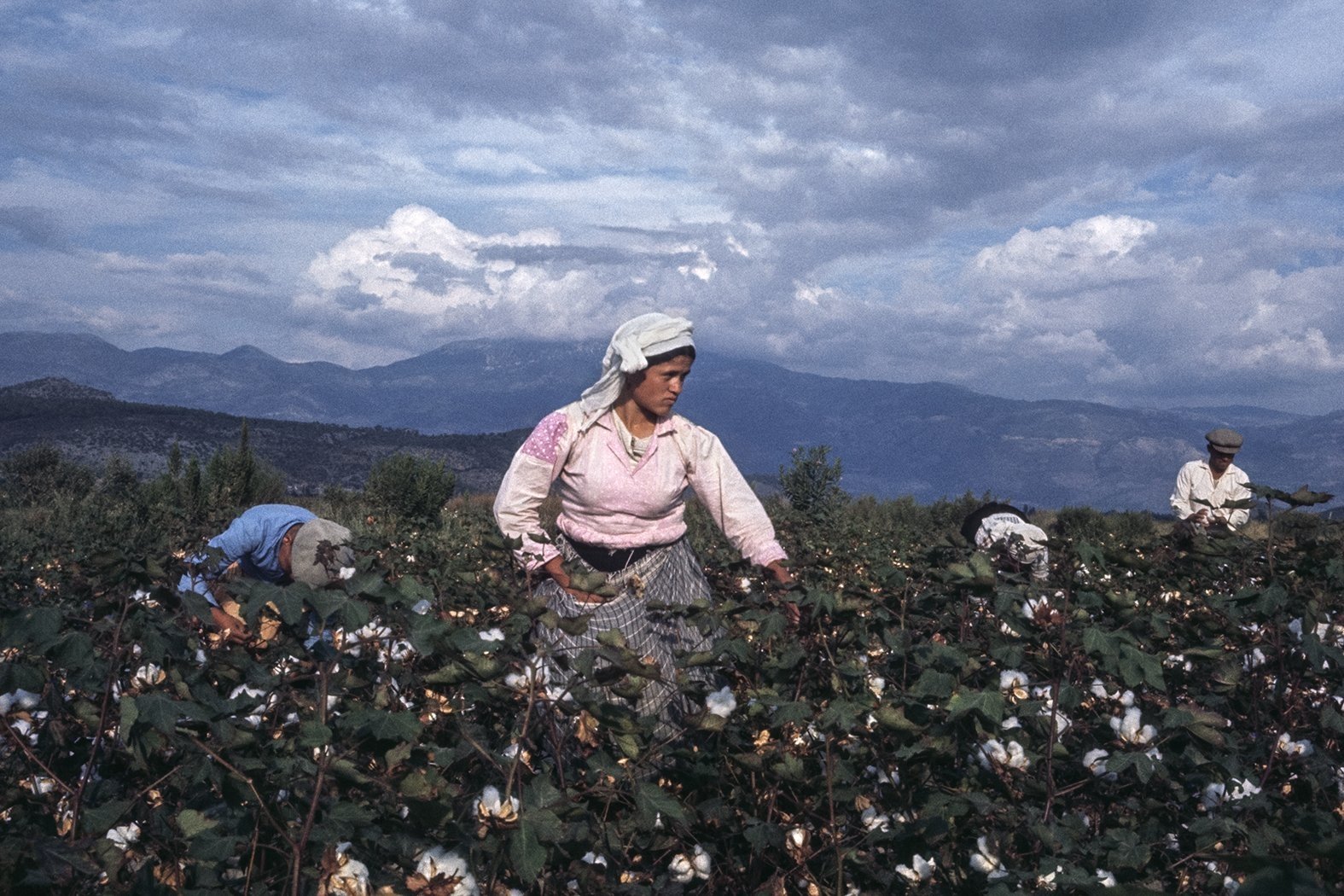
With the establishment of the republic, photography gradually became a way for a new nation to see itself. Modernizing cities, changing ways of life, the faces of Anatolia, workers, children, public squares, railway stations and coffeehouses, photography no longer merely showed reality. It began to narrate it. Documentary photography and photojournalism became some of the strongest points of contact between photography and the public in Türkiye. Figures such as Ara Güler, Ozan Sağdıç, Semiha Es and Yıldız Moran not only recorded their era but endowed it with emotion, aesthetics and perspective.
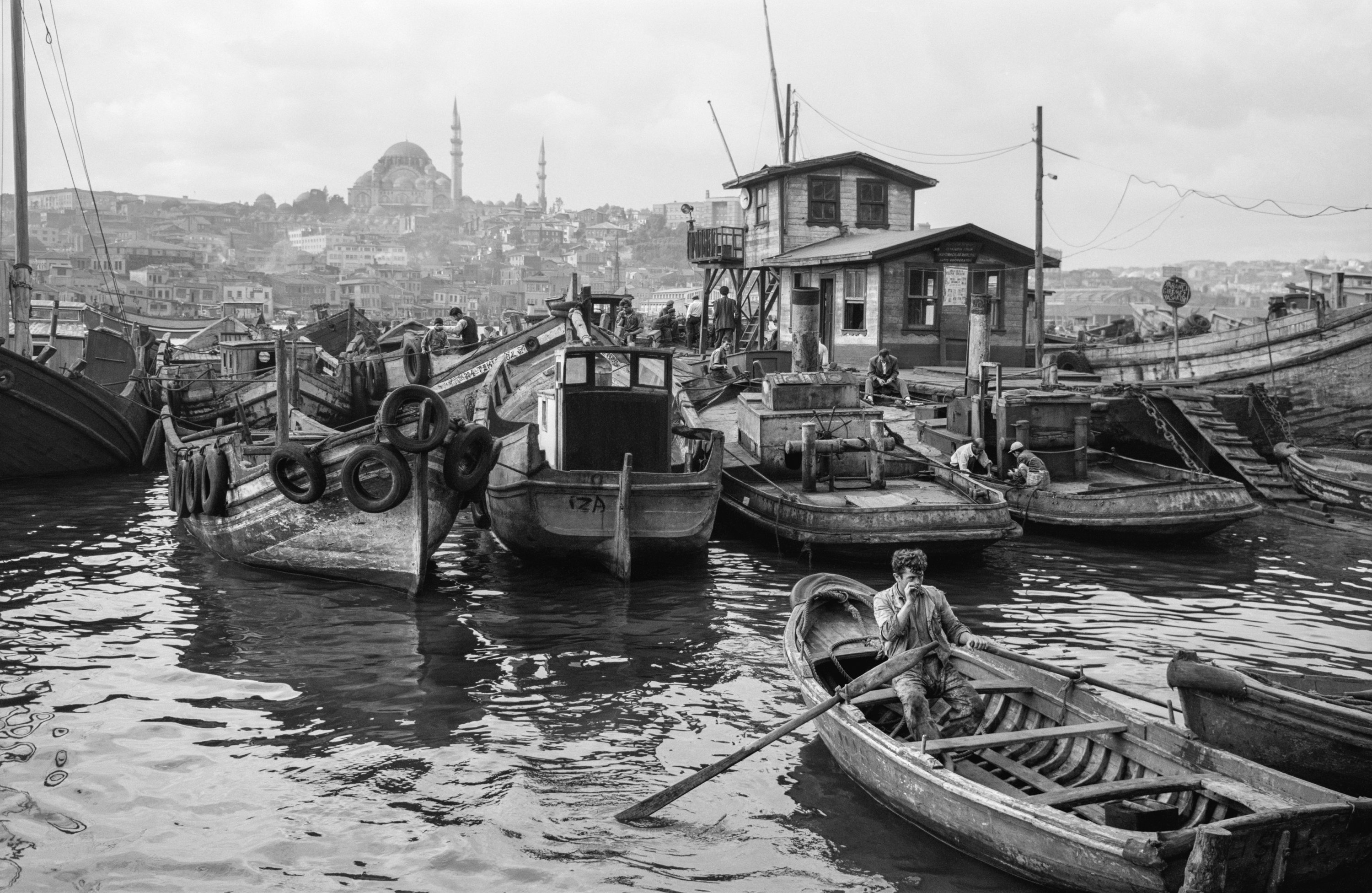
Looking at Ara Güler’s photographs, we do not simply see Istanbul; we hear it. We sense the exhaustion in the fishermen’s hands, the curiosity in children’s eyes, the shadow stretching across Galata and the damp atmosphere of Beyoğlu. Güler consistently described himself as a photojournalist rather than an artist and often kept his distance from debates over whether photography should be classified as art. Yet perhaps that is exactly what made him extraordinary: without attempting to create art, he secured a permanent place within its history.
His work also introduced Istanbul to international audiences through publications such as "Time," "Life," "Paris Match" and "Stern." Long before social media transformed cities into visual brands, Ara Güler had already shaped the global image of Istanbul through his lens, presenting the city’s layered humanity to readers across the world.
Because sometimes art is born not from ambition, but from witnessing.
Yet reading the story of photography in Türkiye solely through its documentary tradition would leave the picture incomplete. Artists such as Yıldız Moran discovered the possibilities of composition, light, rhythm and abstraction at a remarkably early stage. Moran’s photographs demonstrated that photography was not merely capable of showing reality; it could also construct a way of seeing.
As Türkiye’s first professionally trained female photographer, Yıldız Moran occupies a singular place in the country’s photographic history. Educated in Britain under the celebrated photographer John Vickers, she brought an international sensibility to Turkish photography while remaining deeply connected to her own cultural landscape. Although her photographic career was relatively brief, the influence of her work has continued to resonate across generations.
In Moran’s photographs, photography functions almost like a surface-based art form. Light becomes something akin to a brushstroke, while shadows shape rhythm as much as they define form. Her images remind us that photography is never simply about what stands before the camera. It is equally about how the photographer chooses to see.
There is an important threshold here. For a long time, photography in Türkiye was understood primarily through journalism, documentary practice and archival work. Gradually, however, it entered the spaces of galleries, museums and contemporary art with increasing confidence. This transformation also altered photography’s meaning. No longer was it simply a lens directed toward the external world. It became a medium capable of carrying the artist’s conceptual concerns, personal reflections and relationship with memory.
Turkish photographer and artist Burhan Doğançay offers a particularly compelling example of this transformation. Most people know him primarily as a painter. Yet his fascination with urban walls shaped not only his paintings but also his photographic practice.
Walls were never merely surfaces for Doğançay. They represented the subconscious of society itself. Torn posters, graffiti, political slogans, rust, stains and traces of everyday life became visual testimonies of collective experience. Through his monumental Walls of the World project, he photographed urban walls across dozens of countries over several decades, creating one of the most extensive photographic archives of public surfaces ever assembled by a single artist. The project brought together photography’s documentary power with painting’s capacity for abstraction and interpretation.
Here, one of the most fascinating characteristics of photography in Türkiye becomes visible. For certain artists, photography is not necessarily the primary medium, but it remains an indispensable part of artistic thinking. In Doğançay’s practice, photography opens the path toward painting. It records not only what is visible but also what later becomes transformed into another artistic language.
The same can be said of Erol Akyavaş, whose relationship with photography unfolds through form, texture and metaphysical inquiry. His artistic language, shaped by architecture, Islamic art, Sufism and abstraction, also finds expression in his photographic work. In Akyavaş’s images, surfaces are never simply surfaces; they become doors, traces and symbols pointing toward meanings beyond themselves.
This raises an important question: when a painter takes photographs, how should we read those images? As technical records? Or as extensions of the artist’s visual thinking?
I believe the second answer is far more convincing.
For some artists, photography becomes the notebook of the eye. Sometimes it serves as preparation for a painting, sometimes as an independent artwork and sometimes as the most honest record of the way an artist experiences the world.
Another figure deserves to be mentioned within this broader understanding of photography: Ahmet Ertuğ. Internationally renowned for his large-format photographs of architectural masterpieces, archaeological sites and historic libraries, Ertuğ has dedicated decades to documenting cultural heritage with extraordinary technical precision and artistic sensitivity. His work has taken him to institutions such as the Vatican Library, the National Library of France and the British Library, presenting Türkiye’s architectural and historical legacy within a truly global cultural dialogue. In Ertuğ’s photographs, documentation itself becomes an act of preservation, transforming architecture into visual memory.
One of the strongest contemporary names in Türkiye’s popular photographic imagination is undoubtedly Nihat Odabaşı. He is widely recognized for his fashion photography, portraiture and images of celebrities. Yet reducing him to “the photographer of celebrities” would be a profound injustice.
Portrait photography is considerably more demanding than it may first appear. Capturing a person’s appearance is relatively easy; revealing their character is something else entirely. Odabaşı’s photographs are often defined by meticulously controlled lighting, carefully constructed compositions and highly stylized visual worlds. His work demonstrates how deeply photography has become intertwined with contemporary visual culture, fashion and the production of the image itself.
An interesting contrast emerges here between Ara Güler and Nihat Odabaşı. Ara Güler sought life as it unfolded naturally in the streets, embracing spontaneity and chance. Nihat Odabaşı, by contrast, embraces the carefully orchestrated frame, the constructed image and the power of visual identity. One captures the city’s natural rhythm, the other reconstructs personality through image-making. Yet both ultimately respond to the same question: How does a person, a city or an era become visible?
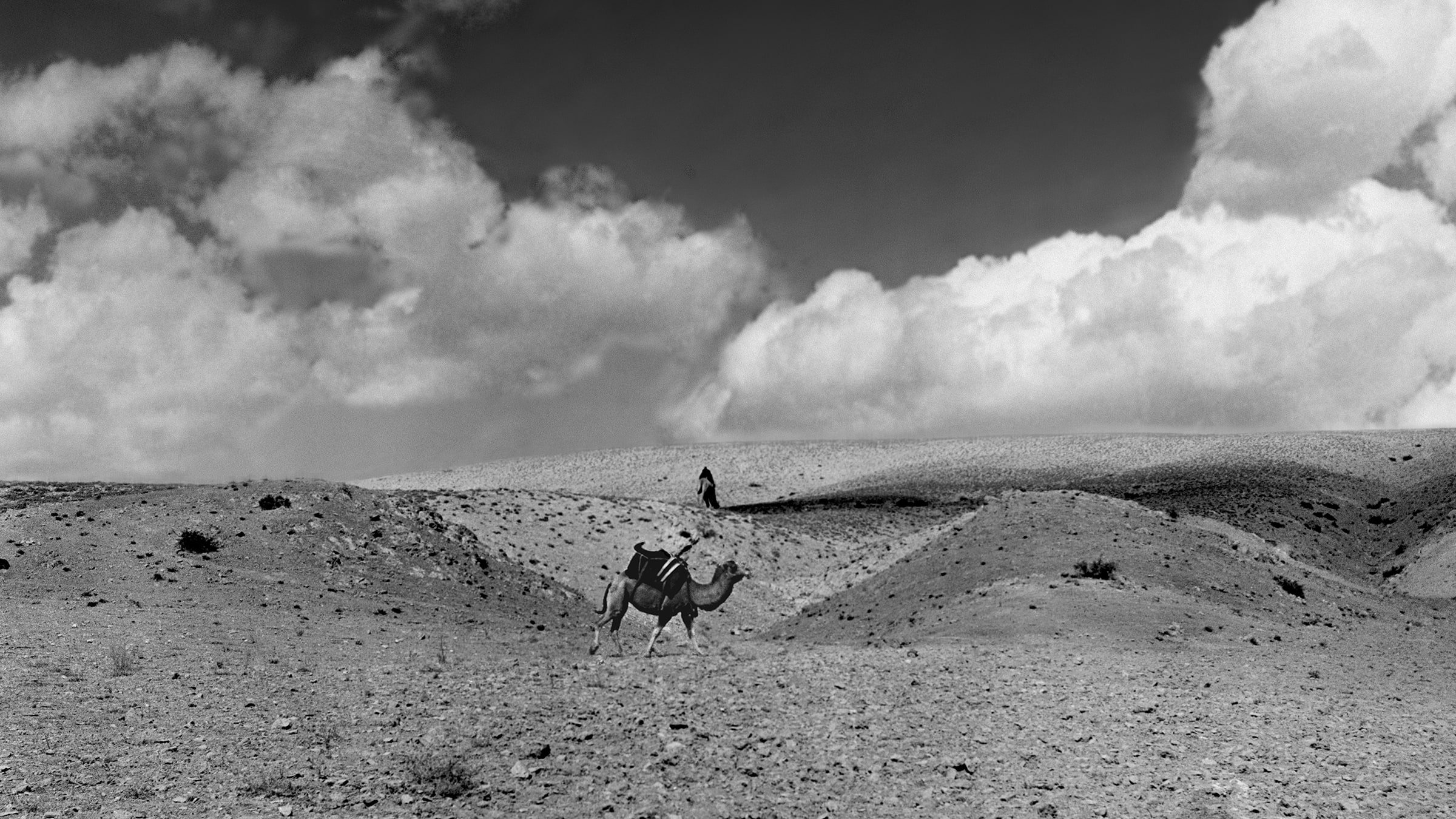
When we arrive at the field of contemporary art, photography takes on an even broader role. Today, photography in Türkiye is no longer simply about producing aesthetically compelling images. Issues such as identity, migration, the body, gender, urbanization, memory, archives, nature, ecology and political history are increasingly explored through photography. The artist is no longer simply someone who observes the world, but someone who raises questions, challenges images, reconstructs archives and, at times, questions photography’s own claim to truth.
The digital age has also transformed the way we understand photography. There was a time when a photograph was widely accepted as evidence. Today, we know that every image can be manipulated. Does this make photography less powerful? I believe the opposite is true. Photography is no longer concerned only with what is real, but with how reality itself is constructed.
Contemporary photography in Türkiye clearly reflects this shift. Many artists combine photography with archives, video, installation and performance. A photograph no longer has to exist as a single framed image hanging on a gallery wall. It can become part of an exhibition, a spatial experience, an exploration of memory or even a political statement.
One of the most important platforms that reflects this transformation is 212 Photography Istanbul. Since its launch, the festival has brought together internationally recognized photographers alongside emerging artists, strengthening Istanbul’s position within the global photography scene.
The festival presents photography not simply as something to be viewed, but as something to be experienced throughout the city. Historic buildings, public spaces, galleries and alternative venues become part of that experience. As photography interacts with Istanbul itself, visitors are encouraged not only to look at photographs but also to discover the city through them. In this way, photography becomes an active experience rather than a passive one.
Looking at the history of photography in Türkiye, three major traditions stand out: documentation, aesthetic exploration and conceptual thinking. Documentary photography preserves memory. The search for aesthetic expression strengthens photography through composition, light and visual language. Conceptual practice, meanwhile, turns photography into a medium that raises questions and encourages reflection. The country’s most influential photographers and artists have often brought these three approaches together.
Ara Güler’s Istanbul is documentary, but it is also deeply poetic. Yıldız Moran’s photographs are rooted in aesthetics while expressing a distinctly modern way of seeing. Doğançay’s photographs of walls function as archives while engaging with the conceptual language of contemporary art. Nihat Odabaşı’s portraits belong to contemporary visual culture, yet they also offer an exploration of identity in an age dominated by images.
So what makes a photograph truly powerful? Is it technical perfection, the right light or a flawless composition? All of these are important, but I believe the real strength of a photograph lies in its ability to remain with us long after we have seen it. The most memorable photographs are those that stay in our minds, carrying not only a single moment but sometimes the atmosphere of an entire period. A face we have never seen before can still make us wonder about the life behind it.
For viewers who feel they know little about art, photography may be the most accessible point of entry. It reduces the distance that people often feel toward art because it almost always offers something familiar, a street, a face, a child, a doorway or a shadow. That familiarity creates an immediate connection.
But once that connection is made, deeper questions inevitably follow. Why was this photograph taken, what has been left outside the frame? What has the photographer chosen to reveal, and what has been deliberately concealed? Should we read this image as a document, a work of art or an object of memory?
Today, a new generation of photographers in Türkiye continues to build on this rich legacy. Moving comfortably between documentary practice, conceptual art and digital experimentation, they are expanding the possibilities of the medium while continuing to ask the same essential question: How can a single image express something that words alone cannot?
Photography in Türkiye has grown through precisely these questions.
From the Ottoman Empire’s need for representation to the Republic’s vision of modernization, from the witness of photojournalism to the conceptual inquiries of contemporary art, photography has become one of the ways in which this country has understood and represented itself.
Looking back today, we can see that photography has never simply recorded the past. It has also encouraged us to reconsider it.
When we look at Ara Güler’s Istanbul, we are reminded of a city that has gradually disappeared. His photographs preserve not only its streets but also its atmosphere and everyday life. When we look at Burhan Doğançay’s photographs of walls, we begin to recognize them as visual records of cities and societies rather than ordinary surfaces. In Erol Akyavaş’s work, texture and surface become vehicles for exploring symbolism and metaphysical thought. In Nihat Odabaşı’s portraits, we see how contemporary photography engages with image-making, identity and visual culture.
Photography is the trace that time leaves behind. Yet that trace does not belong only to the past. It continues to shape the present and remains part of the future.
Perhaps that is photography’s greatest strength. Within a single frame, it can connect different moments in time and preserve experiences that might otherwise disappear.
This is why the history of photography in Türkiye is far more than the history of the camera or the lens. It is also the history of how this country has learned to see, remember, transform and continually redefine itself through images.
Today, as photographers continue to explore new technologies, new visual languages and new conceptual approaches, that story remains unfinished. The tools may evolve, but photography’s essential purpose endures: to preserve, question and reinterpret the world around us.
In the end, photography in Türkiye is not simply about capturing a moment. It is about understanding how a society remembers, how it changes and how it continues to tell its own story through images. That is precisely why photography remains one of the country’s most powerful and enduring artistic languages.