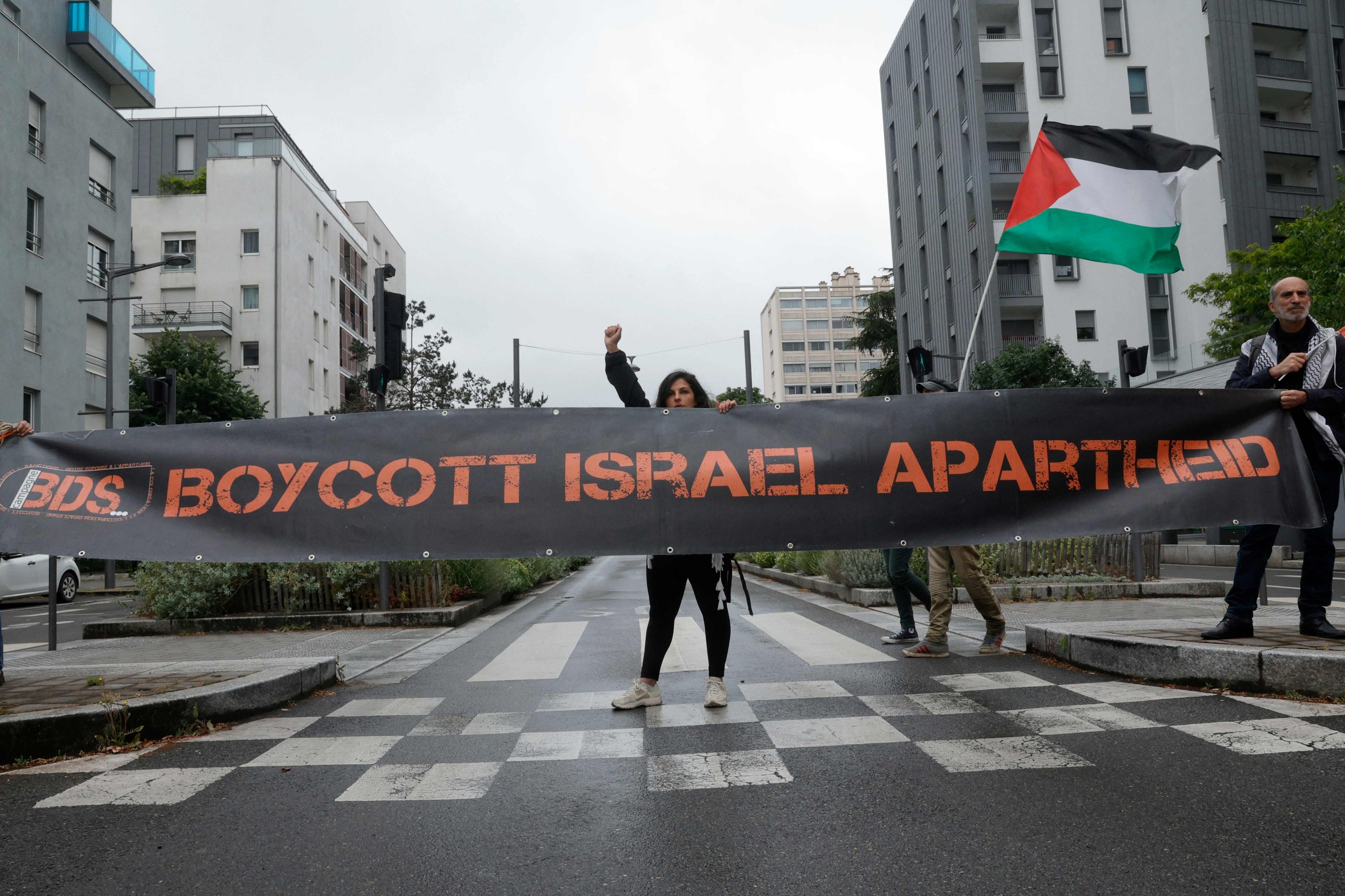
Adil Abbuthalha, founder of the ethical consumption app Boycat, which offers users worldwide a way to contribute individually to Palestine, said his platform’s next phase aims to create an ecosystem providing alternatives to boycott products and establish a global ethical economy.
Speaking to Anadolu Agency (AA) during the Muslim Tech Fest on Wednesday, where AA serves as a global communications partner, Abbuthalha said Boycat began as a personal project to help people learn how to boycott and support Palestine after Israel’s attacks on the Gaza Strip.
The platform now has more than 2.5 million users worldwide, he said.
“The first step of Boycat was to provide consumers with information about products and brands to boycott,” Abbuthalha said. “The next step is the alternative ecosystem. We want to offer alternatives to boycott products, highlight those alternatives and reach millions of people. We aim to complete this within the next year.”
He added: “When you know what to use instead of what to avoid, it becomes easier, especially if the alternative product is made by your own community. That’s why we need to grow this structure and build our own system, so we don’t have to depend on others.”
Abbuthalha said he visited 30 countries last year to realize his dream of building a self-sufficient economic infrastructure independent of dominant systems. He is connected to 40-50 Muslim communities globally and wants to link them, showcase their local products and combine their distribution channels.
His goal, he said, is to create social impact by first helping Palestine and then benefiting other communities such as Bosnia-Herzegovina, Sudan and the Uyghurs.
“Of course, my aim is not to create products only for Muslims,” he said. “There are already enough of those. As Muslims, we must produce products for humanity. Products created according to Islam and our teachings are valid for everyone.”
Abbuthalha emphasized that Muslims should lead ethical consumption and that a global ethical economy should cover sustainability, climate change and animal cruelty, among other areas.
He also shared challenges faced since Boycat’s launch. He said he was fired while developing the platform, and in February, Israel launched a $150 million fund and sent four purchase offers to shut down the company. “We received a $12 million offer that required me to live in Tel Aviv for two years. I rejected it,” he said.
Abbuthalha said attempts were made both externally and internally to shut down the app and that he receives death threats almost weekly.
He added that many Muslims want to support Boycat but fear losing their jobs if they do.
Despite the tragedy of Oct. 7, Abbuthalha described it as a catalyst for people to build and discuss these issues.
“This is just the beginning. We are moving forward by producing alternatives from the individual to the community and from the community to infrastructure,” he said.