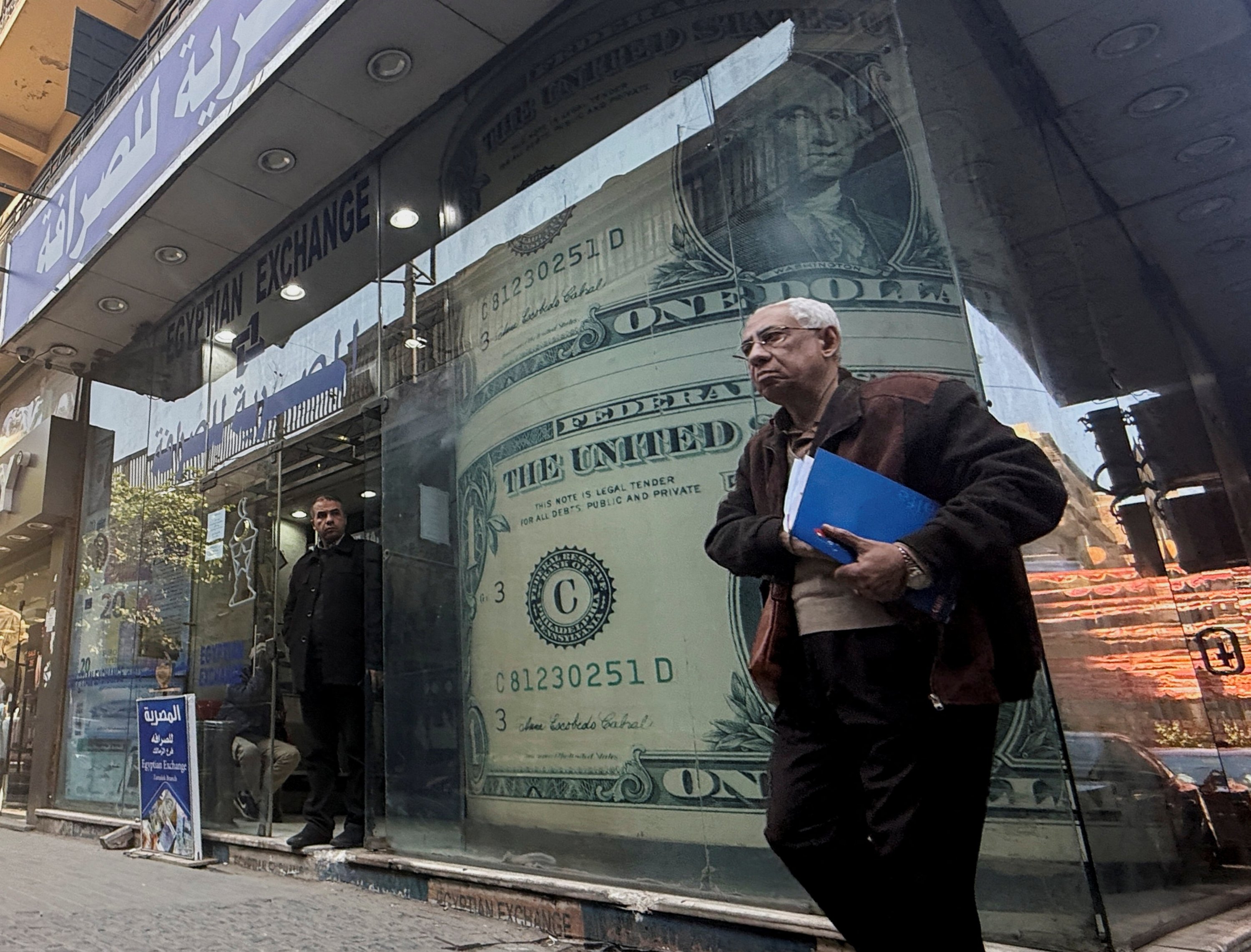
The European Bank for Reconstruction and Development (EBRD) warned on Thursday that tensions in the Middle East are likely to weigh on growth across the regions it operates in, due to higher energy and fertilizer prices, disruptions to trade and tourism flows, and tighter financing conditions.
Growth forecasts for certain developing markets are likely to be revised down by as much as 0.4 percentage points in the next regional economic outlook in June if energy prices remain elevated, according to the development bank.
Oil prices have surged since the U.S. and Israel launched strikes on Iran, which retaliated by effectively closing the key Strait of Hormuz.
Last month, the bank said it expected 3.6% growth this year and 3.7% in 2027 in the roughly 40 countries it covers.
The bank now said that the economic impact will depend on the duration of the war in the Middle East and the extent of energy infrastructure damage.
"The direct negative effects on GDP (gross domestic product) growth via energy costs, the price of fertilizers and food staples, disruptions to supply chains, tourism and remittances from the GCC (Gulf Cooperation Council) will be compounded by higher inflation, greater pressures on government budgets and tighter financing conditions in response to rising inflation," it added.
The analysis said that if oil prices stay above $100 per barrel for an extended period and supply chain disruptions in chemicals and metals continue, global economic growth could decline by at least 0.4 percentage points, while inflation could rise by more than 1.5 percentage points.
The impact of the tensions is also being felt across agricultural inputs and industrial supply chains.
A significant share of global trade in fertilizer feedstocks passes through the Strait of Hormuz, heightening the risk of rising food prices. Disruptions along Gulf trade routes could also affect critical inputs such as aluminum, sulfur, helium, petrochemicals and plastics, adding to global inflationary pressures.
While trade with the Gulf Cooperation Council is important for many economies in the EBRD regions, direct trade with Iran remains limited.
Economies such as Iraq, which rely on exports via the Strait of Hormuz, could face particular challenges. However, existing stocks of essential commodities such as wheat provide some buffer in such countries.
Meanwhile, the bank said tourism-dependent economies in the Middle East are expected to see a decline in visitor numbers, while the tensions are also tightening financial conditions across countries in the region. Capital outflows from some economies have so far remained manageable, but they could accelerate if global financial conditions deteriorate further.
The bank also suggested that remittances from GCC countries, which present an important source of income for economies including Lebanon, Jordan and Egypt, may come under pressure.
According to the EBRD, the extent to which economies can absorb shocks to their terms of trade will depend on the strength of their fiscal and external buffers.
Among the more than 40 countries where the EBRD operates are Türkiye, Egypt, Iraq, Kenya, Lebanon, Jordan, Moldova, Mongolia, Senegal, Tunisia, Ukraine, Azerbaijan, Greece and Nigeria.
In Azerbaijan, Iraq, Kazakhstan, Mongolia and Nigeria, oil and gas trade surpluses range from 11% to 39% of GDP, but the bank noted that production has been reduced or halted at Iraq's largest oil fields.
Meanwhile, for every $10 per barrel increase in the oil price, Russia gets a "windfall in revenue" from oil, gas and fertilizer sales equivalent to 1.5 percentage points of 2025 GDP, the EBRD estimated.
Oil prices could reach $180 per barrel if Gulf oil supplies remain restricted due to short-term inelastic demand, the bank also said.
Commenting on the report, EBRD Chief Economist Beata Javorcik said the tensions in the Middle East show how quickly geopolitical shocks can spread through energy markets, supply chains, and financial conditions.