Inflation in the U.K. held steady at 3.8% in the year to August, official data showed on Wednesday, the highest among major advanced economies and reinforcing expectations that the Bank of England (BoE) will not cut interest rates until next year.
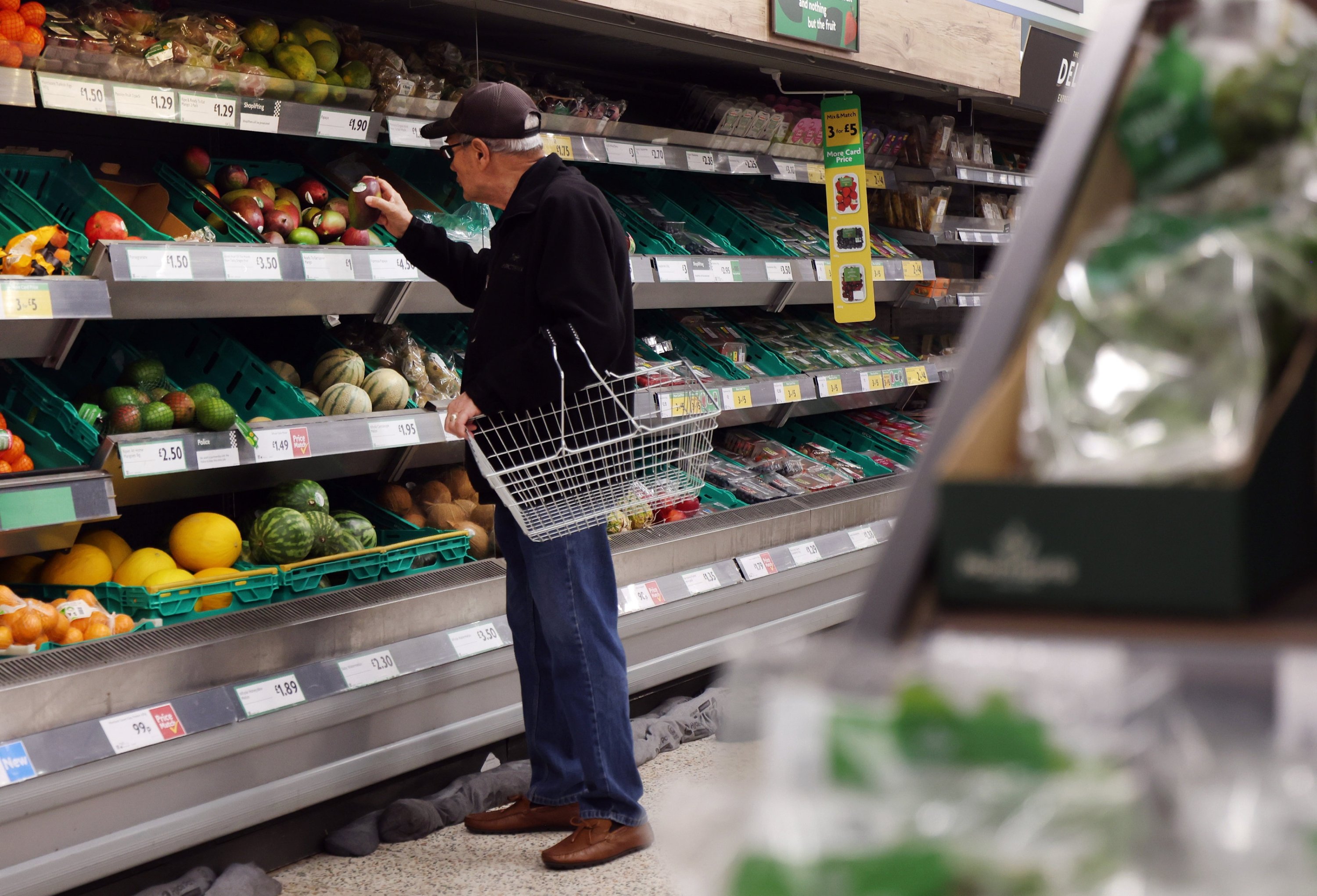
The Office for National Statistics (ONS) found food and drink prices rose for the fifth month in a row, but airfares fell sharply after a big spike in July.
Though inflation remains nearly double the BoE's target rate of 2%, most economists had anticipated a modest increase in August.
The rise in food prices – which the BoE sees as key for shaping public inflation expectations – was the sharpest since January last year and offset a drop in airline fares, the ONS said.
James Smith, research director at the Resolution Foundation think tank, said headline inflation remained uncomfortably high and households would feel the impact of higher food prices.
"The chancellor should look to ease the cost of living pressures on struggling families at the budget in November," Smith said.
Food and non-alcoholic drinks prices were 5.1% higher in August than a year earlier, after a 4.9% rise in July.
Last month, longer-term inflation expectations among the public rose to the highest since 2019.
Stubbornly high inflation has been one of the reasons why the Labour government's poll ratings have fallen sharply since it came to power in July 2024.
Treasury chief Rachel Reeves will be hoping inflation starts to drop down toward target, as many forecasters predict, in the year to come, as it will relieve some of the cost-of-living pressures that are hurting households and undermining the government's support.
"I know families are finding it tough and that for many the economy feels stuck," she said after the figures were released. "That’s why I'm determined to bring costs down and support people who are facing higher bills."
Inflation for services – closely watched by the BoE – slowed to 4.7% from 5.0% in July.
Many firms have said they would raise prices after an increase in their social security contributions in Reeves' first budget last October. She is expected to raise taxes again when she delivers her next budget on Nov. 26.
Many critics blame Reeves personally for the increase in inflation this year, saying her decision to increase taxes on businesses to plug a budget hole prompted firms to up prices.
Core inflation, which excludes energy, food and tobacco prices, fell to 3.6% in August from 3.8%, the ONS said.
Most economists polled by Reuters and the BoE had forecast that the headline measure of inflation would hold at 3.8%.
British inflation is higher than in the United States, where it increased to 2.9% in August and in the eurozone, where it rose to 2.1%, just above the European Central Bank's (ECB) 2% target.
The BoE has forecast that British inflation will reach 4% in September and stay above its 2% target until the spring of 2027.
The inflation figures have cemented market expectations that the central bank will keep interest rates unchanged at 4% on Thursday.
The Monetary Policy Committee's 5-4 split vote for a quarter-point cut last month suggested it might slow an already gradual pace of rate cuts.
Since it started cutting borrowing rates in August 2024 after the unwinding of the previous spike in inflation in the wake of Russia's invasion of Ukraine, the bank has done so in a gradual manner every three months. When it cut its main rate to 4% in August, it was largely expected that there would be no further reduction at the September meeting.
If the bank were to continue to cut interest rates in the manner it has been doing so, the next meeting in November would see a further reduction. However, economists remain split as to whether another cut is forthcoming since inflation has proven to be stickier than anticipated earlier this year, partly because of relatively high wage increases.
"Several months of disappointing data has highlighted the U.K.'s unwanted position as an international outlier for 'sticky' inflation, with the highest headline inflation of any G-7 economy," said James Smith, research director at the Resolution Foundation think tank.
While Britain's labor market has loosened, basic wage growth of 4.8% remains too high for the BoE.
However, official data last week showed Britain's economy grew just 0.2% in the three months to July.
"We still expect the looser labour market to weaken wage growth and eventually bring down U.K. inflation to similar rates as in the U.S. and the eurozone," Paul Dales, chief U.K. economist at Capital Economics, said.
That would allow the BoE to cut rates from 4.0% now to 3.0% by the end of next year, Dales said.
"But we think the upside inflation risks are just too high for the Bank of England to cut interest rates tomorrow or, more significantly, at the following meeting in November," he added.