Türkiye’s top business group on Friday said it expected the new finance minister’s economic program to contribute to macroeconomic stability, as it stressed that price stability was the first priority for "healthy" growth.
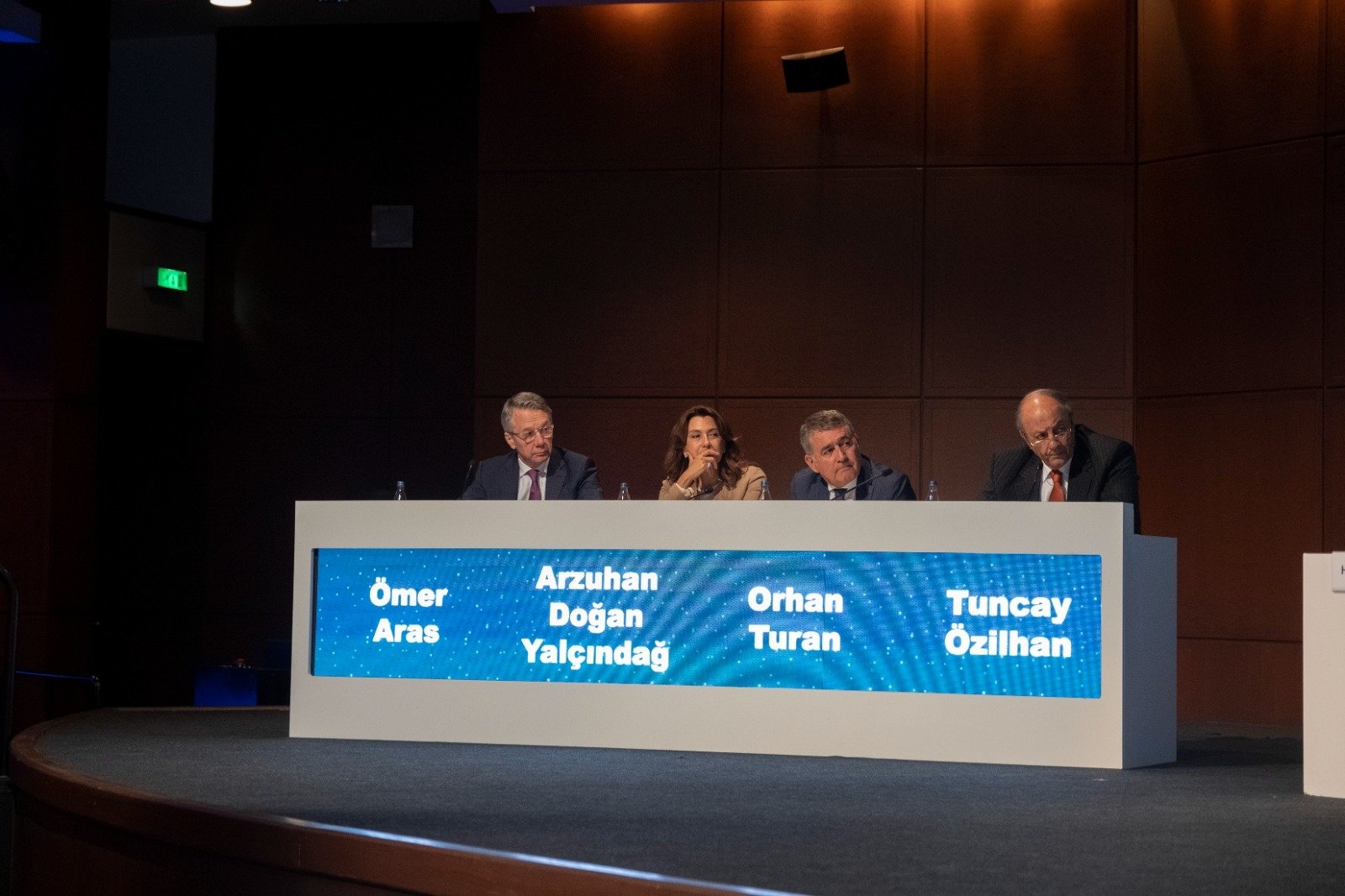
Members of the Turkish Industry and Business Association (TÜSIAD) met with Treasury and Finance Minister Mehmet Şimşek in Istanbul, marking the respected veteran policymaker’s first official meeting with business executives since his appointment earlier this month after President Recep Tayyip Erdoğan won reelection that extends his rule into a third decade.
Analysts and investors suggest Şimşek’s return and appointment of Hafize Gaye Erkan, a former Wall Street banker, as central bank governor, signaled an economic policy overhaul could be in the pipeline of the newly elected government.
Tuncay Özilhan, the head of TÜSIAD’s high advisory council, said the business group expected the new finance minister's economic program to contribute to macro-stability, adding that it should also include structural reforms.
"We shared our findings and suggestions about the economic situation with the minister. It was an open and sincere meeting. We expect that the economic program that Mr. Minister will put forward after completing his studies will contribute to macroeconomic stability," he noted.
Özilhan, head of conglomerate Anadolu Group, said strengthening the Turkish lira was not the way for Türkiye to fight inflation and that moves to tighten monetary policy should not lead to an unwanted slowdown in growth.
"Our first priority is to fight the devil of inflation and restore confidence in the lira," he added.
"However, the way to fight inflation is not to increase the value of the lira. Because when the lira gains in value, this situation inevitably makes imports cheaper, exports more expensive and the foreign trade deficit increases."
The lira has lost some 20% so far this year after declining 44% in 2021 and 30% in 2022. The currency stabilized from record lows earlier this week and traded at 23.676 against the U.S. dollar on Friday.
"We need to replenish the central bank's reserves instead of strengthening the lira in the event of foreign inflows," Özilhan said.
A critic of high borrowing costs, Erdoğan had spent the past two years endorsing a “new economic model” that prioritizes ultra-low interest rates. The model aimed at achieving price stability by slashing borrowing costs, boosting exports and flipping chronic current account deficits to surpluses.
In his comments this week, Erdoğan expressed his backing and said Şimşek would take quick steps in coordination with the central bank, signaling that Türkiye would return to interest rate hikes to combat inflation, revamping policies centered around monetary stimulus. Yet, Erdoğan stressed it was a mistake to suggest he had changed his own stance when it comes to interest rates.
Analysts at leading investment banks now expect Türkiye’s central bank to ramp up its key policy rate at its monetary policy committee meeting on June 22, having slashed it to 8.5% currently from 19% in 2021.
Orhan Turan, the chair of TÜSIAD, which represents about 4,500 companies, said the real sector had trouble in accessing financing despite the rate cuts, adding that price stability was the first priority for "healthy" growth.
Annual inflation eased to below 40% in May, a notable regress after touching a 24-year high of 85.5% last October. In comments this week, Erdoğan said he was determined to lower inflation to single digits.
"We need to stop talking about monetary policy, and instead focus on economic transformation and increasing our competitive strength," Turhan said.