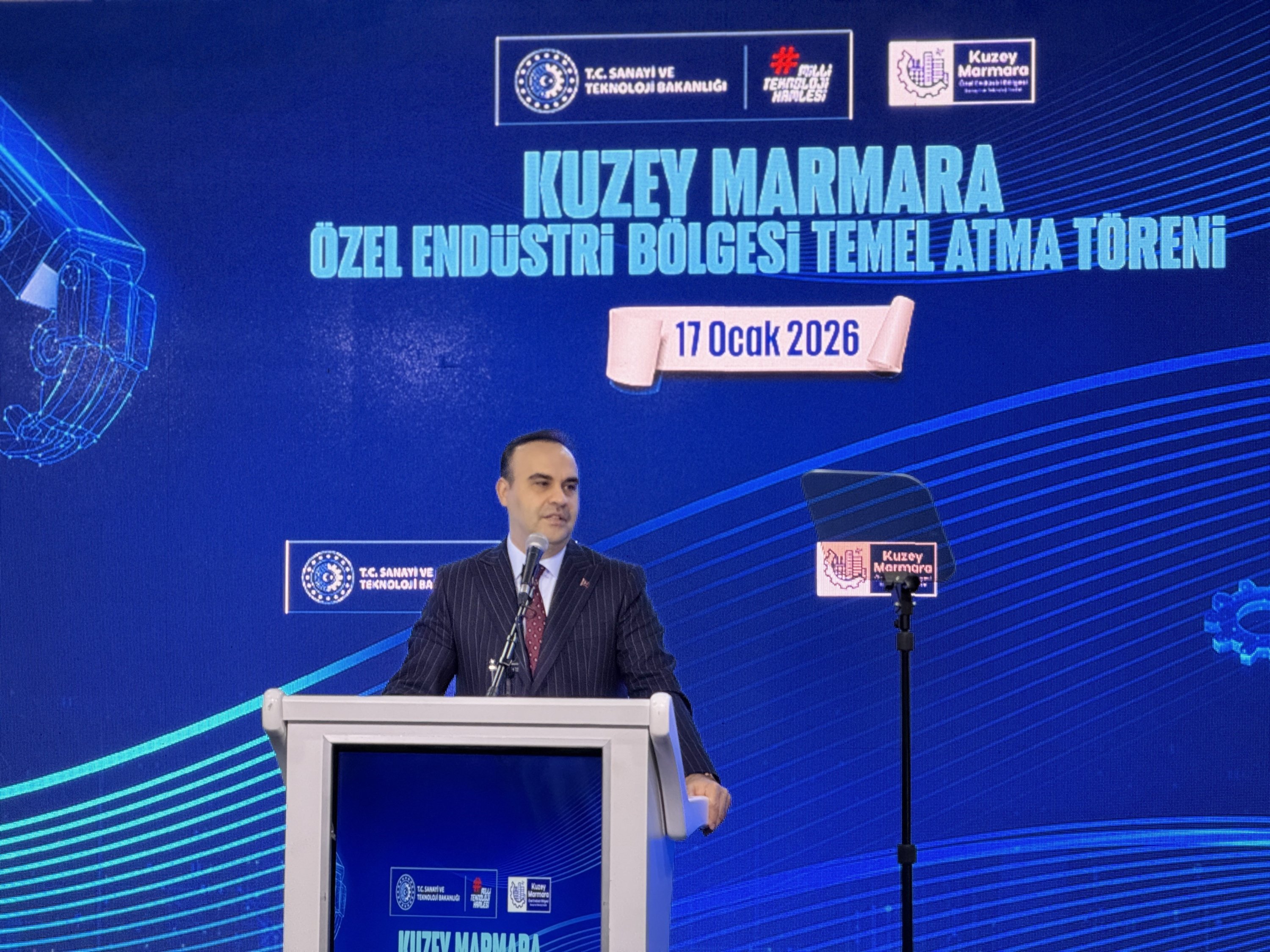
Türkiye is establishing 16 new industrial zones in different Anatolian provinces as part of the first phase of the Industrial Areas Master Plan, Industry and Technology Minister Mehmet Fatih Kacır announced on Saturday.
Speaking at the Northern Marmara Special Industrial Zone Collective Groundbreaking Ceremony, Kacır unveiled 16 new industrial investment areas totaling 59,000 hectares in 13 provinces along the Samsun-Mersin line.
These include Aksaray, Amasya, Ankara, Eskişehir, Hatay, Karaman, Kastamonu, Kayseri, Kırşehir, Konya, Nevşehir, Niğde, and Yozgat, the minister said.
"With this historic step, we have added an additional area equivalent to 37% of our existing planned industrial areas to our country's industry, as announced in today's Official Gazette. May it be auspicious," he noted.
"We will build mega industrial zones in these areas, which will be approximately 11 times the size of our current Organized Industrial Zones (OSB)," he maintained.
Emphasizing the need to spread the industry, currently concentrated in the Marmara region, to Anatolia, Kacır stated: "While positioning Istanbul as the 'brain center' of our industry, we also aim to expand our industry, currently concentrated in Marmara, into Anatolia, and to seize the opportunity for stronger global connectivity created by the Development Road and Zangezur projects through new industrial zones."
Also, announcing the preparation of the Industrial Areas Master Plan, he said they prepared it to "shed light on the next 30 years of our industry and increase the size of our planned industrial areas from the current 160,000 hectares to 350,000 hectares.”
He stated that the master plan took into account different factors, including earthquake and disaster risks, efficient use of water resources, land slope, property types, agricultural production, proximity to existing and planned railways and opportunities for sectoral clustering.
"We aimed to provide our industrialists with access to safe investment locations with strong infrastructure and logistical connections at the most affordable cost," he added.