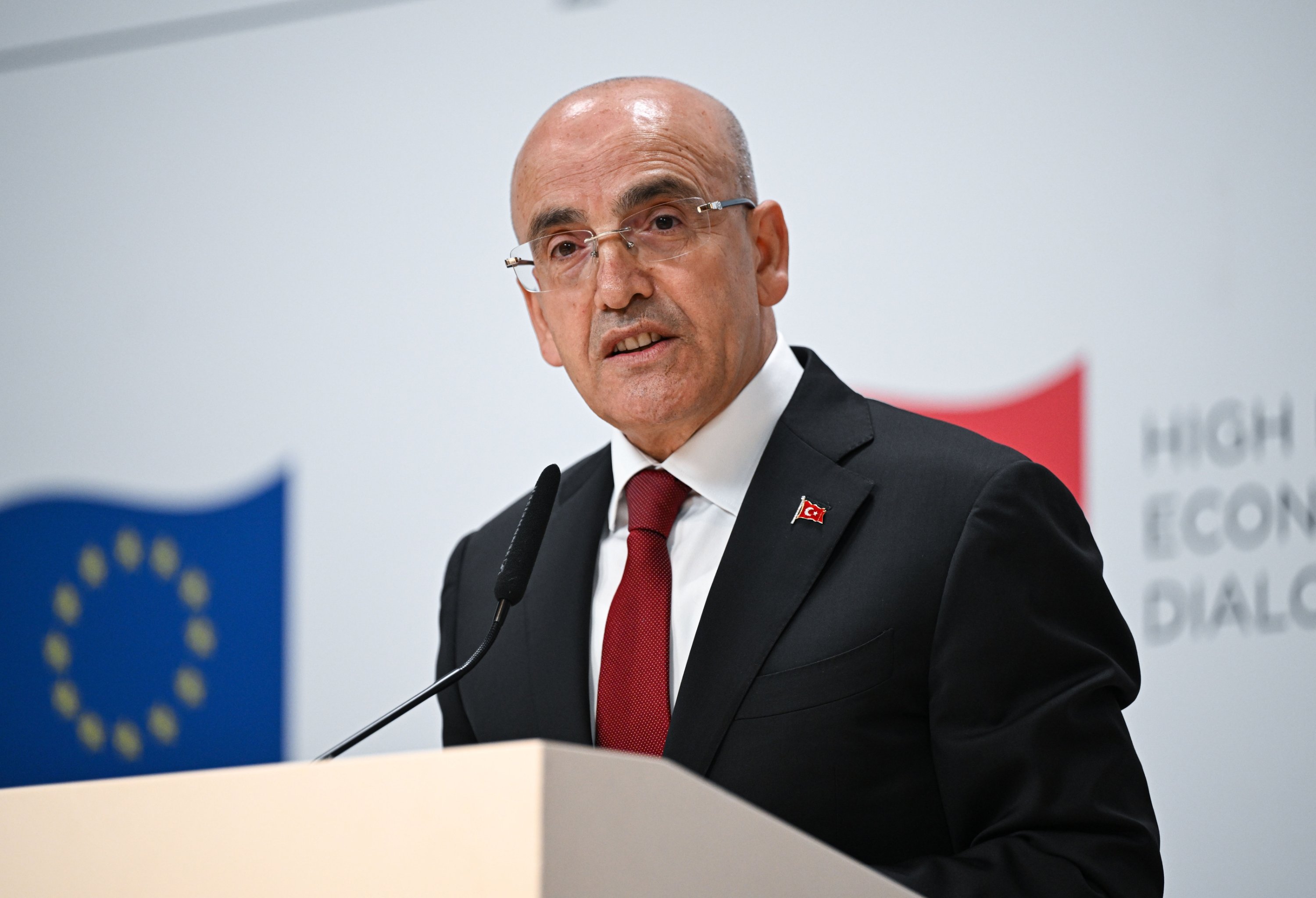
Türkiye expects its annual budget deficit to have narrowed to around 2.5% of gross domestic product (GDP) as of June, down from 2.9% in 2025, Finance Minister Mehmet Şimşek said Monday.
Şimşek cited stronger fiscal discipline despite revenue losses from measures aimed at containing inflation that rose amid a fallout from the Iran war.
Last week's official data showed Türkiye's central government budget shifted to a surplus by posting an excess of TL 114.2 billion (around $2.4 billion) in June.
Revenues jumped 66.0% year-over-year to nearly $32.1 bilion in current prices, fueled by a 72% increase in tax collections, data from the Treasury and Finance Ministry showed. Expenditures rose 12.6% to some $29.7 billion.
In the January-June period, the budget posted a deficit of $20 billion, compared with a gap of around $20.8 billion a year ago. Expenditures rose 32.7% year-over-year to $185.5 billion, while revenues increased 39.1% to $165.5 billion.
The primary balance, which excludes interest payments, registered a surplus of TL 521 billion in the first half of the year, Şimşek said.
The overall gap, meanwhile, improved by TL 38 billion lira compared with the same period last year, he wrote on the social media platform X.
He added that the improvement came despite the government's decision to forgo some tax revenues to limit the inflationary impact of geopolitical developments.
In June, the primary balance registered a surplus of $6.7 billion, compared with a deficit of $1.15 billion in the same month last year.
Tax revenues surged 72% year-over-year last month to $28.05 billion. Income tax revenues rose 145.7%, domestic value-added tax (VAT) receipts increased 89.6%, and value-added tax collected on imports climbed 53.1%.
Meanwhile, corporate tax revenues increased 31.8%, and special consumption tax receipts edged down 0.1%.
Şimşek attributed the stronger fiscal performance to efforts to combat the informal economy, policies to increase voluntary tax compliance and tighter control of public spending.
"Thanks to the fight against the informal economy, policies to increase voluntary compliance and discipline in public expenditures, we estimate that the budget deficit-to-GDP ratio, which stood at 2.9% in 2025, declined to around 2.5% on a rolling annual basis as of June," he wrote on X.
He added that the stronger budget performance had also helped keep domestic debt rollover ratios below both last year's levels and official projections.
"Budgetary discipline, which enhances the resilience of our economy, is also of critical importance for price stability, the primary objective of our program. We will continue to implement policies aligned with our disinflation target while maintaining fiscal discipline," Şimşek said.