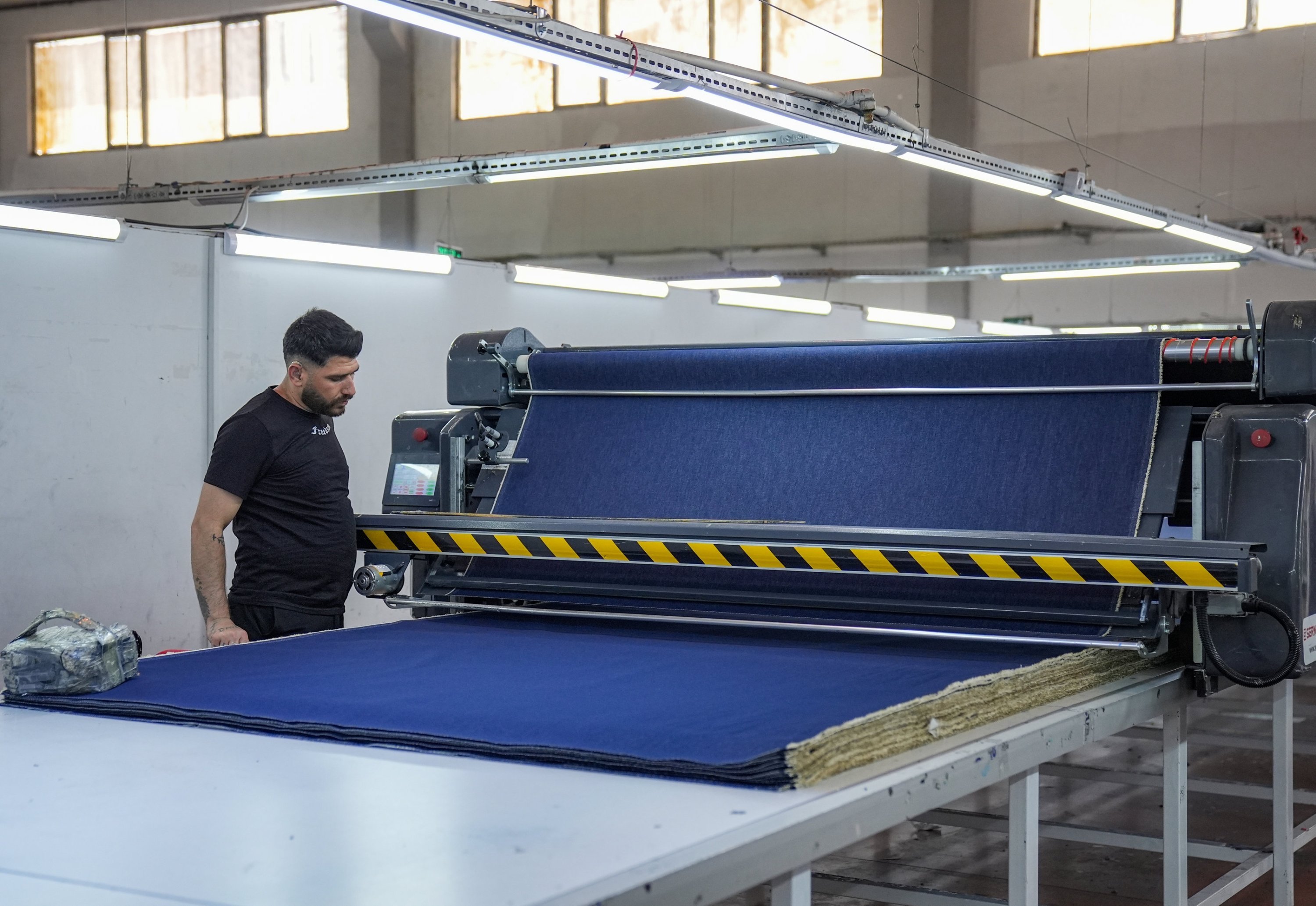
Activity of the manufacturing sector in Türkiye weakened in June as new orders, output, employment and purchasing activity all slowed at a sharper rate, a top survey showed on Tuesday.
The Istanbul Chamber of Industry (ISO) Türkiye Manufacturing Purchasing Managers' Index (PMI) fell to 46.7 in June from 47.2 in May, marking the lowest reading in eight months.
PMI is a composite single-figure indicator of manufacturing performance. It is derived from indicators for new orders, output, employment, suppliers’ delivery times and stocks of purchases. Any figure below 50.0 indicates a contraction in activity.
Data that is considered the fastest and most reliable reference in the manufacturing industry performance, which is a leading indicator of economic growth, showed a prolonged downturn in activity last month.
Weak demand continued to weigh, leading to a further moderation in new orders, extending a decline that began two years ago. New export orders also eased, with both categories seeing the most pronounced slowdowns in three months.
Manufacturers responded to the lack of new orders by scaling back production at the end of the second quarter and cutting staff at the fastest rate in nine months, the survey showed.
Input cost inflation ticked higher in June, driven by currency weakness and inflationary pressures from the situation in Iran. However, output prices rose at a slower pace as muted customer demand limited firms' pricing power, the survey said.
"The struggles continued for Turkish manufacturing firms in June, with the latest PMI data pointing to an increasingly challenging demand environment," said Andrew Harker, economics director at S&P Global Market Intelligence.
"As such, firms looked to scale back operations and moderate output to the largest degree since October last year. Despite this, firms still had an excess of stocks of finished goods, which increased for the first time in three months. The latest PMI reading completes a difficult first half of the year, with hopes that better will come over the second half of 2025," he added.