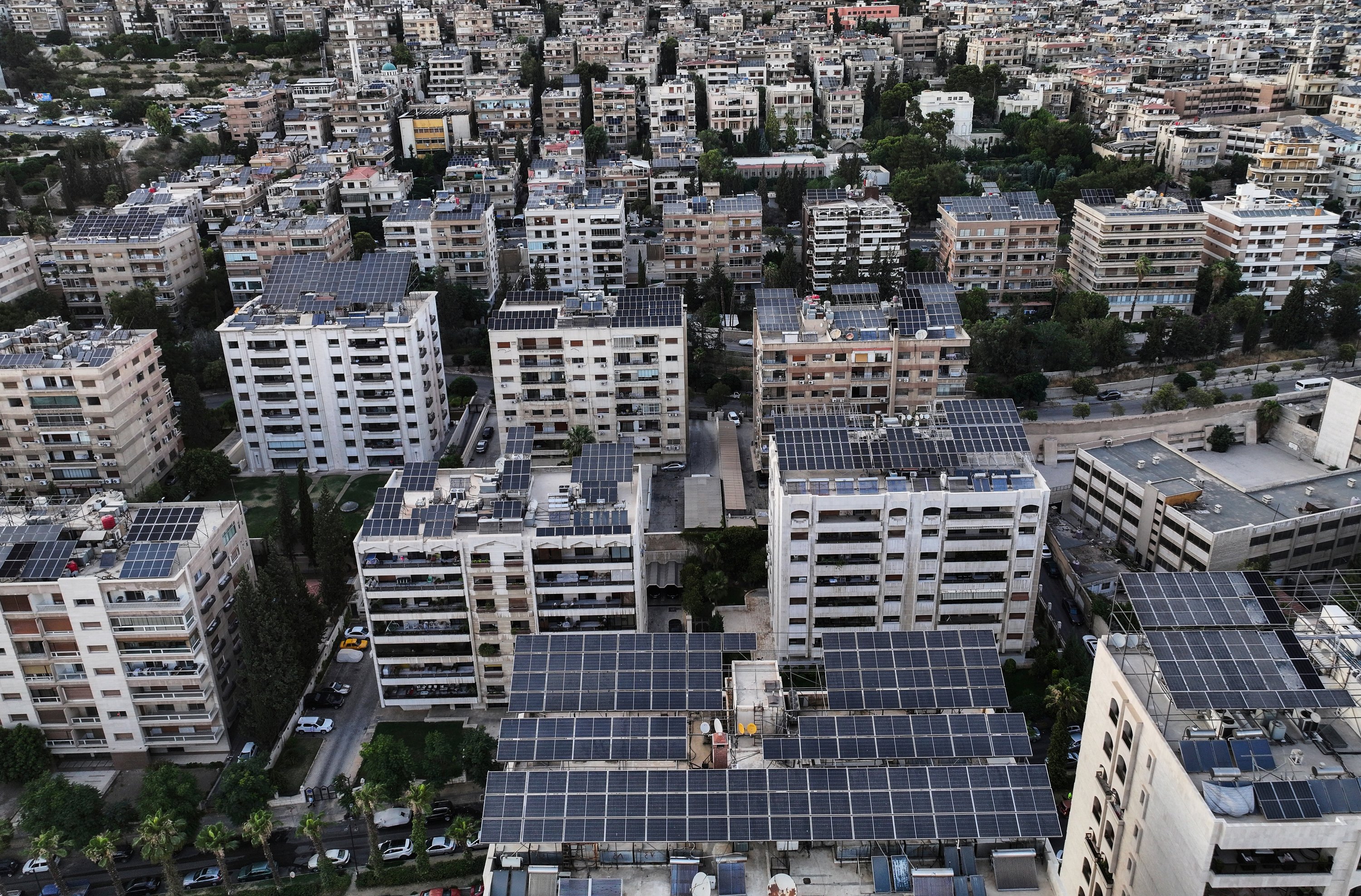
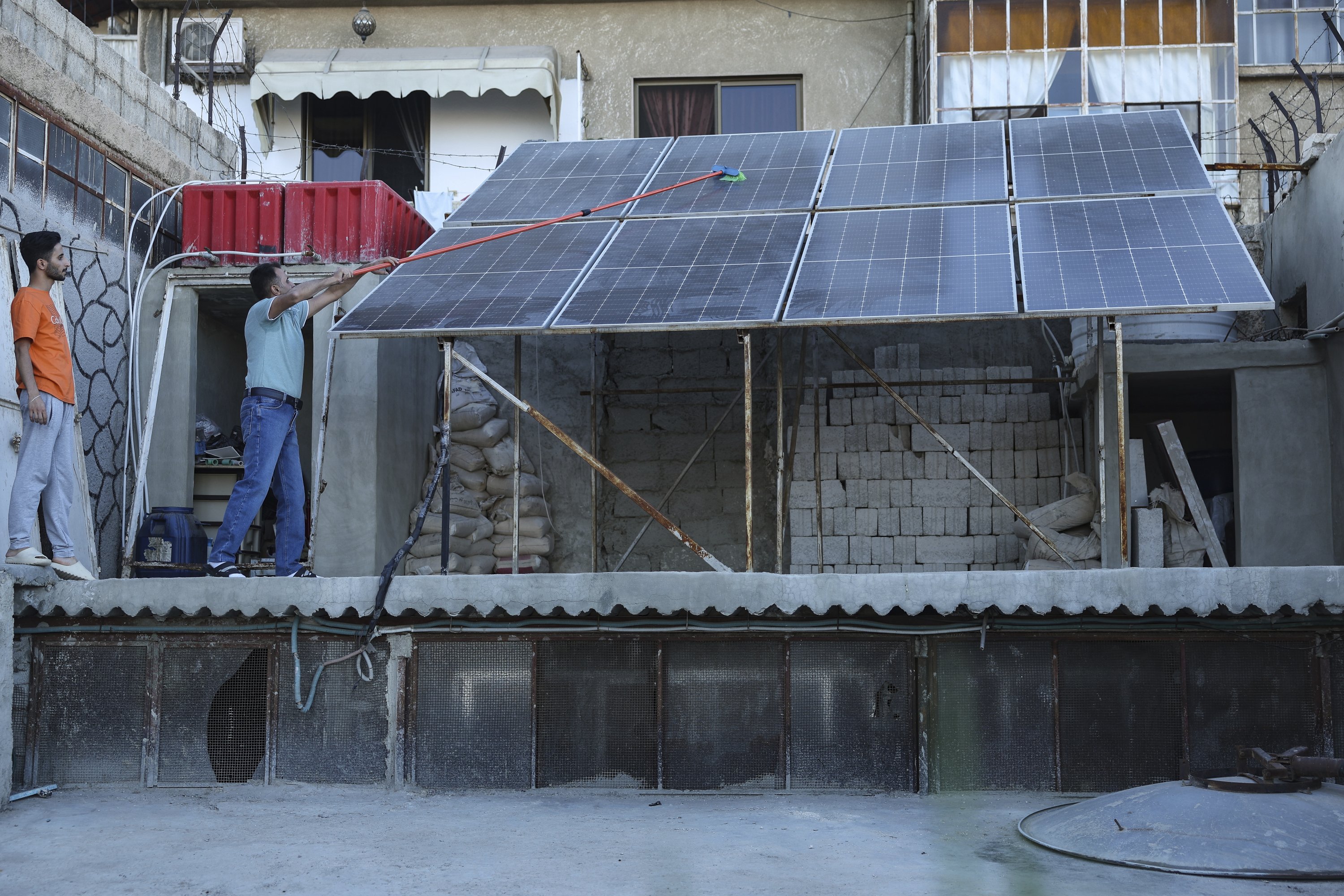
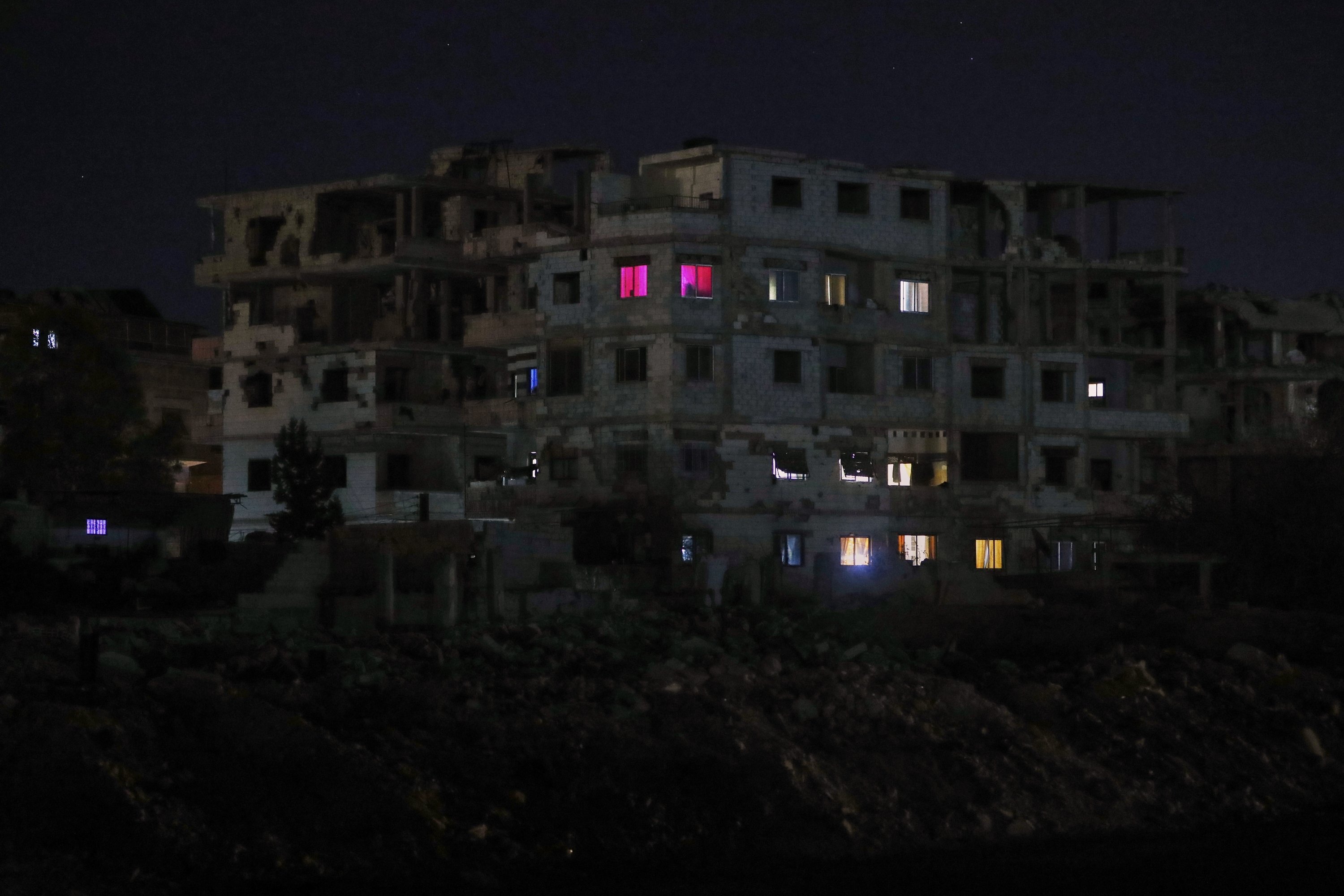
Abdulrazak al-Jenan brushed the dust off the solar panel atop his apartment building overlooking Damascus. Syria's largest city lay largely in darkness, with only scattered glimmers of light from homes that could afford solar panels, backup batteries or private generators.
Al-Jenan went thousands of dollars in debt to buy his solar panel in 2019. It was an expensive coping mechanism at the time, but without it, he couldn't charge his phone and run the refrigerator.
Syria has not had more than four hours of state electricity per day for years, as a result of the nearly 14-year civil war that ended with the ouster of longtime dictator Bashar Assad in December.
Syria's new leaders are hoping renewable energy will now become more than a patchwork solution. Investment is beginning to return to the country with the lifting of U.S. sanctions, and major energy projects are planned, including an industrial-scale solar farm that would secure about a tenth of the country's energy needs.
"The solution to the problem isn't putting solar panels on roofs," Syria's interim Energy Minister Mohammad al-Bashir told The Associated Press (AP). "It's securing enough power for the families through our networks in Syria. This is what we're trying to do."
Some of the efforts focus on simply repairing infrastructure destroyed in the war.
The World Bank recently announced a $146 million grant to help Syria repair damaged transmission lines and transformer substations. Al-Bashir said Syria's infrastructure that has been repaired can provide 5,000 megawatts, about half the country's needs, but fuel and gas shortages have hampered generation. With the sanctions lifted, that supply could come in soon.
More significantly, Syria recently signed a $7 billion energy deal with a consortium of Qatari, Turkish, and American companies. The program over the next three and a half years would develop four combined-cycle gas turbines with a total generating capacity estimated at approximately 4,000 megawatts and a 1,000-megawatt solar farm. This would "broadly secure the needs" of Syrians, said al-Bashir.
While Syria is initially focusing on fixing its existing fossil fuel infrastructure to improve quality of life, help make businesses functional again, and entice investors, the U.N. Development Programme (UNDP) said in May that a renewable energy plan will be developed in the next year for the country.
The plan will look at Syria’s projected energy demand and determine how much of it can come from renewable sources.
"Given the critical role of energy in Syria’s recovery, we have to rapidly address energy poverty and progressively accelerate the access to renewable energy," Sudipto Mukerjee, UNDP's resident representative in Syria, said in a statement announcing the plan.
While the war caused significant damage to Syria's infrastructure, crippling Washington-led sanctions imposed during the Assad regime's decades of draconian rule made it impossible for Syria to secure fuel and spare parts to generate power.
"Many companies over the past period would tell us the sanctions impact matters like imports, implementing projects, transferring funds and so on," al-Bashir said.
During a visit to Türkiye in May, the minister said Syria could only secure about 1,700 megawatts, a little less than 20%, of its energy needs.
A series of executive orders by U.S. President Donald Trump lifted many sanctions on Syria, aiming to end the country's isolation from the global banking system so that it can become viable again and rebuild itself.
The United Nations estimates the civil war caused hundreds of billions of dollars in damages and economic losses across the country. Some 90% of Syrians live in poverty. Buying solar panels, private generators, or other means of producing their own energy has been out of reach for most of the population.
"Any kind of economic recovery needs a functional energy sector," said Joseph Daher, Syrian-Swiss economist and researcher, who said that stop-gap measures like solar panels and private generators were luxuries only available to a few who could afford them. "There is also a need to diminish the cost of electricity in Syria, which is one of the most expensive in the region."
Prices for electricity in recent years surged as the country, under the Assad regime, struggled with currency inflation and rollback on subsidies. The new officials who inherited the situation say that lifting sanctions will help them rectify the country's financial and economic woes and provide sufficient and affordable electricity as soon as they can.
"The executive order lifts most of the obstacles for political and economic investment with Syria," said Qutaiba Idlibi, who leads the Americas section of the Foreign Ministry.
Syria has been under Washington-led sanctions for decades, but designations intensified during the war that started in 2011. Even with some waivers for humanitarian programs, it was difficult to bring in resources and materials to fix Syria's critical infrastructure – especially electricity – further compounding the woes of the vast majority of Syrians, who live in poverty.
The removal of sanctions signals to U.S. businesses that Trump is serious in his support for Syria's recovery, Idlibi said.
"Right now, we have a partnership with the United States as any normal country would do," he said.
Meanwhile, Al-Jenan is able to turn on both his fans on a hot summer day while he watches the afternoon news on TV, as the temperature rises to 35 degrees Celsius (95 degrees Fahrenheit). He doesn’t want to let go of his solar panel but hopes the lifting of sanctions will eventually bring sustainable state electricity across the country.
"We can at least know what's going on in the country and watch on TV," he said. "We really were cut off from the entire world."