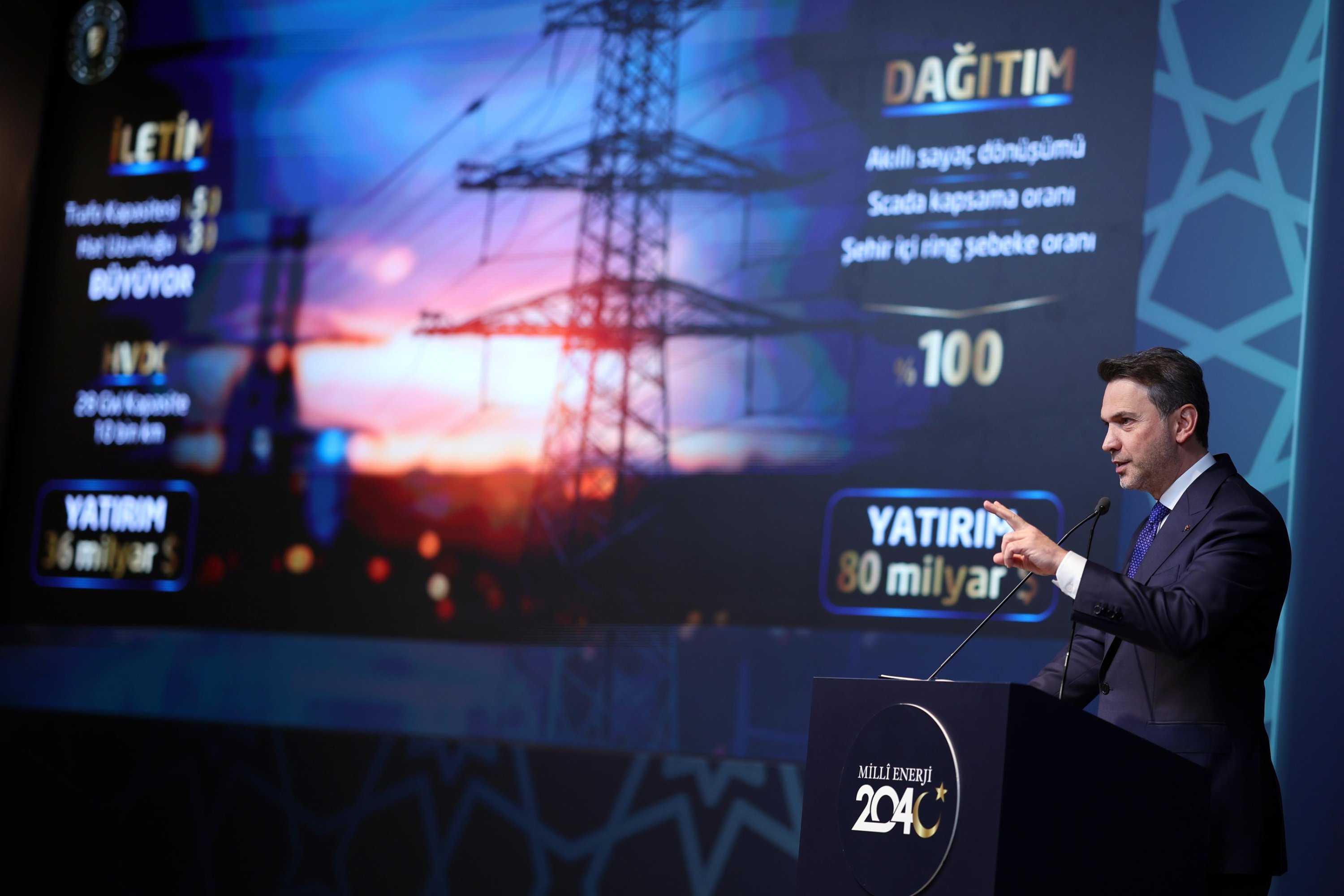
Turkish authorities outlined a new energy vision for 2040 on Thursday, which, in the words of a top official, could be summarized in one term: electrification.
The new "National Energy Plan 2040," targeting as much as $500 billion (about TL 25 trillion) in investment, was presented to the public days before the COP31 climate talks, which Türkiye is hosting for the first time next week in the Mediterranean city of Antalya.
The energy road map is aimed at boosting domestic production, expanding renewable energy and nuclear capacity, and strengthening energy independence by 2040.
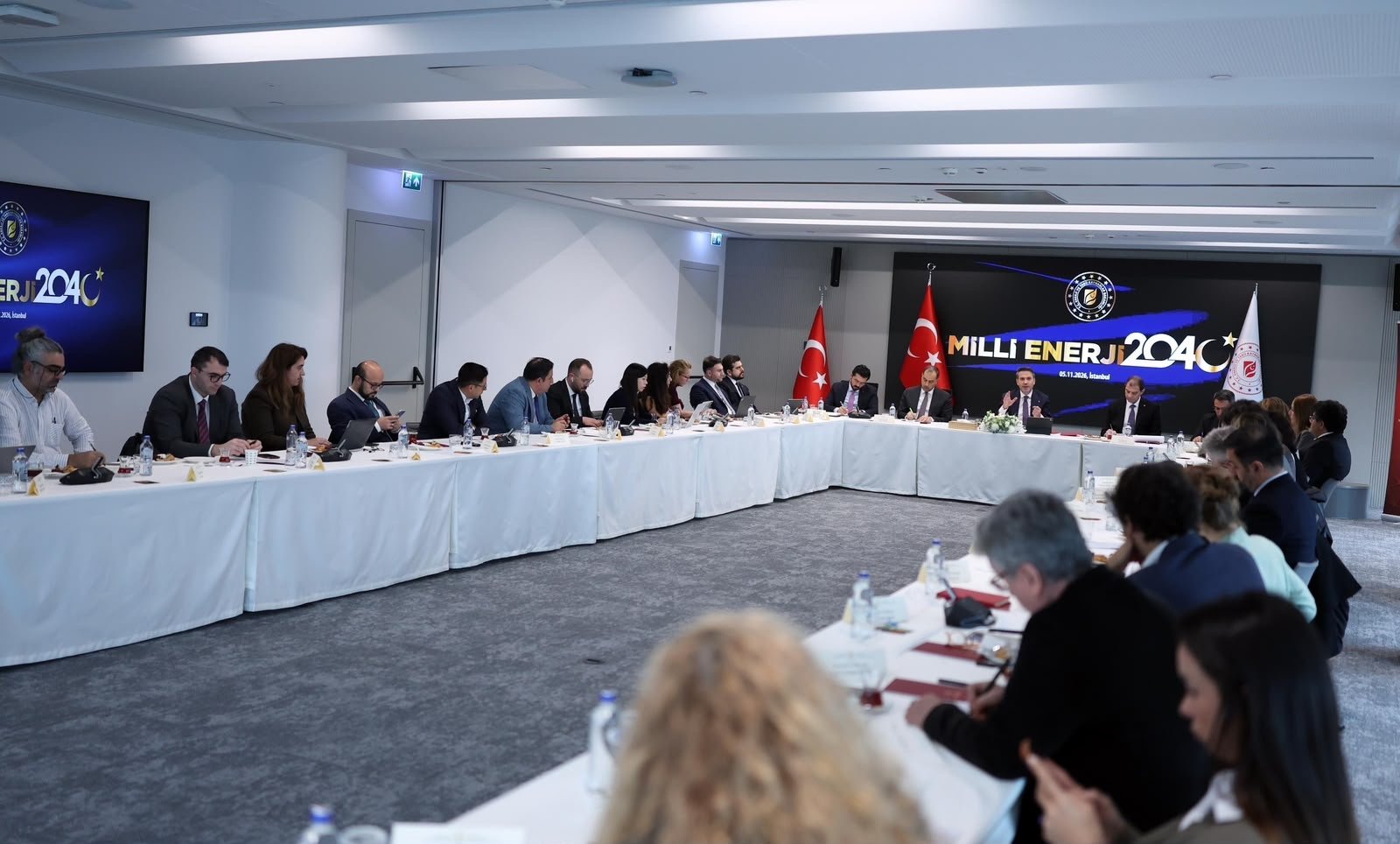
"In the new National Energy Plan 2040, if you ask me to summarize the plan in just one word, I would say electrification," Energy and Natural Resources Minister Alparslan Bayraktar told a roundtable of journalists following the unveiling of the strategy in Istanbul.
The strategy builds upon five key areas, including energy efficiency, nuclear energy, renewables, oil and gas and mining.
Emphasizing the importance of energy security and resilient infrastructure amid what he called "a very vulnerable era," Bayraktar mentioned two main areas to work on to address these issues.
"Number one, diversification. And the second thing is broader cooperation. We need broader cooperation in the region and with our neighboring markets," he said.
Describing electrification as a transition to cleaner energy sources in which machines, systems and industries run on electricity rather than other power sources, particularly fossil fuels, the minister said the goal is to "electrify the entire economy."
"Our aim is to reach 36% electrification in Türkiye by 2040," he noted.
"A major, major transformation you will see is electrification in transportation. Today, we have half a million electric cars on the roads. It will be 20 million cars on the road in 2040," he added, suggesting this would require an additional 90 terawatt-hours (TWh) of electricity.
Under the road map, Türkiye's electricity demand is projected to rise from 365 TWh in 2025 to 680 TWh in 2040, Bayraktar said.
The other areas of focus would be enhancing energy efficiency and also achieving 10 gigawatts (GW) in nuclear capacity by the same period, while the share of renewables is projected to reach 77% of total installed capacity.
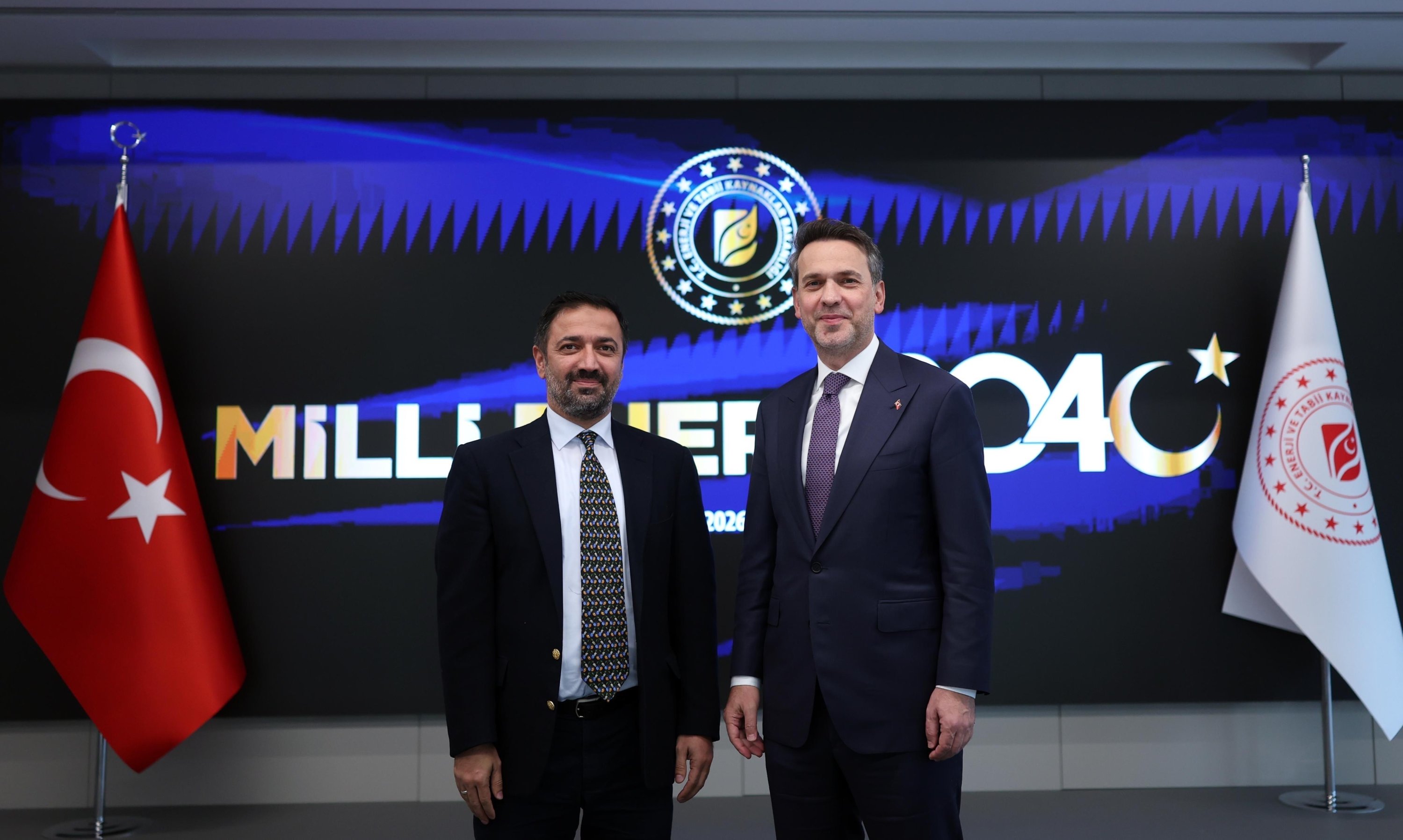
"Of course, this will require investment. I would say it will require half a trillion dollars in investment by 2040," Bayraktar maintained.
Around $210 billion of this would come from the public sector or public companies, while the rest would come from independent power producers and companies investing in infrastructure, distribution systems and transmission systems, including foreign companies and investment, according to the minister.
Answering the question of why Ankara does not collaborate with Greece on energy, the minister voiced openness to collaboration but flagged the political concerns, mainly due to the divided island of Cyprus.
"I would certainly consider collaboration with Greece. I would love to work and cooperate with Greece. Why not? We are talking about a broader alliance and broader cooperation," he said.
Still, he noted the issues, suggesting that Athens got involved and complained to Brussels about the planned undersea cable, through which Türkiye aimed to supply only the renewable energy produced in Türkiye, whether solar, wind or geothermal, to the island.
Bayraktar mentioned that Europe is still committed to decarbonization, unlike the U.S., expressing that they "should approach these issues from the same perspective," but that issues related to the island of Cyprus remain a hurdle.
Noting that the island still relies on fossil fuels, he said, "Our idea was to supply electricity to the island and make it carbon-free."
"Since the northern and southern parts of the island are interconnected, we could also have supplied this electricity to the southern part," he added, referring to the Greek Cypriot administration in the south, which is backed by Greece and the European Union.
"Of course, they didn't say yes. Why? Because of political reasons. And now, we decided to bring the natural gas pipeline to the island from Türkiye," he said.
Moreover, answering the question about reducing the gas supplies from Russia, the minister described Russian gas as "more expensive," and said there is a search for alternatives, including alternative fuel.
"Why are we buying less gas from Russia and more gas from the U.S.? Very simply, not because of politics, but because of the price ... We need to buy gas from Russia. But the simple answer is: It is expensive," Bayraktar argued.
He also noted that they are encouraging the search for alternatives, citing alternative gas, cheaper gas, competitive gas or alternative fuel.
Similarly, he said that the authorities would like to introduce some other elements into energy consumption, on the energy demand side, "because gas is extremely expensive."
He also pointed out that this trend of phasing out the expensive gas is likely to continue.