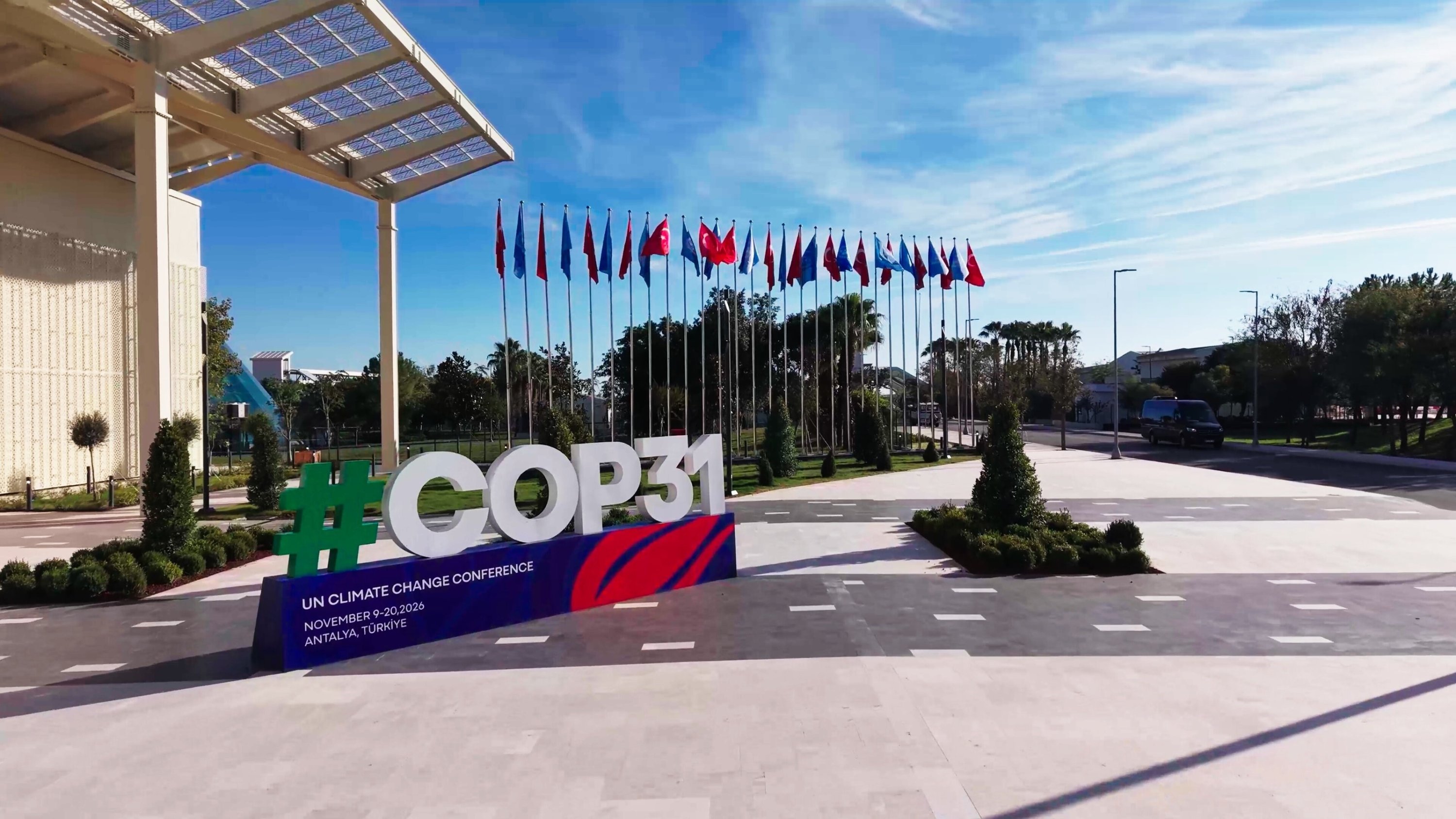
As the countdown to COP31 begins, the challenge for Türkiye is to turn years of climate pledges into concrete action, with experts stressing that the summit's success will depend on implementation, accountability and accessible financing rather than new promises alone.
Scheduled for Nov. 9-20 in Antalya, COP31 has been positioned by Türkiye as an “Implementation COP,” aiming to bridge the gap between climate commitments and tangible results.
Experts who spoke with Daily Sabah said the summit should deliver practical solutions across climate adaptation, energy and waste management, while ensuring that vulnerable communities benefit from global climate efforts.
Chukwudi Njoku, an environmental peacebuilding expert and executive director of the Nigeria-based Pan-Adrian Initiative for Development, said COP31 should link climate action with human security and peace, particularly in regions facing both environmental pressures and conflict.
“My expectation for COP31 is that it moves beyond ambitious pledges to practical commitments connecting climate action with human security and peace,” Njoku said.
He stressed the importance of conflict-sensitive adaptation, accessible climate finance and meaningful community participation, particularly in Africa's fragile and climate-exposed regions.
Njoku also called on countries to increase climate and adaptation finance promised at COP30, emphasizing that funding must reach vulnerable communities and support locally led solutions that strengthen livelihoods and resilience.
“The commitments made must also have clear timelines, accountability and measurable outcomes, for example around how climate finance would be raised, governed and disbursed,” he said.
For Njoku, the challenge is not simply to mobilize more funding but to ensure that financial commitments translate into practical support for communities most exposed to climate risks.
Abdalftah Hamed, an independent energy policy researcher and lecturer at Lusail University in Qatar, offered a more cautious assessment of what COP31 could achieve, saying its contribution would likely center on advancing existing commitments rather than securing major new agreements.
“I expect COP31’s contribution to be incremental, focused on implementing existing commitments from previous COPs,” Hamed said.
He identified several potential areas of progress, including advancing the implementation of the just transition mechanism, securing broader support for a voluntary electrification pledge and developing partnerships to support electricity grids, energy storage and energy-efficient buildings.
“These are areas we already saw reflected in the preparatory process and presidency initiatives. We will see if it could get enough support,” he said.
On climate finance, Hamed said progress on improving access to funding, preparing projects and establishing implementation arrangements was more plausible than a major new financing settlement.
For developing and conflict-affected countries, he said, the value of these efforts would depend on whether they reduce financing barriers and improve access to reliable energy.
“The test would be the funding, responsibilities and follow-up attached to the outcomes, alongside their contribution to reliable electricity and emissions reductions,” Hamed said.
His assessment highlights a central challenge for COP31: translating broad political support into clearly defined responsibilities, workable financing arrangements and measurable progress on the ground.
The implementation challenge extends to waste management, where achieving climate goals requires changes not only in how waste is collected and processed but also in how products are designed, manufactured and consumed.
Zoe Lenkiewicz, founder of the U.K.-based Global Waste Lab, said COP31 should establish clearer responsibility for waste prevention and back it with effective policies.
“For me, the key change would be clearer responsibility for preventing waste, backed by policy. Waste operators can't deliver waste reduction targets without changes to product design, manufacturing and consumption,” she said.
Lenkiewicz also called for stronger measures to create demand for recovered materials, including recycled-content requirements and public procurement policies. Expanding collection and processing capacity alone, she argued, would not be enough without markets for recycled materials.
She further stressed that climate finance should support waste management services capable of operating reliably over the long term, rather than focusing primarily on large-scale capital investments.
“In countries with large collection gaps, that means funding reliable collection and safe management alongside waste prevention,” she said.
While expectations vary over how much COP31 can deliver, the experts agree on the need for more practical outcomes. Whether through climate finance, energy partnerships or waste-prevention policies, the summit's central test will be translating existing commitments into measurable progress.